The decision by the Yemeni Houthis to re-enter the war currently under way in the Middle East is testimony to the survival and continued vigour of the Iran-led regional alliance. The self-defined ‘resistance axis’ has suffered severe blows in the course of the last three years, and many of its inherent limitations have been laid bare. The Houthis’ declaration of a targeted maritime blockade against Saudi Arabia at the strategically crucial Bab al Mandeb (‘Gate of Tears’) Strait shows, however, that the axis is far from defunct.
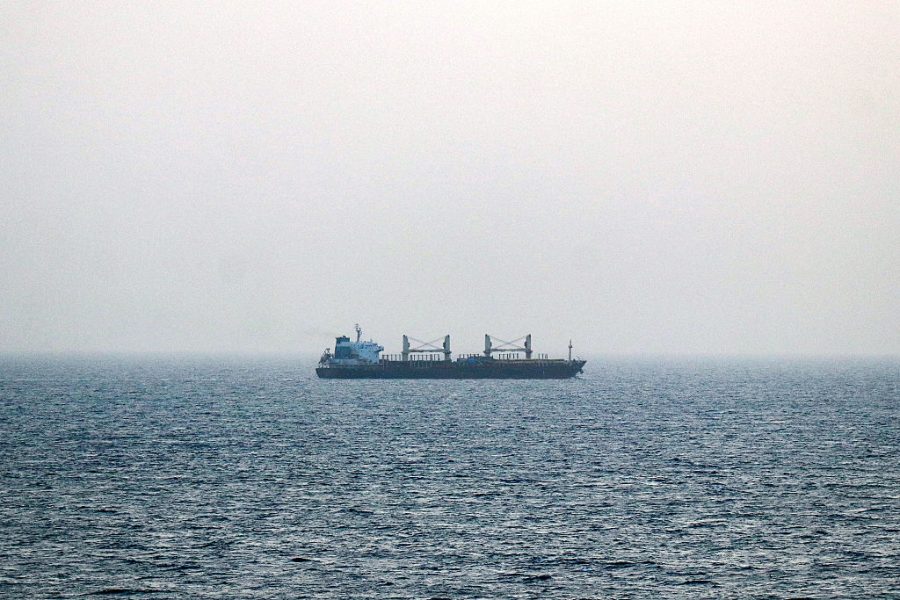
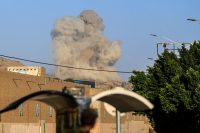
Indeed, Iran’s ability to command or at least align with proxy and client forces across the Middle East and beyond remains its most significant tool of power projection. The strikes on two Saudi-flagged oil tankers, the Encelia and the Leila, last week further indicate that Iran’s axis will not hesitate to expand the parameters of the war to its advantage. This is despite the heavy blows it is currently taking from US air power. The subsequent attacks on the Aramco facility at the southern Saudi port of Jizan over the weekend raise the stakes still further.
The last three years have demonstrated the hollowness of Iran’s axis propaganda
Prior to the outbreak of war in the Middle East three years ago, the ‘resistance axis’ was the most practically significant but perhaps least understood element of Iran’s bid for hegemony in the region. Tehran’s nuclear ambitions were the focus of western concerns about Iran, given the apocalyptic potential of weapons of this magnitude finding their way into the hands of the Islamic regime. Iran’s ballistic missile project was also an item of regional concern, with its relevance to the nuclear programme and Tehran’s ability to intimidate its poorly defended and fragile Gulf neighbours.

But it was the ability to command proxies and work with clients which had in practice brought Iranian power to the shores of the Mediterranean and the Red Sea. Through the Lebanese IRGC franchise that it calls Hezbollah, the Iranian regime continues to dominate that country. The Iraqi Shia militias of the Hashd al-Shaabi (Popular Mobilisation Forces) remain the most powerful political and military force in Iraq. Hamas and Palestinian Islamic Jihad, both Iranian clients, now effectively own Palestinian militancy.
The Assad regime in Syria was Iran’s oldest ally, affording Tehran territorial contiguity between its own borders and the Mediterranean. Lastly, the Houthis, who controlled the Yemeni capital and a large section of its coastline from 2014, afforded Iran the capacity to disrupt shipping along the vital Gulf of Aden-Red Sea route.
Iran was proud of its regional alliance, which it saw as both a tool of power projection and a reflection of its legitimacy and appeal among Arab populations seeking armed action against the West and Israel. The axis formed a key element in Iran’s self-presenting as the ‘sunrise’ power in the Middle East, advancing inexorably against the declining hegemony of the US and its allies.
The last three years have demonstrated the hollowness of Iran’s propaganda regarding its axis. When tested, it proved a rather more prosaic and limited affair than its self-image had suggested. In the period prior to October 2023, Iran-associated organisations and outlets projected constant messaging about the ‘unification of the fronts’ – the notion that a combined assault by the entire axis could do what Arab armies had historically failed to do, and defeat and destroy Israel once and for all.
It seems to be with this in mind that Hamas leader Yahya Sinwar, who was largely responsible for repairing his movement’s relations with Iran after 2017, launched the jihadi rampage of 7 October. It was to Israel’s very great good fortune that the ‘resistance axis’ failed to live up to its billing in the days that followed.
Had Hezbollah, the Iranian regime itself, the Houthis and the other components launched an all-out assault on the Jewish state in the wake of or alongside 7 October, the outcome might have been catastrophic for Jerusalem. As it was, the axis turned out to consist of a number of players, each with their own related but different interests. None of them, it transpired, felt like committing suicide for a relatively minor element of their alliance which had decided to launch a massive assault without prior consultation.
The partial and piecemeal mobilisation of the axis enabled Israel to focus on each of its components separately and to deliver telling blows against all of them by the time the ceasefire of 25 October came several weeks later. The fall of the Assad regime, whose erstwhile Hezbollah defenders were unavailable – weakened by Israel, was an unexpected byproduct of this process.
So the resistance axis was dealt a severe blow because of its hubris and overconfidence. The problem with hubris and overconfidence, of course, is that they have a tendency to transit between rival camps.
This, it has become clear, has taken place between Iran and its US and Israeli enemies. America and Israel’s pummelling of Iran since late February of this year has failed to achieve any strategic results except that Iran now controls the Strait of Hormuz. Jerusalem and Washington, evidently, also believed their own information operations and decided that the Iranian regime and its allies were a busted flush, ripe for the coup de grace.
This is very evidently not so. The US now faces the choice of very sharp escalation against the Iranians, or effectively conceding, with grave implications, that the decision to return to war in February was a failure and has produced only Iranian control of Hormuz. The Houthi strikes against Saudi targets show that Iran itself is now seeking to control the escalatory ladder. The Saudis had been bypassing Hormuz by pipelining oil to their Red Sea terminal at the port of Yanbu. The Houthis’ announcement of the closure of Bab al-Mandeb to Saudi-flagged ships severely complicates this option, since all ships setting out from Yanbu westwards must pass through this narrow strait.
The Iran-led axis has been shown in the last three years to be a looser, more heterogeneous arrangement than previously advertised. Its loudly trumpeted notion of hybrid armies able to take on conventional ones has been largely buried by Israel in the earth of southern Lebanon. None of this makes it a busted flush. Iran’s enemies have yet to find an effective antidote to the IRGC’s ability to infiltrate and hollow out neighbouring countries’ political systems. The regime itself has proved a formidable structure, with a large number of able people committed to its survival (as ought to have been obvious to western and Israeli observers). The IRGC’s application of the methods of asymmetrical warfare to a maritime context, meanwhile, awaits an effective response and appears to have delivered still unreversed strategic gains for Tehran since February.
The Iran-led regional axis is weakened and has shown it is not unstoppable. Nevertheless, it remains far from defeated. In Bab el Mandeb, it has just raised the stakes once again.





Comments