In July 2014, three aspiring entrepreneurs – Reeve Collins, Craig Sellars and Brock Pierce – launched a startup from a Santa Monica bungalow. Its product, Realcoin, was a dollar-pegged cryptocurrency: a digital token that, unlike volatile Bitcoin, could be used for everyday transactions. When the trio pitched it to Silicon Valley’s big investors, they were laughed out of the room.
This could have made for a classic startup origin story, were it not for the cast behind it. Their résumés betray the whole venture as a pipe dream. Sellars was the only software engineer of the group; Collins was an ad man notorious for the pop-ups that flooded the early internet; Pierce was a former child actor best known for starring in The Mighty Ducks, whose early evangelism for crypto led him to give a speech at a conference organized by Jeffrey Epstein.
Tether has spent the past five years racing to shore up its reserves
Yet scarcely a decade on, their idea has achieved a phenomenal level of success. Now rebranded Tether, the project is worth $200 billion: a value that is higher than Disney, Boeing or BlackRock. Its token, USDT, is the most traded cryptocurrency in the world. The firm holds more US government debt than Israel or Germany, and this year bought more gold than most central banks, which it stores in a former Cold War bunker in Switzerland.
On Monday, the Senate’s Permanent Subcommittee on Investigations published a report on the firm. Alarmed by its ties to senior figures in the Trump administration, it denounced Tether as an “unprecedented and pervasive” tool for Iranian sanctions evasion and the financing of terrorist proxies.
So how exactly did a questionable Santa Monica startup end up here? The breakthrough came in 2015, when Hong Kong-based exchange Bitfinex became the first company to offer bitcoin-Tether trading. Users could buy USDT from Tether, deposit them on Bitfinex platform and swap it for Bitcoin, sparing exchanges the banking licenses needed to accept dollar deposits.
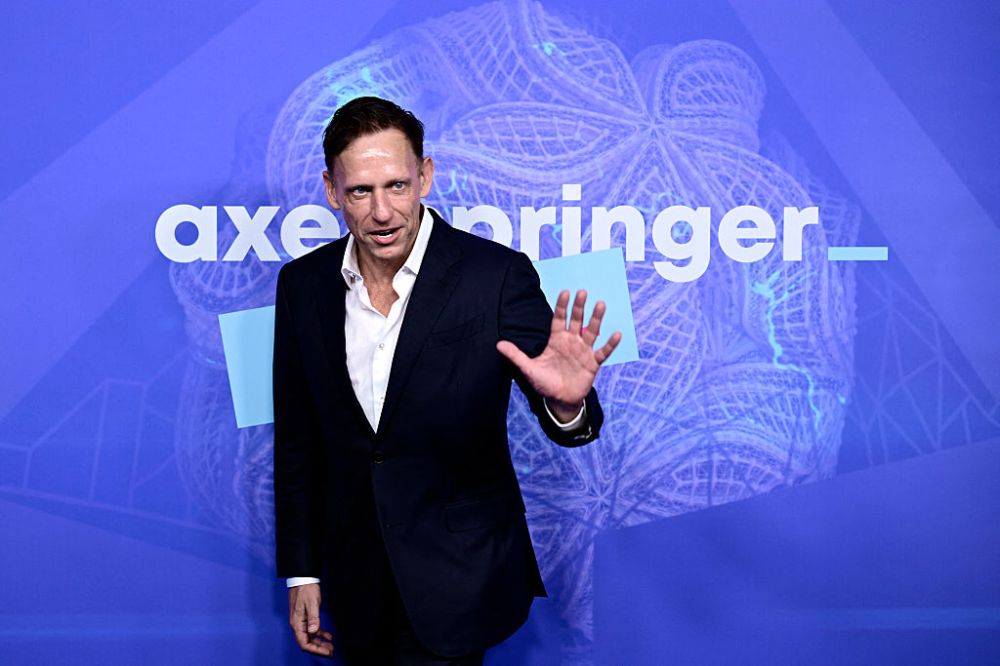
The relationship between the two firms overstepped typical commercial boundaries. The 2017 Paradise Papers revealed that two Bitfinex officials, Giancarlo Devasini and Philip Potter, had set up Tether’s legal entity in the British Virgin Islands. A spokesperson later confirmed that the firms shared a CEO, Jean-Louis van der Velde. The Realcoin trio had handed their equity to these and other Bitfinex insiders by 2015, and the blurred lines would prove costly.
In 2018, Bitfinex faced an $850 million hole in its balance sheet after its payment processor, Crypto Capital Corp, failed to honor withdrawals; foreign governments had allegedly seized the funds. To plug the hole Tether sent Bitfinex at least $700 million from its cash reserves. New York’s Attorney General alleged that the firms concealed both the losses and the transfer. They settled for $18.5 million and were barred from serving New Yorkers.
This was not Tether’s first brush with regulators. It had always assured the public that every USDT was matched by a dollar in a bank account. But a Commodity Futures Trading Commission investigation found it held sufficient fiat currency in its own bank accounts to back the tokens on just 27.6 percent of days sampled.
For years the firm offered no financial audit, only “attestation reports” examining reserves at a single point in time. The CFTC noted that Bitfinex had sent funds to Tether on the mornings of attestations. The companies had “commingled Tether Reserves with funds belonging to Bitfinex and/or Bitfinex customers,” the CFTC said. The two firms were fined a total of $42.5 million. This year, Tether says KPMG performed the firm’s first full audit and issued an unequivocal opinion that the reserves are there, although it has still not published the full document.
As Tether’s market capitalization grew with the crypto industry, it set about trying to fix its sullied reputation. A turning point came in 2023 when van der Velde, Tether’s elusive CEO who has never given a public interview, stepped aside for Paolo Ardoino, an Italian software engineer. Ardoino joined Bitfinex in 2014 and was appointed chief technology officer at Tether in 2017. As CEO he has turned a secretive offshore issuer into a politically wired conglomerate, reporting record profits of more than $13 billion in 2024 and expanding into gold, bitcoin mining, AI and even a stake in Juventus football club.
Tether has also spent the past five years racing to shore up its reserves, replacing dicey and illiquid assets with US Treasury bills. It was this scramble that brought it into the orbit of Trump’s future inner circle.
Cut off from traditional banking after Crypto Capital’s collapse, an adviser at Tether’s former bank set up an introduction with Howard Lutnick, then CEO of leading Treasury dealer Cantor Fitzgerald. He flew to the Bahamas in 2021 to meet Devasini and, after reviewing the books, later told a Bitcoin conference that Tether did have the money they claimed, albeit in “pretty Godforsaken places” – likely Chinese junk bonds.
Cantor became Tether’s US custodian, moving its riskier assets into Treasuries, and took a 5 percent stake then worth around $600 million. It also facilitated Tether’s $775 million investment in Rumble, the anti-cancel-culture streaming platform, in 2024.
For years the firm offered no financial audit, only ‘attestation reports’
When Lutnick became Commerce Secretary in February 2025 and sold his Cantor stake to his children later that year, Tether made an undisclosed loan to one of his family funds, prompting an investigation by Senators Elizabeth Warren and Ron Wyden. The pair wanted to confirm that Tether had “not sought to bribe or otherwise exert control or influence” over a sitting Cabinet member. The Senators are seeking to establish whether Tether helped finance the purchase of Lutnick Sr.’s shares by his children. So far, the findings of that investigation have not been published.
Lutnick is not the only Trump insider linked to the firm. Bo Hines, former executive director of the President’s Council of Advisors on Digital Assets, runs Tether’s US stablecoin arm. Jesse Spiro, Tether’s head of government affairs, chairs the newly launched Fellowship PAC, to which Cantor has given $10 million. So far Fellowship has spent more than $1 million on advertising, including payments to a company co-founded by Hines. Tether is also a donor to Trump’s White House ballroom project.
These ties worried critics long before this week’s report, and Iran is not the first national security concern. In 2025, the Justice Department seized cryptocurrency tied to BuyCash, a Gaza-based money-transfer firm the US designates a Hamas supporter. USDT was used to obscure that support; one account received at least $4 million before and after the October 7 attack. The DoJ alleges Tether’s help in transferring the assets.
Last month, the International Consortium of Investigative Journalists revealed that Tether’s problems with bad actors stretch far back into the firm’s origins. Historical customer records show one buyer, Tomorrow Good Limited, purchased more than $66 million USDT directly from Tether in 2019. Its director, Cheng Hung Man, was later indicted in the US for laundering money for North Korean cyber operators, and the company appeared in a 2024 Sinaloa Cartel indictment.
Tether insists it cooperates with law enforcement. On the day the Senate Committee report was published, it said it had frozen over $4.9 billion in digital assets to-date, and that most users are legitimate businesses and individuals unable to access dollars. Tether also says it has frozen $550 million in Iran-linked account during 2026.
Treasury Secretary Scott Bessent, himself a crypto investor before taking office, argues that stablecoins secure the dollar’s global reserve status. He may be right: they drive massive demand for Treasury bills, as well as helping to “dollarize” foreign retail economies through the internet. But their use as a tool by rogue states and threat actors is concerning.
Tether may or may not have solved its reserves problem, but the far more serious question – whether it can stop all national security threats from using its product – remains unanswered.





Comments