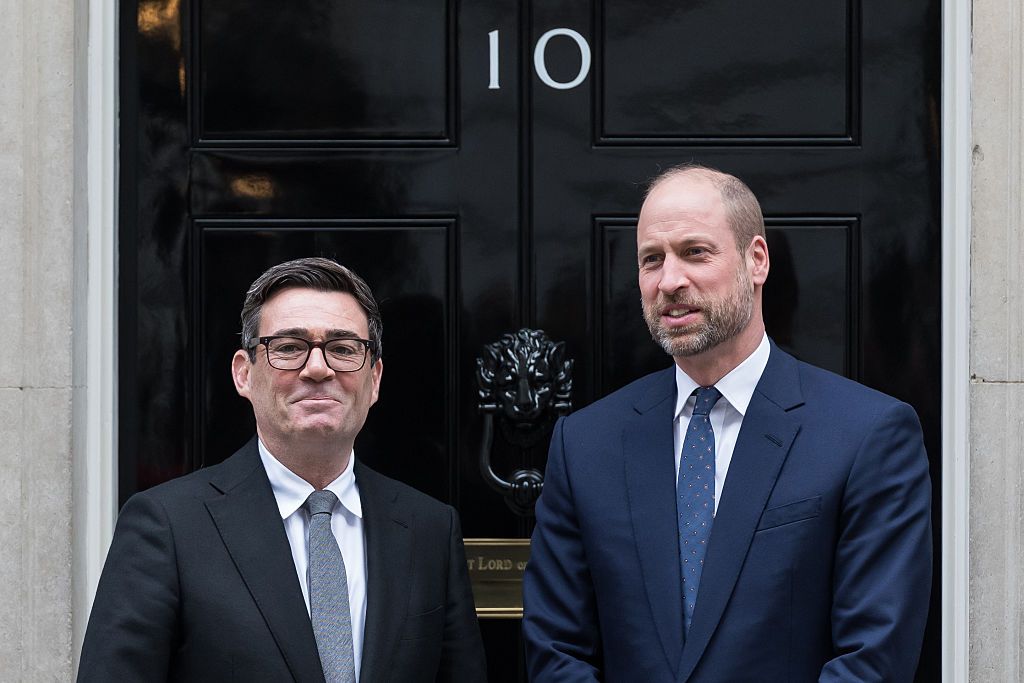
When the Prince of Wales visited the Prime Minister at 10 Downing Street yesterday, it might have seemed like a slightly odd encounter between the future king and the former king of the north. Prince William – who, in unrelated news, suffered a break-in at his country house, Anmer Hall, proving that crime can and will affect everyone in the country – is an Eton-educated southerner whose love of polo and country activities has not, so far, been equalled by a similar interest in arts, culture or religion. Andy Burnham, meanwhile, is a northern Cambridge graduate who likes to discuss his favourite poets (Larkin and Tony Harrison) and the bands that he adores, including the Smiths and the Stone Roses.
The substance of the meeting, such as it is, appears to have been relatively bland. The two men were said to have discussed rough sleeping, which, unsurprisingly, they both agree must be stamped out in the country as soon as possible. Burnham also congratulated the Prince on his work with the Earthshot Prize. If other, more sensitive matters were discussed, this has not yet been briefed, and without a member of the ever-leaky Sussex gang lurking in an alcove somewhere, it seems likely that any more candid conversations between the two men will remain off the record.
Still, William will have been pleased that his audience with the Prime Minister has allowed him to demonstrate his statesman credentials. It marked the first time a senior member of the royal family has visited Downing Street since the Queen attended a cabinet meeting during 2012 as part of her Diamond Jubilee celebrations. While the two men are very far from having the warm and amicable relationship that Elizabeth II enjoyed with the likes of Winston Churchill and Harold Wilson, it is early days yet. And, of course, the more significant constitutional relationship is between King Charles and Burnham; it is not yet known whether the monarch approves of the relative informality of his first minister, or if he might prefer the stiffer, more courtly approach of Sir Keir Starmer.
It is impossible to say whether William will become king while Burnham is still PM, but if he does, the two men will have to find an effective way of working together, and overcome what might be some glaring personality clashes. Burnham is currently unusually well-liked thanks to what is perceived as his straight-talking, man-of-the-people style, but political gravity suggests that this cannot and will not last for long. William, meanwhile, might chafe at the knowledge that for all his outreach and attempts to be seen as accessible, he can never be the pint-swilling premier that Burnham is, and not just because royal protocol forbids it. But he has other advantages, not least the knowledge that he cannot be defenestrated by the electorate or those around him when people tire of him, if this ever comes to pass.
Both men are enjoying their current status as, respectively, the most popular member of the royal family and most popular politician in the country, but both also know that inspiring chats about ending rough sleeping are the easy, PR-focused part of their roles. Burnham has some tough choices to make about Britain, and William, if recent reports are to be believed, will be the most consequential monarch in history when it comes to dragging the institution that he will one day reign over into the modern age. Only time will tell whether this polite sympathy can strengthen into a deeper and more constructive partnership.





Comments