
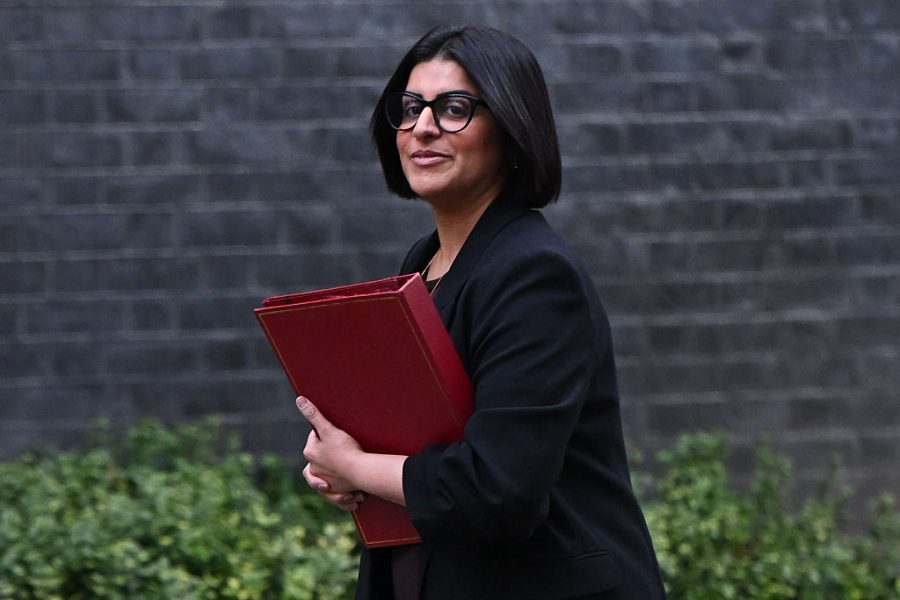
This afternoon, Home Secretary Shabana Mahmood unveiled a set of sweeping police reforms. These include increased police response times, the reduction of constabularies from 42 across the country to 12, a new licensing regime for officers and a new centralised agency, the National Police Service, created to deal with national challenges such as organised crime, terrorism and cyber fraud. A national centre for policing will also be created to centralise and rationalise training, equipment and IT. These proposals will require a huge amount of (mostly performative) change and a years-long transition to a new policing model that will likely outlast Mahmood’s tenure.
Most people will agree that there is an urgent need for policing to get back to the basics, shorn of progressive distractions that have exasperated the Home Secretary, if not her officials. But this determination has been undermined by the silly stunts leaked ahead of the publication of today’s white paper. The proposed annual licensing of police constables is a prime example.
This is the Home Office solution to ‘outsmart’ criminals
This suggestion that police officers must hold a ‘licence to practise’ in order to work is a civil service answer to an operational question. Good chief officers such as chief constable of Greater Manchester police Sir Stephen Watson are already solving it. In 2023, Stephen Watson was appointed to a failing force where almost every metric – from arrests to charges to response times – was in freefall. Watson diagnosed the problem as one of leadership at every level and set about improving it. He created a ‘plan on one page’ – the bureaucrat’s nightmare – for improved performance. Inspectors praised a dramatic increase in officer productivity and proactivity.
In many localities, poorly resourced and equipped response officers are tearing their hair out every day thanks to the high demand for service to cover with too few cops. About the last way to deal with this priority is to require an annual MOT for their skills. Yet this is the Home Office solution to ‘outsmart’ criminals.
It is the job of police leaders in uniform to ensure their officers are trained, equipped and ready to fight crime, not a new cadre of pen pushers or already overloaded supervisory ranks. It is the job of vetting to ensure that we don’t have more rapists and murderers in uniform. It is the job of already existing performance management appraisals to coach and encourage improvement. The cost of a shiny new credentialing system ought to be ploughed into more boots in neighbourhoods or it risks damaging morale, recruitment and retention still further.

Similarly, a press release that promises improved national response times for officers is another ‘all hat and no cattle’ device that makes for a good headline while ignoring reality. It is quite legitimate to ask why a huge and successful police uplift programme that recruited 20,000 extra officers by March 2023 has not translated into better productivity. But then again, these officers merely returned policing strength to pre-austerity numbers, replacing seasoned officers with inexperienced ones.
Moreover, a recent National Audit Office report revealed, astonishingly, that officers spend 65 per cent of their time on non-crime tasks like mental health crises, public welfare and training, diverting them away from core policing. Mahmood has promised, like every home secretary from Robert Peel onwards, to cut the administrative red tape that ties police officers to offices and keeps them from the streets. Other obvious gains gather far less attention. Why, for example, is there such a disparity between forces in terms of the well-being support provided for officers exposed to more trauma in a year of their working lives than many of us see in a lifetime? You can’t fix broken Britain with broken officers.
Mahmood has shown that she is not afraid to take on vested interests to make the police more responsive to the public they serve. But as Robert Peel, the father of modern policing, observed, the police are the public in uniform and any high-minded reforms that leave them exposed to impossible political expectations and morale-sapping distractions like annual licensing will only accelerate already worrying levels of resignations.
The problem here is not the scale of change but its destination, a hybrid mix of local policing and national agencies with a cull of constabularies. If this cull is handled badly, it will result in the same decade-long freefall in performance seen in Scotland after eight constabularies were shoehorned into Police Scotland. In my opinion, Mahmood should have looked more closely at the continental model of policing seen in France, Spain and Italy, where a gendarmerie handles public order and national policing in rural areas, with local police delivering neighbourhood patrols in towns and cities.
There is one potential gain in the existing proposals. The Home Secretary has said she wants a national police commissioner. If the best predictor of future success is past performance, she will need someone who understands that leadership and accountability is more important than flimsy PR. That person should be Sir Stephen Watson precisely – because the administrative class would hate it.






Comments