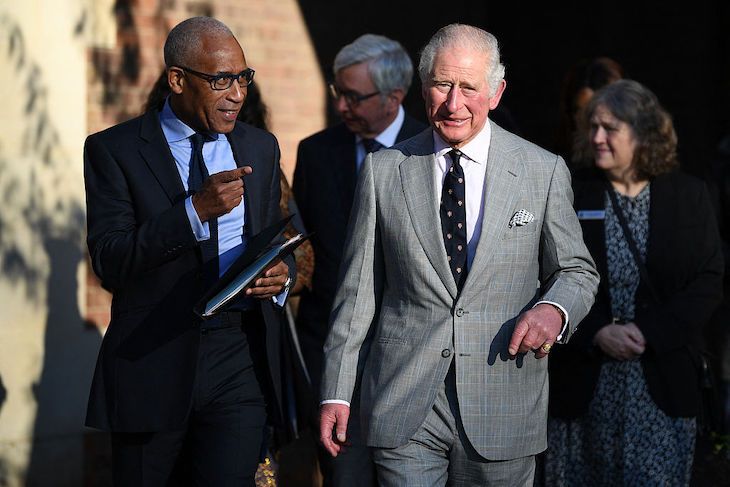
The principal of Homerton College, Cambridge, has insisted he was telling the “truth” when he said that Jason Arday was murdered – or in his words, was the victim of a “lynching” and a “public assassination” by people who had decided that “Jason doesn’t deserve to be alive.”
The reaction of Woolley’s fellow activists to our initial post was, inevitably, to say that questioning all these untruths was racist
In a LinkedIn post Simon Woolley, Lord Woolley, has doubled down on his factually false and racially inflammatory claims, saying he was “speak[ing] truth to power” and “nor would I change my actions. Not for a moment.” In doing this, he appears to have joined the ranks of what the Atlantic magazine calls the “Jason Arday truthers,” dedicated peddlers of untruths about the late academic – an unusual, probably unprecedented position for a senior figure at one of the world’s top universities.
It’s further evidence that Woolley is, as we judged on Monday, unsuitable for that job.
Homerton, meanwhile, has issued an uneasy “the board has full confidence in the manager” type statement about Woolley, of the kind that in football famously precedes an almost inevitable sacking. As they put it, “he continues to serve with the confidence and support of the College’s leadership and Governing Body.” The statement also said that Woolley was under “professional and personal pressures” over the affair.
Neither the college’s statement, nor Woolley’s, addresses another issue we raised with both of them more than a week ago – a false claim used to justify Woolley’s appointment as principal. Homerton’s official announcement of the job said that “in 2018 Lord Woolley was appointed by prime minister Theresa May to create and lead the UK government’s pioneering Race Disparity Unit.” This is not true. The unit was actually created in 2016 and led throughout by a career civil servant, Marcus Bell. Woolley’s role, starting two years later, was as the chair of its advisory group.

The falsehood about Woolley’s CV has not been corrected and remains live on Homerton’s website at the time of writing. The college continues to refuse to say whether it was an Arday-style embellishment by Woolley or whether it was made up by Homerton.
The reaction of Woolley’s fellow activists to our initial post was, inevitably, to say that questioning all these untruths was racist. Some have also had to rely on falsehoods, or misrepresentations, of their own. Sir Patrick Vernon, the Windrush campaigner, compared our attack on Woolley with the failure to attack Cambridge’s white chancellor, Lord Chris Smith, saying this proved the existence of a “racial double standard” in the media. But of course Smith, unlike Woolley, did not say that Arday was murdered, or that anyone wanted him dead. Woolley himself, in his LinkedIn post, said we’d called him “not fit to be at Cambridge,” when we in fact said he was not fit to be head of a college at Cambridge.
Into the debate last night entered the ultimate supporter that no-one should want, Jolyon Maugham. In his usual measured fashion, Maugham said this magazine wanted both Arday and Woolley dead, saying that “apparently one senior black academic dead is not enough for The Spectator,” and making the same false equation between the quite different remarks made by Chris Smith and Simon Woolley.
Woolley, meanwhile, has spent much of the last fortnight in China, where he has been speaking at an official state summit on “international entrepeneurship.” He was escorted on the trip by a guy called Jerry Wu, the managing director of a Chinese venture capital firm called LongRiver Investments who has been given an associate fellowship at Homerton. In another LinkedIn post, Woolley praised the Chinese people’s “profound” sense of “belonging, identity and nationhood.” Perhaps he and his supporters would prefer the kind of journalism they have in China, where undue questioning of those in power is prevented. Luckily, however, this is not yet the case in Britain.





Comments