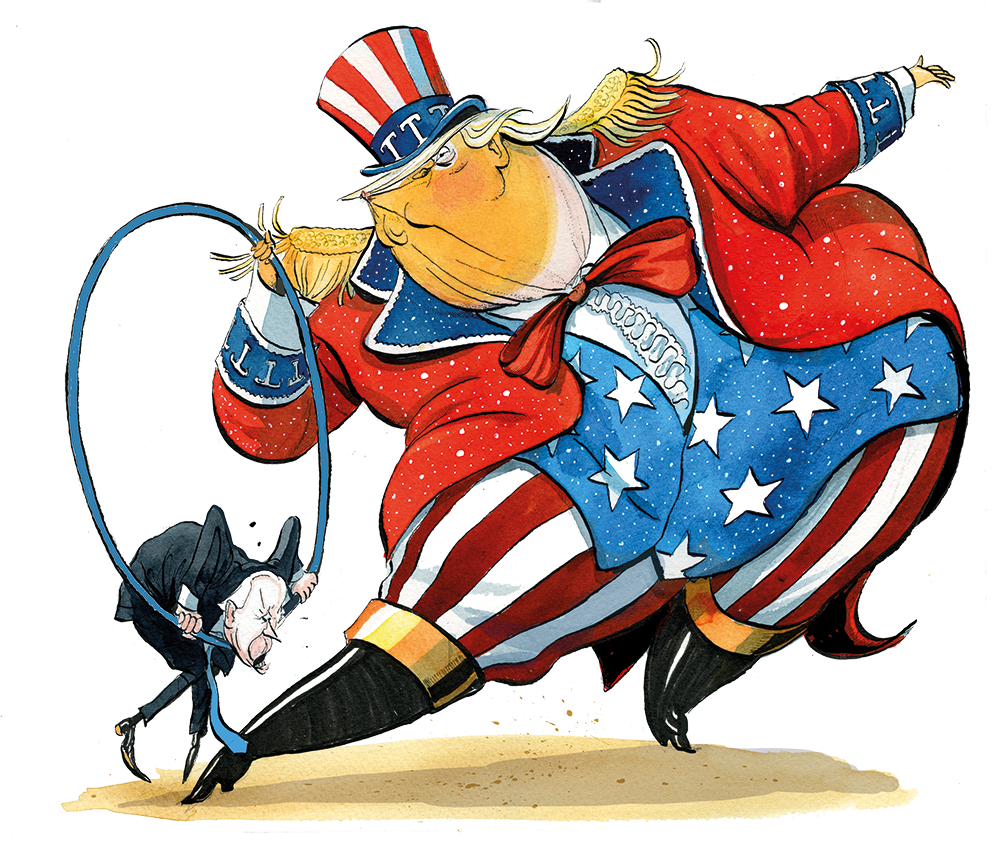
This is how I became a Canadian nationalist. I did it on the rebound. I never wanted to, and it is a strange experience to find myself pounding the arm of my chair when Mark Carney, of all people, defies the Almighty Trump. But it is so. Once, like that poor man who speaks the first lines in The Godfather, I believed in America, arsenal of liberty, land of the free, inheritor of Magna Carta and so on. Then, after a couple of years in Moscow, I went to live in Washington, DC. And it was there that I was wooed and eventually seduced by the land of maple syrup.
To begin with, it was the discovery that soppy British sentiment about the US was not in practice returned. It wasn’t so much that they didn’t like us as that they had barely heard of us. Legally, Britain didn’t seem to exist. I had no credit history in the US, so could not get a US credit card. I had no American driving record, so had to write begging letters to get insurance. I heard alarming tales of other British correspondents or their wives being thrown into the cells by highway patrol for driving with British documents. And when Mrs. Hitchens and I set out to obtain Maryland driver’s licenses, we faced an extra hurdle. We could not even take the test until we had attended a four-week series of unsubtle evening classes about the perils of drinking and driving. We were at this time in our early forties, and had done a fair share of driving (and drinking, though not at the same time) in Moscow, where breaking the zero-alcohol law could put you in an actual labor camp. Maryland’s logic was that, having not attended one of their superb high schools, we had never benefited from the stern anti-drinking education provided there. Why, we might even have tasted the dreaded devil’s buttermilk before we turned 21.
I was now in a monarchy with a parliament, northern and stern but with limits
The lectures were conducted by a female sheep farmer from the Catoctin Mountains, who cheerfully admitted to an alcoholic past. So far, so funny. As was the day when I tried to persuade passersby in DC to change a dollar bill into four quarters for a parking meter. I received nothing but blank looks until I grasped that many Americans could not really hear or understand the English version of their own language, much as I might struggle with a Glasgow accent. As soon as I asked for “kworders,” they smiled and obliged.
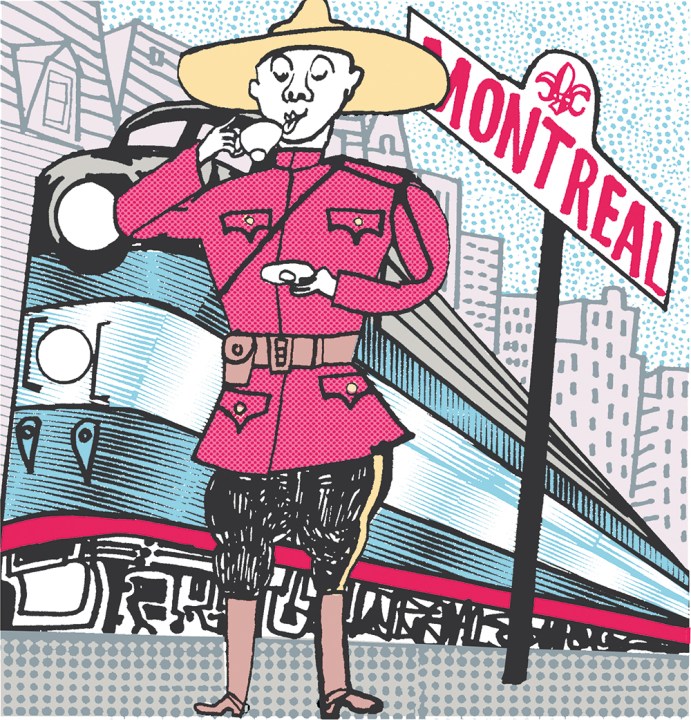
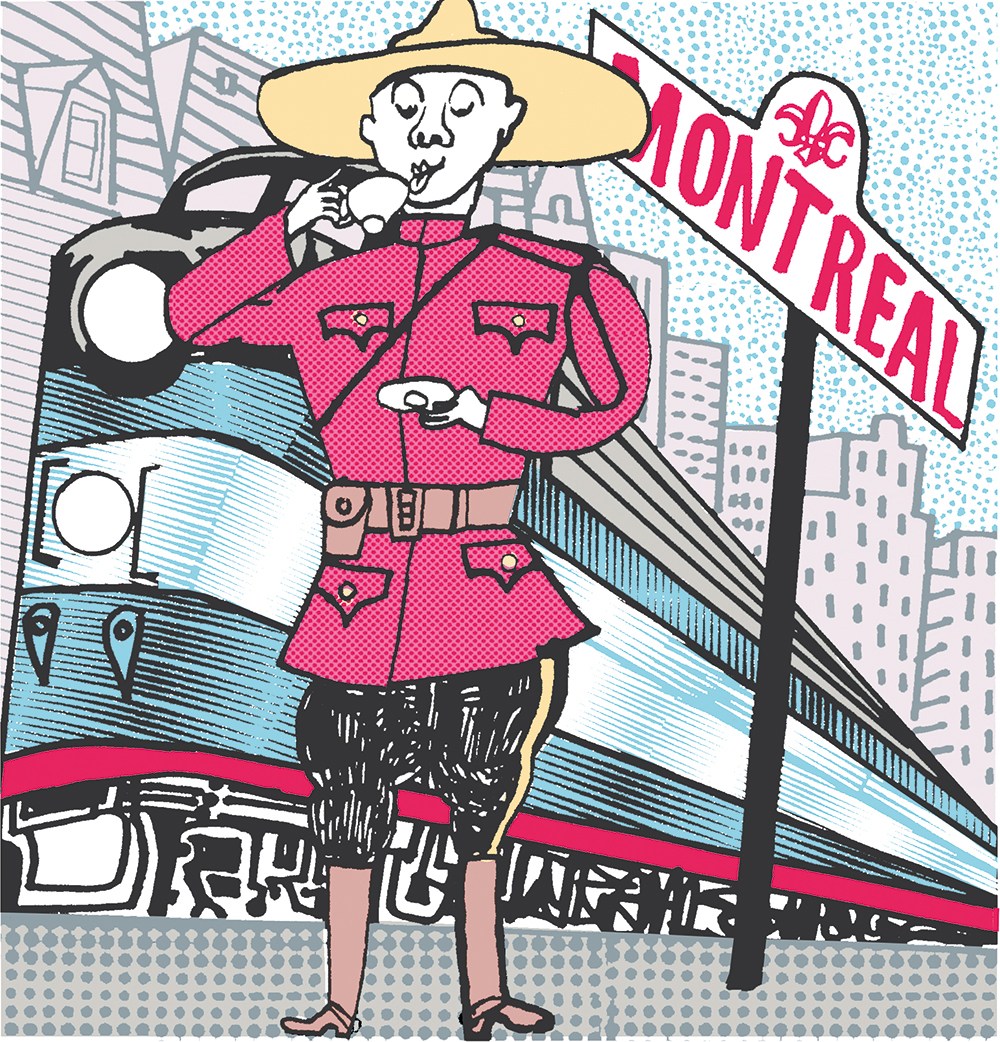
But then came the Clinton White House’s decision to fall in love with Sinn Fein’s uncuddly leader, Gerry Adams. This was not funny. I let my scorn show at a White House briefing and some days later received a phone call from a senior West Wing official. She cluelessly explained to me that America had a duty to prevent conflict in the world. For example, did I not think they were right to intervene in Yugoslavia, as they were then doing? I asked coldly if she was actually equating America’s oldest ally etc. etc. with, er, Serbia. A silence fell. I realized this was exactly what she was doing and she realized at the same time that diplomacy wasn’t for her. We said goodbye. And I was out of love. Not long afterward, by coincidence, I took the train north from New York to Montreal for the first time, braving the cold Canadian air mass, which is about the only Canadian thing US broadcasters seem to care about.
This was true foreign travel, far more so than I had expected. The line wanders through glorious lake and forest country and passes Ticonderoga, that wonderfully named battlefield where France and Britain long ago tangled for control of North America, a continent I still love, in spite of everything. Then suddenly all the signs were in French.
I was instantly captivated by Canada, even by the coffee-and-doughnut chain called Tim Hortons, unknown in the Great Neighbor to the South. There, I found myself sitting next to a Canadian cop, who to begin with looked much like his US counterpart. But then I noticed the St. Edward’s Crown on his badge and my heart turned over. I have never been much of a Thatcherite or Reaganite, and always felt in the US that there really is no top and no bottom, that if you fall, you will fall forever.
For me, this has always been the dark implication of all that liberty: Wall Street billionaires at one end, chain gangs at the other. The sight of that Crown, and of the Queen’s face on the blue and purple money, brought home to me that I was now in a monarchy with a parliament, northern and stern but with limits. I was especially captivated by the French bit, full of glorious anomalies, especially in delightful Québec City, perhaps the only place in North America where streets curve sensibly uphill instead of wasting their breath going straight at the gradient.
It was a dream of France before the Revolution, with a grand bust of Louis XIV on a cobbled square next to a superb wine merchant. And despite years of ferocious metrication, the heights of arches were given in pieds and pouces and I was able to order a steak in onces. In Ontario next door, the motorways were marked by tasteful black and white metal shields proclaiming that this was “the King’s Highway,” rather than Interstate 95 or whatever the Americans would have called it.
Then there was the baseball. The Toronto Blue Jays were playing a major game in Atlanta, Georgia, and a Marine Corps band marched out into the stadium carrying the Canadian flag upside down. All over Canada there was laughter. For months afterward, they displayed pictures of their national standard, stalk down, helpfully bearing the words: “THIS WAY UP.” Who could not love a country which responded in this way to America’s inability to grasp that there are other nations with pride and history?




Comments