
The near-total internet blackout imposed by the regime in Iran has now continued for nearly a week. Behind the veiled effort to cut the country off from the world, sufficient evidence has emerged to establish a clear picture of what the authorities are attempting.
In a move wearyingly familiar to all observers of the contemporary Middle East, the leaders of the Islamic Republic of Iran are seeking first to isolate the masses of protestors now in the streets demanding an end to their regime. Then, under the cover of the resulting darkness, they are slaughtering a sufficient number of them so as to drive the remainder back into a terrified silence.
As of now, estimates of the numbers killed in the last week range from 12,000 (the number claimed by Iranian opposition sources) to 2,000 (the number acknowledged by the authorities). The true number probably lies somewhere in between. Even the lower figure would reflect an astonishing level of brutality on the part of the regime, which clearly understands that it is in a fight for its life. The Iranian authorities have now begun to issue death sentences to apprehended protestors convicted in hurried ‘trials’ of ‘moharabeh’ (enmity against God).
History has no examples of regimes being brought down by air power alone
If the current balance of forces between the regime and the protestors remains constant, the regime does not appear in imminent danger of collapse. Only increased external involvement might shift the balance.
While there are undoubtedly sharp differences of opinion within the ruling elite regarding the proper strategy to adopt toward the unrest, this does not appear to be producing a real fissure. Most importantly, as of now, no evidence has emerged of large-scale defections among those elements tasked with repressing the protests or who are capable of forming an alternative centre of coercive force on the protestors’ behalf.
In the former camp, the Iranian authorities appear to have bolstered their forces with thousands of Iraqi Shia militiamen brought into the country in recent days. These men, militants of the Popular Mobilisation Forces (Hashd al Sha’abi) in Iraq, can be relied upon not to develop any feelings of empathy towards Iranian civilian demonstrators, with whom they share neither a common language nor any elements of a common outlook.
The fall of the Iranian regime would mean the end for the militia archipelago that the mullahs and the Islamic Revolutionary Guard Corps (IRGC) have seeded across the Arabic-speaking world over the last three decades. The Shia militiamen, renowned for their brutality in their own country, will follow orders. The thugs of the Basij, and the IRGC directing them, similarly show no signs of hesitation and are unlikely to do so.
Regarding the possibility of a counter-force emerging, some analysis has focused on the official Iranian military, the Artesh, as a possible nucleus for such a development. Less associated with the regime, a source of patriotic pride for all Iranians, it is possible to imagine scenarios in which the military or parts of it might choose such a role. No empirical evidence has yet emerged, however, that this is taking place.
Examples from elsewhere in the region indicate that attempts by flailing regimes to crush dissent through slaughter can serve to produce a counterforce from among the protestors themselves. Syria offers a lesson here. In the summer of 2011, the Assad regime sought to end nationwide protests against it by turning the full force of its tools of repression against the protestors. The result was not the end of the protests, but rather their transformation into an armed insurgency that 13 years later brought down the regime.
Might the Iranian regime’s current efforts produce a similar result? It is possible. Some evidence is emerging of the use of armed counterforce by elements among the opposition. At the moment, the forces that have verifiably engaged in such activities are emerging not from the main cities of Iran, but from pre-existing, nationalist paramilitary organisations active among ethnic minorities in the periphery.
Most notably, a group calling itself the Kurdistan National Army has carried out a series of actions against IRGC targets in the Khermanshah area in recent days. On Tuesday, the group announced that it had captured an IRGC base in the area. The Kurdistan National Army appears to be linked to the PAK (Kurdistan Freedom party), a small and militant Kurdish nationalist movement which maintains a base across the border in northern Iraq.
It’s too soon to tell if such beginnings might lead to a more general arming of the opposition in Iran, along lines comparable with what took place in Syria. Much has been made in western analysis of the fact that the protestors do not have a united leadership. But past regional experience suggests that protest and revolutionary movements rarely emerge with a single, military-style chain of command. Rather, such leaderships often emerge in the course of a protracted struggle if the destruction of the protest movement can be avoided.
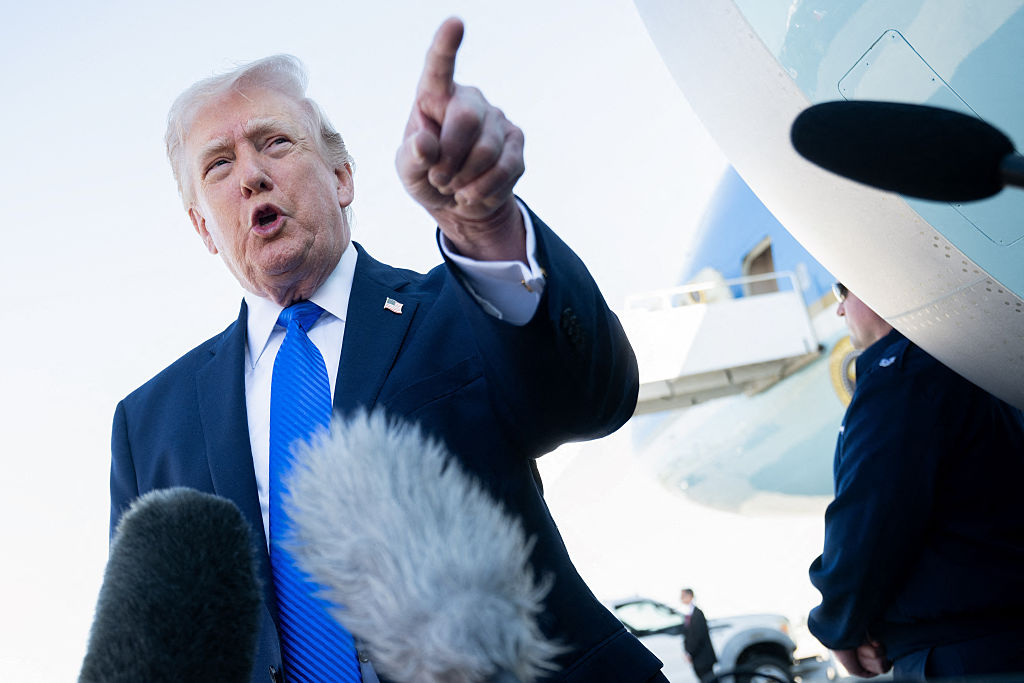
The key issue likely to determine the direction of events in Iran in the days and weeks ahead is the stance to be taken by the US administration of Donald Trump. The American president told protestors that ‘help is on its way’ and encouraged them to continue and increase their activity. At the same time, Trump has suggested that the regime might be ready to negotiate.
The US president’s past activities, both in relation to Iran itself (the killing of IRGC Qods force commander Qassem Soleimani in January 2020) and more recently with regard to Venezuela, suggest that his admonitions to the Iranian regime to desist from its mass killings of protestors should not be taken lightly.
What form, though, might US intervention to tip the balance against the regime take, and what approach would be most advisable? Firstly, it should be noted that while, conceivably, a regime could be decapitated through the judicious application of air power, history has no examples of regimes being brought down by this alone. The Iranian situation is not one which lends itself to resolution through a single overwhelming act of force, if the replacement of the Islamic regime is the goal. So if, as may be the case, the US president favours the use of force only if it can bring down the regime with a single blow, such force will not be used. This is because air power, at least within the parameters in which it could conceivably be employed in this context, cannot achieve that goal.
Much could still be done if the US and other opponents of the regime want to act. Action to weaken the regime and assist the protestors could include ongoing attacks from the air on regime forces to disrupt their ability to engage in repression and remove senior officials. They could also provide communications capacity to the protestors to enable them to beat the regime’s current efforts to isolate and silence them. Medical assistance could also be given to the opposition forces – neutralising the regime’s ability to carry out mass arrests of wounded protestors in public medical facilities. Cyber attacks would disrupt regime communications and, where needed, opponents of the regime could provide direct military capacities to anti-regime forces.
If the goal is to end the Islamist regime in Iran (and it should be), these are measures which could be adopted by the US and its allies. They would keep the opposition in the game and help move their cause forward. Hopefully the preparation for such measures is already under way.

Comments