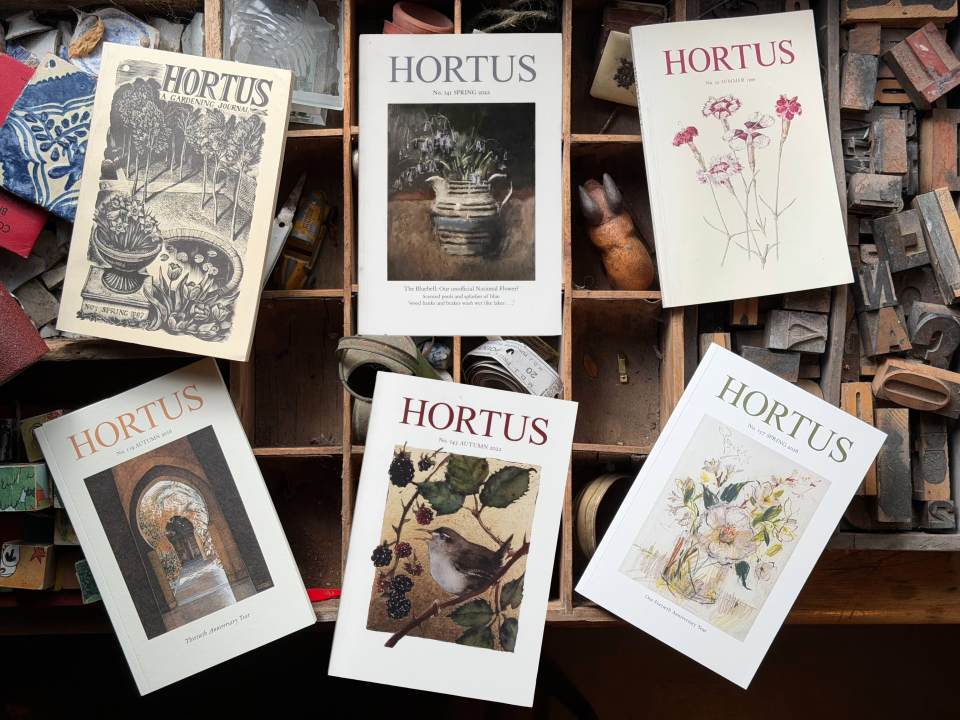
In the spring of 1987 David Wheeler took the brave decision to launch a new, privately published gardening quarterly titled Hortus. Brought up in Gloucestershire, Wheeler had gardened from an early age, but exchanged his rural family plot for a single ‘north-facing, three-foot-long window box’ when he came to London for work. After a career in Fleet Street (including a stint as the advertising director for the Spectator), he moved to Farnham and worked as a jobbing gardener, but found that ‘a potent whiff of printers’ ink lingered in my nostrils, as potent as the fragrance of my newly rediscovered roses’.

With the encouragement of the garden designer John Brookes, the cookery writer Elizabeth David and the formidable chatelaine of Barnsley House, Rosemary Verey, he produced the first issue of Hortus, which has now been published for 40 years. Somewhat to his surprise this enterprise did not bankrupt him, though he admitted in 2008 that ‘it pays for the tonic, not the gin’. It attracted a large and devoted readership, both in Britain and abroad, but Wheeler is now 80 and has reluctantly decided that issue 160 will be the last one.
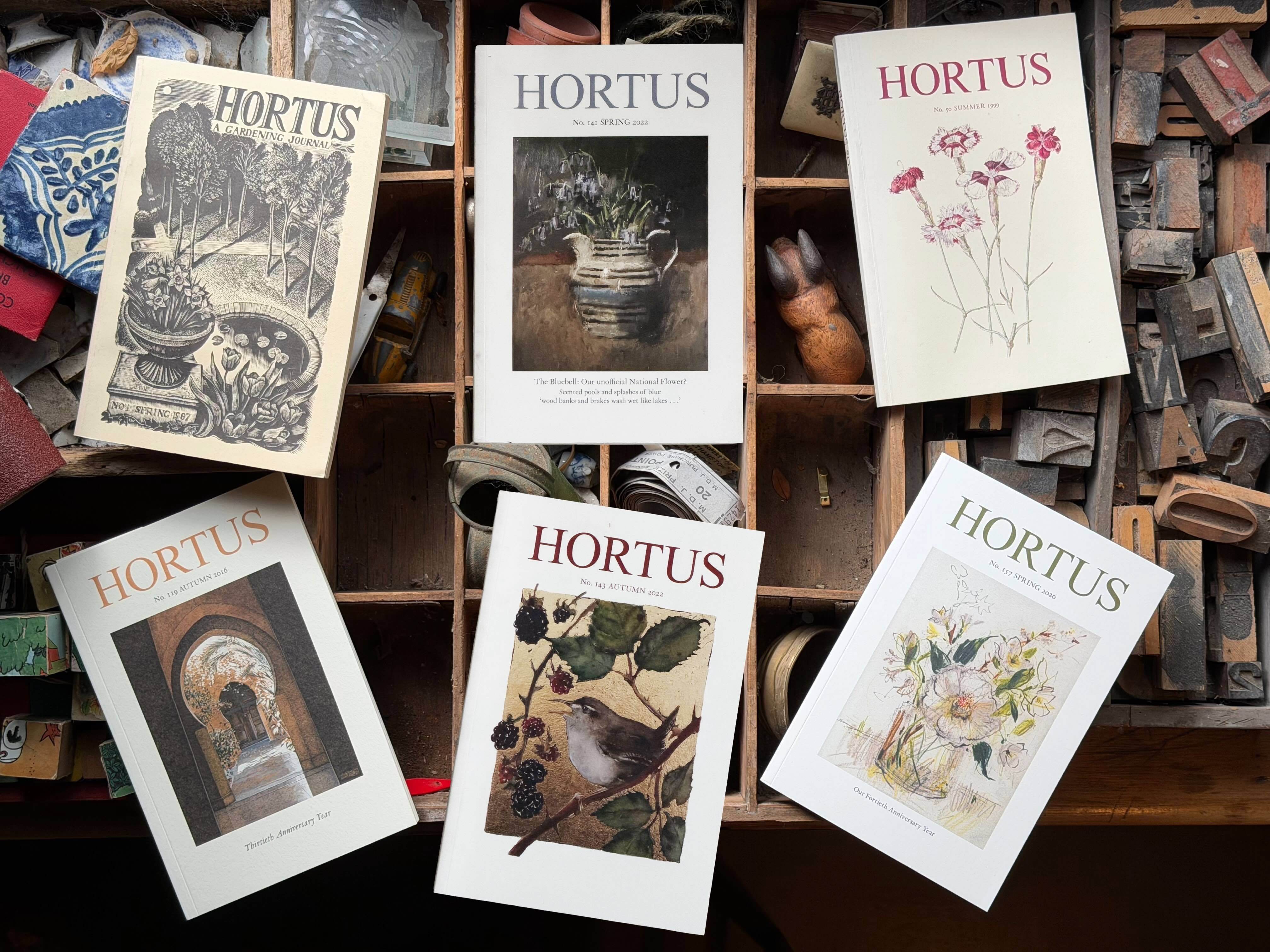
In the inaugural number, Wheeler announced that Hortus would ‘concern itself mainly with the decorative aspects of gardening – some history, design and ornamentation, plants, people and books’. There would be no advice on the best time to plant broad beans or prune roses, tips that were readily available in such popular magazines as Amateur Gardening. Unlike the Garden History Society’s journal, which first appeared in 1972, Hortus would be aimed not at scholars but the general reader, and the tone would be friendly rather than academic; and unlike the full-colour and glossy Gardens Illustrated, which followed in 1993, it would be A5 (a size suitable for fitting into a gardener’s apron), printed on thick, creamy paper, and illustrated only by black-and-white photographs, drawings and wood engravings. Subdued colour would latterly creep on to the journal’s covers, usually in the form of specially commissioned artwork, but never into the text.
From the outset Wheeler attached as much importance to prose as he did to plants, and to that end he generally solicited contributions from writers who were keen gardeners rather than from professional horticulturists. The first issue boasted a very distinguished roster of contributors, among them Beth Chatto recalling the artist-plantsman Cedric Morris, Penelope Hobhouse on the creation of the garden at Tintinhull, Rosemary Verey on courtyard gardens in the American city of Charleston, Nancy-Mary Goodall taking ‘A Glance at Chinese Gardens’, Arthur Hellyer on ‘Changing Fashions in Hellebores’ and Ronald Blythe on ‘The Ephemeral and the Perennial’. John Francis inaugurated the long-running ‘Gardens in Fiction’ series with a piece on E.F. Benson’s Mapp and Lucia novels, and the issue concluded with 13 book reviews.
Wheeler attached as much importance to prose as he did to plants
In terms of contributors and subjects, this eclectic and international mix set the pattern for the 159 issues that followed, but the overall design of the journal did not settle down until the third issue in which a new and enduring typeface was introduced. This, Wheeler explained to his readers, was Van Dijk, ‘recut for the Monotytpe system in 1937’ and based on the one used for ‘the great Dutch gardening books’ of the mid-seventeenth century. For some years, until it became prohibitively expensive, the journal was even printed using the hot metal process. Another regular and defining feature was introduced in Issue 8, which had a pen-and-ink cover drawing of a wintry scene commissioned from Simon Dorrell, a young artist who became Wheeler’s partner, provided the magazine with innumerable illustrations and, from Issue 16, was enrolled as its art editor. High production values were essential to the entire enterprise, and Hortus has remained the world’s only privately published gardening periodical, attracting a very wide range of devoted readers and subscribers.
Equally devoted are those people who over the years were seduced into writing for Hortus despite being paid well below the going rate. These include, among many others, Mirabel Osler, Ursula Buchan, Anna Pavord, Graham Stuart Thomas, Katherine Swift, Roy Strong, Hugh Johnson, Deborah Kellaway, Alvilde Lees-Milne, and indeed (full disclosure) myself. Part of the attraction for contributors was Wheeler’s willingness to allow writers very free rein and keep editorial intervention to a minimum. In addition, he was always open to suggestions for articles, with the result that Hortus was a gardening journal like no other. Where else would readers find not only to pieces on individual plants and gardens, but also essays on ‘Gardening Behind the Iron Curtain’, ‘Shakespeare’s Weeds’, ‘Lady Luxborough and her lost ferme ornée’, ‘A Gardener’s Wanderings in Africa’, ‘Memsahibs and their Gardens’, and an account of the gardens in Giuseppi di Lampedusa’s The Leopard? The highly individual contents and the restrained elegance of the design made Hortus a collectors’ item even when it was still publishing, and readers and contributors alike will mourn its passing.
There will be an event at the Garden Museum on 26 November at 11.30 am to celebrate and bid farewell to Hortus





Comments