Colin Thubron’s compact, elegant and beautifully written new novel opens with a woman undergoing surgery to remove a brain tumour. Kathleen has had a successful career as an actor and is married to Robert, a pompous neurologist with whom she is planning to go on holiday to Egypt. The operation stalls and so is postponed until their return from the Valley of the Kings.
This passage to Egypt, where Robert, in an ironic echo of E.M. Forster’s Adela Quested, hopes to see the ‘real’ country, is complicated by the inclusion of Robert’s younger brother, Alan. It was Alan who first met and fell in love with Kathleen when he was an adolescent, and he still nurses a passion for her, exacerbated both by the realisation that her illness may prove terminal and by her apparent attraction to their Egyptian guide, Ashraf. The trio are taken to Ashraf’s village to see a play he has written, which is at once the ancient story of a pharaoh’s vain bid for immortality and a satire on the present-day Egyptian regime. Tensions within the group lead to a desperate act of betrayal, as a result of which ‘the real Egypt’ brutally reasserts itself.

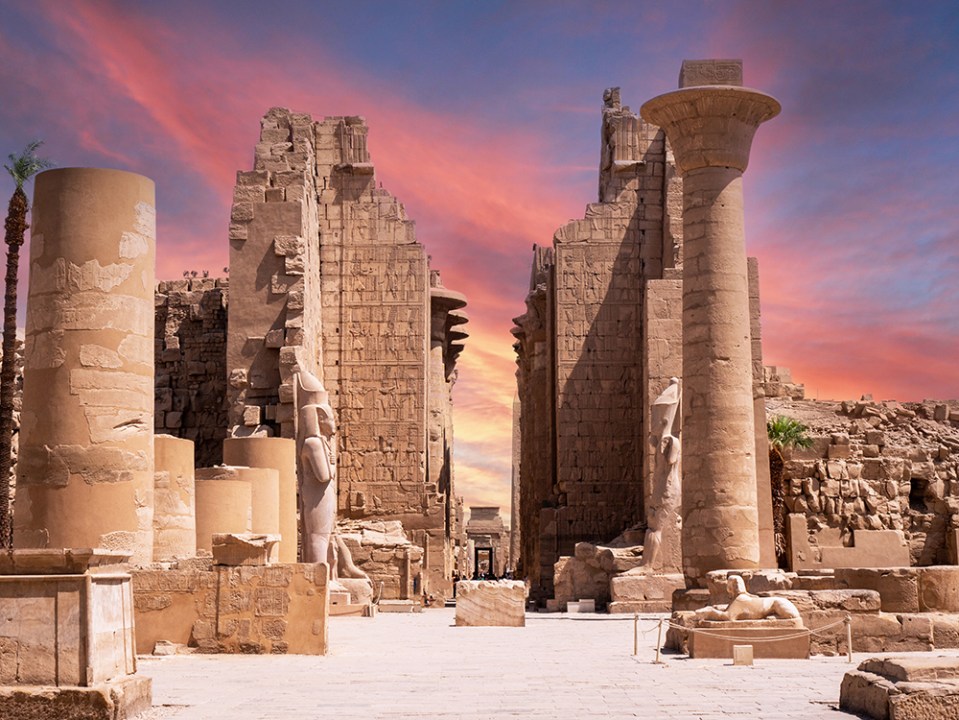
Kathleen has previously enjoyed an excursion into a tomb along a richly decorated underground passage. A bored and resentful Robert attributes his wife’s enthusiasm for what he describes as ‘these morbid and ridiculous images’ to her astrocytoma, whereas Alan ‘loves the fervour ignited in her by whatever it was she found resplendent in these indecipherable corridors’. If the hieroglyphs and images remain largely unreadable, this is unmistakably ‘a passage that would lead at last to death’, and the novel’s title reverberates throughout the book. As well as the trip from England to Egypt and this literal passage and what it represents, there is a preoccupation with the passage of time, which alters everything and is enacted by a group of black-veiled actors trooping across the stage in Ashraf’s play.
The novel is also an investigation of identity, of the perhaps unanswerable question of who we really are and what of us will remain. Kathleen’s tumour is pressing on her hippocampus, which we now know is responsible for memory; but the ancient Egyptians believed that it was the heart that remembered things, and so left it inside mummified bodies, while the brain was merely siphoned out through the nostrils and thrown away. Watching the surgeon probing his wife’s brain, Robert is ‘struck again by the mystery of this infinitely complex machine that somehow projects the illusion of a coherent self’. This is not something he finds relatable to Kathleen in their everyday life. As an actor she creates characters by committing to memory the words from which playwrights have constructed them, and then reproducing those words and embodying those invented people on a stage. Robert consequently finds Kathleen unknowable, and excuses his infidelities by claiming that it is she who has deserted him with her ‘self-displacement into what was surely the facile irresponsibility of the theatre, the pretence of being someone else’.
Here, as elsewhere, Thubron catches Robert’s deadening rationality perfectly, while his portrait of Alan, a man who has never really recovered from romantic disappointment as a teenager, is oddly moving. As one would expect, he also writes brilliantly about Egypt in a subtle and compelling novel that, for all its brevity, brings science, psychology and different religious beliefs to bear on the question of what makes us who we are.





Comments