
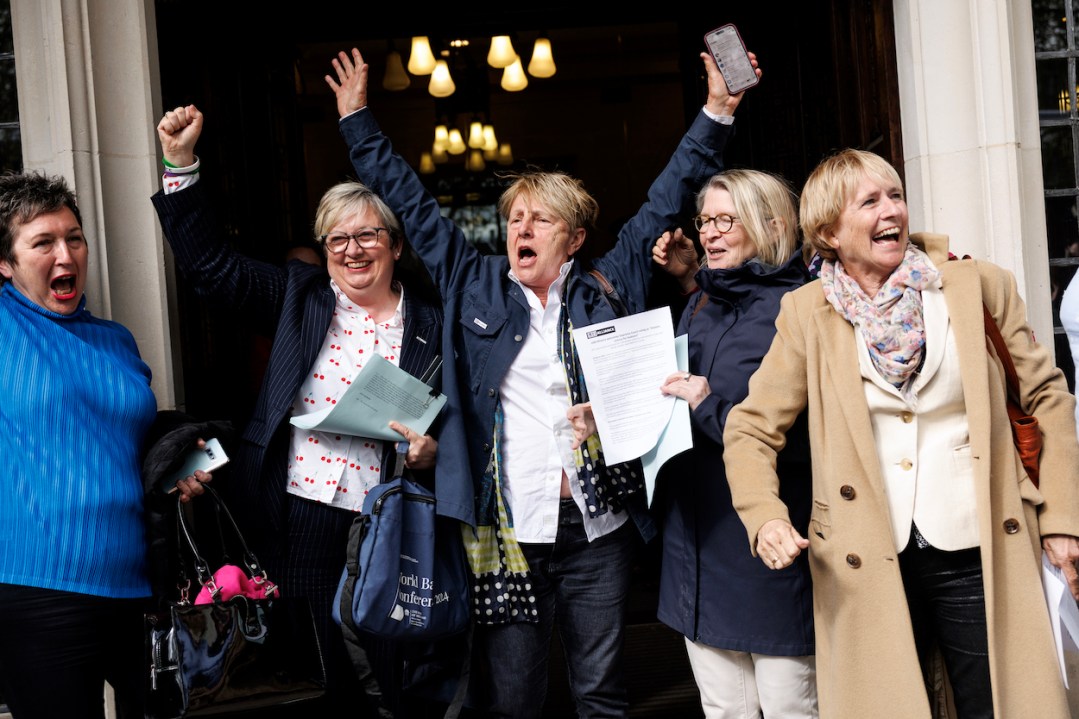
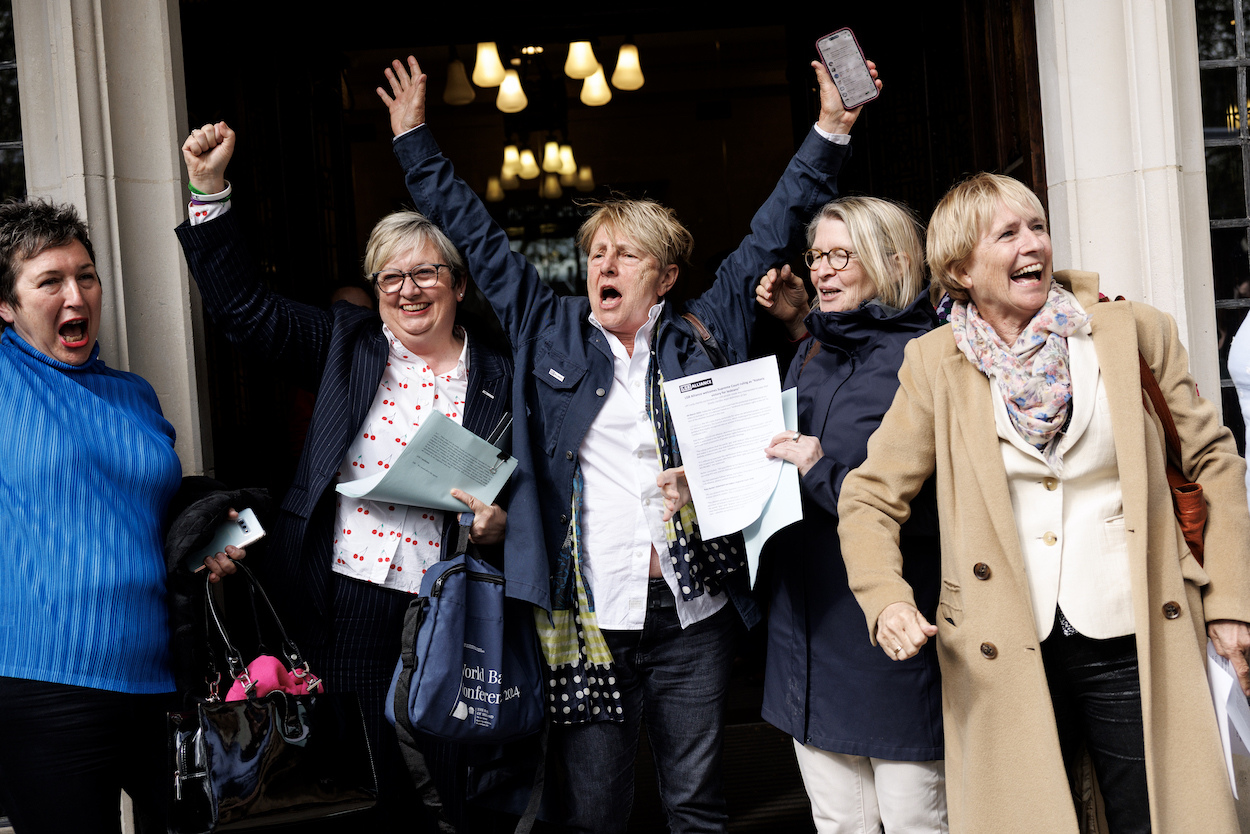
Here is a lesson in power. One year ago today, the Supreme Court handed down its judgment in For Women Scotland v. the Scottish Ministers, concluding that for the purposes of the Equality Act 2010 ‘sex’ referred to biological sex and not ‘certificated’ sex. That is, a woman is someone who was born a woman and legal rights and protections specific to women (e.g. single-sex spaces) cannot be opted into by men who ‘identify’ as women. The judgment was, I wrote on Coffee House that day, ‘a victory for women’. But was it?

One year on, policy and practice have yet to catch up with the law. True, there has been progress, such as Girlguiding remembering the first syllable in its name, but these victories stand out because they are uncommon. In the main, the response to For Women Scotland has been respectful non-compliance, with public bodies – the Scottish government comes to mind – stressing their acceptance of the judgment and eagerness to uphold the law even as they drag their heels on putting the judgment into practice. This is typically accompanied by some disingenuous verbiage about the importance of getting the necessary changes exactly right, or the need to await further guidance or review, when the object is in fact stalling for time until a strategy can be settled upon for mitigating and minimising the court’s judgment. The longer-term goal is to amend the Equality Act to invalidate For Women Scotland, but that will have to wait for a more favourable political landscape.
Progressivism is a moveable feast. On almost any other issue, the failure of governments, public services, NGOs and even private enterprises to comply with a Supreme Court ruling would horrify the very progressives hellbent on resisting the For Women Scotland judgment. There would be ominous speeches in parliament, fraught essays in liberal newspapers, interventions from organisations self-appointed to uphold ‘norms’, ‘democracy’ and ‘the rule of law’. Political scientists and legal academics would do a roaring trade in Newsnight appearances and Bluesky threads.
This is different, of course, because this time the Supreme Court was wrong, which is to say its interpretation of the law was at odds with the political objectives of the left. I mean, isn’t that the whole point of having a Supreme Court, to vindicate the Good People and their Good Ideas while putting a stop to the Bad People and their Bad Ideas? More reflective minds within the progressive space might wonder if paying lip service to a Supreme Court judgment while refusing to implement its conclusions is a wise strategy. The Golden Rule of progressivism is, ‘It’s okay when we do it’, but their opponents are not bound to observe this convention. In time, there will be a political establishment of a different hue, and it too will be frustrated by court judgments it wishes to ignore, and it will be able to draw on the For Women Scotland go-slow as a blueprint for how to proceed.
Then again, perhaps we shouldn’t rebuke progressives too harshly. Perhaps, instead of undermining our political system, they are merely revealing how that system works. Much as we might tell ourselves, and dearly wish it to be so, that the liberal order is a creature of norms, democracy and the rule of law, it is striking how easily those considerations can be set aside when they fail to produce the outcomes desired by the ruling elites of the day. The decisive factor, then, is not law or democracy but power. The elites have power – political, cultural and, most importantly, institutional – and when they determine to do so they can wield that power to entrench their ideology and shield it from all comers, whether at the ballot box or from the highest bench in the land. The only real authority of a court is the deference its rulings command. A Supreme Court judgment is a flimsy thing compared to power and the determination to use it.
Women might not have won and gender activists lost as conclusively as it seemed a year ago, but the real losing party in For Women Scotland has been the Supreme Court itself.






Comments