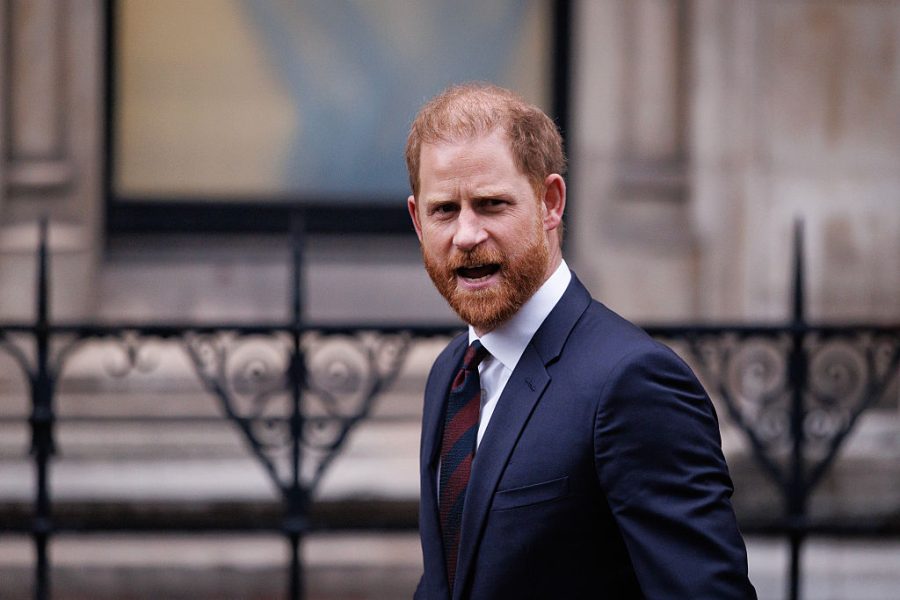
When Prince Harry left the witness box at the High Court this afternoon, it was observed that he was ‘visibly emotional’. The Duke of Sussex was there to give evidence in his group legal action against the Daily Mail publishers Associated Newspapers a day earlier than expected.
There is inevitably a certain amount of personal toil involved in any high-profile legal case – where the stakes for whichever side wins are considerable, both financially and reputationally. But the Duke of Sussex’s emotive, even angry appearance in court today made it quite clear to any onlooker that his motives were deeply personal. It appears that victory for him would represent a spectacular vindication of a quest that he has been on for years.
Whether Harry will obtain this victory as easily as he has won out-of-court settlements from other news organisations that have been accused of hacking into his mobile phone in order to obtain confidential information remains to be seen. During the course of his evidence today, he was visibly angry. When he was asked, as a courtesy, how he should be referred to, Harry snapped ‘same as last time’. He also made it quite clear how vehemently opposed he was to tabloid journalists, gossipmongers and, by implication, the well-paid lawyers who are arguing the opposing side of the case on behalf of the Daily Mail.
More than once, Harry went too far, even by his standards
More than once, Harry went too far, even by his standards. The judge, Mr Justice Nicklin, had to remind the man who was once third in line to the throne that ‘you don’t have to bear the burden’ of acting as his own legal counsel. Instead, he said, he had to answer the questions put to him in as clear, factual and neutral a fashion as he could. We learnt, for instance, that Harry ‘wasn’t allowed to complain’ when stories about him were published in the press – such is the Firm’s maxim of ‘never complain, never explain’ – and that he regretted not speaking up at the time. He clearly resented Associated Newspapers’ silky KC Anthony White, and when asked why he did not make more of a fuss when the pieces were published, sneered, ‘Hindsight is a beautiful thing, Mr White.’

The Duke of Sussex may not have been Oscar Wilde in the witness box, but then nor did he have to be. He frequently argued with the judge, claiming that the emotive tenor of his evidence was essential ‘when you’re under 24 hour surveillance’. He spoke candidly about his motives for bringing the case, which he suggested were to engender ‘truth, justice and accountability’ in the press. He had particularly scathing words about the Daily Mail’s royal correspondent, Rebecca English: ‘I remember Rebecca English as a young journalist at the time, trying to make a name and career for herself through the use of my private life, without shame’.
Yet it was in the final section of the cross-examination by his own barrister, the charismatic David Sherborne, that Harry gave the fullest vent to his feelings, perhaps because he felt he was in sympathetic hands. He declared that:
Having my life, like others, commercialised in this way since I was a teenager, delving into every single aspect of my private life, listening into calls, blagging flights, so that they could find out where I’m going. It was a time then when everybody was in competition with each other.
To sit here and go through this all over again and have them give their own defence and claim that I don’t have any right to any privacy is disgusting.
He remarked that ‘it’s got worse, not better’ throughout his life. ‘I’ve never believed that my life is open season to be commercialised by these people.’
And then, in his parting words, perhaps the truest indication of why the case had been so assiduously prosecuted came to light. Associated Newspapers, the Duke spat, ‘had made my wife’s life an absolute misery’. With that final remark, Harry finished his evidence and left the witness box.
There will inevitably be far more drama courtesy of the other A-list figures involved in the trial. But whatever happens over the coming weeks, and whatever judgement Mr Justice Nicklin eventually arrives at, it is perfectly clear as to why the Duke sees this case in such emotive, even vindictive terms. Whether this is the same thing as deserving to win remains to be seen.



Comments