
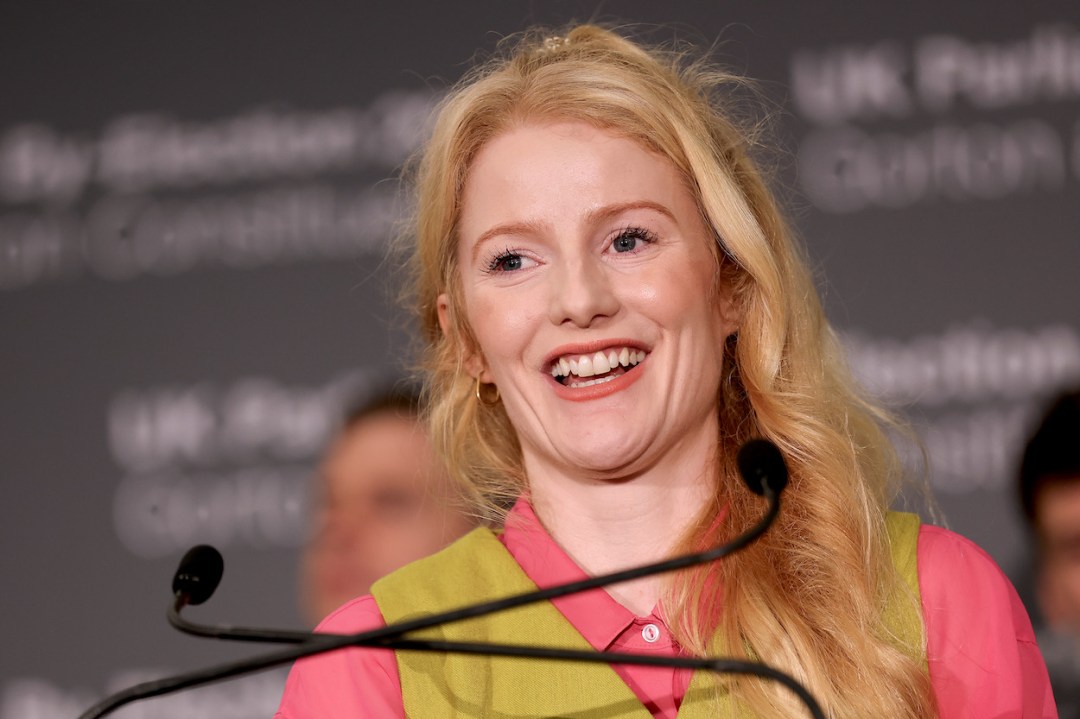
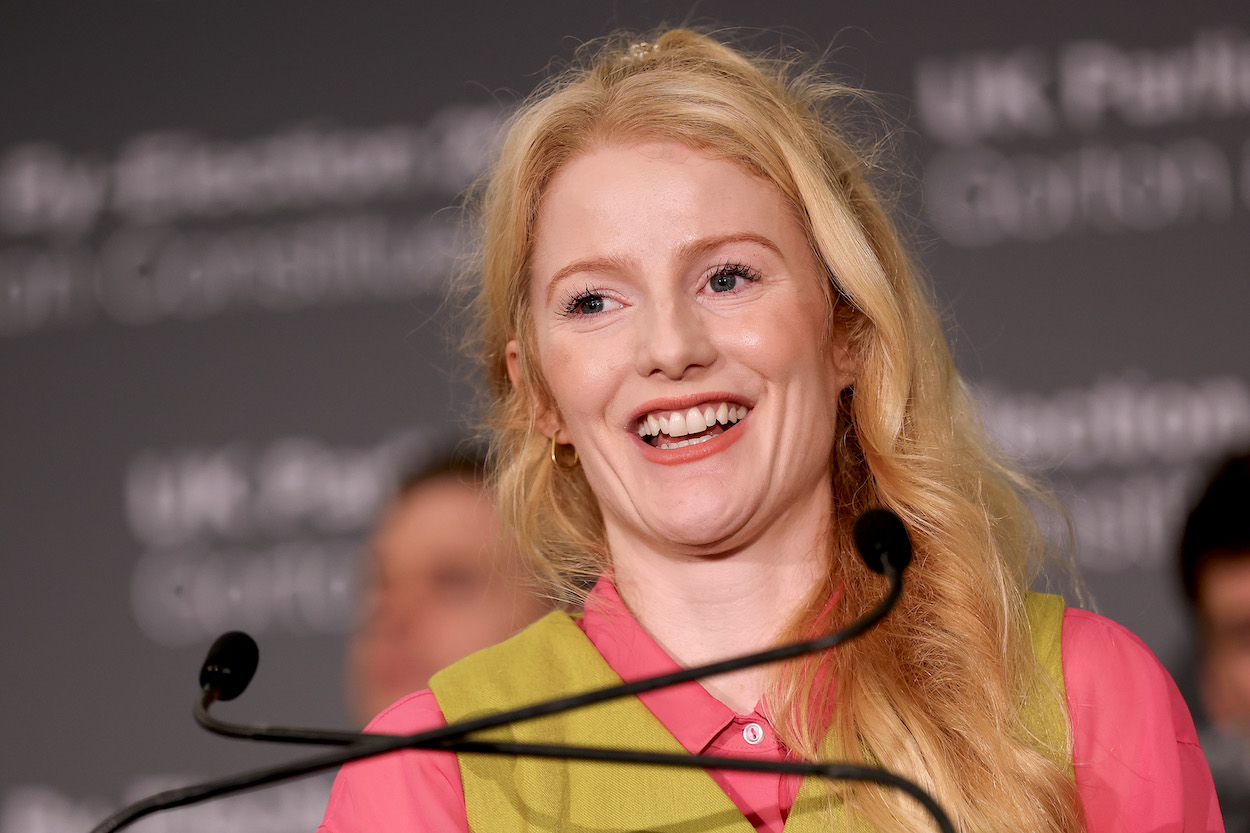
Politics students of the future – if there are any who can see the full length of study without recourse to industrial amounts of anti-depressants – will study the Gorton and Denton by election, which saw the Greens’ Hannah Spencer beat not only Labour but also Matt Goodwin of Reform.
So they all appeared in the early hours of the morning for one of the last vestigial rites of functioning British democracy: the leisure centre humiliation. A visibly graceless Mr Goodwin stood there, looking like a waxwork of the acid bath murderer. The Monster Raving Loony man looked positively normal.
The main thrust of Ms Spencer’s speech was that she offered ‘hope and a chance to do things differently’. It was a masterclass in what I like to call ‘tweeslop’; a mobilisation of the British people’s worst instincts for sentimentality and self-congratulation. ‘We don’t have to accept being turned against each other’, she said, which will be news to her party’s social media people who marked this Mike Leigh-style grassroots heartwarming local campaign by plastering videos with the image of Sir Keir Starmer meeting Prime Minister Modi of India. We were only fortunate that she didn’t break out in a strangulated rendition of ‘Don’t Look Back in Anger’.
Inevitably the tweeslop continued. ‘People like us will finally get a seat at the table’, again feeding into a myth that there has been no representation of people from working class backgrounds in British history until the good people of Gorton and Denton chose a woman who was picked as one of the best dressed people at Glastonbury Festival 2013 and first entered politics through a campaign to shut down her local dog track.
Ms Spencer claimed that her primary motivation in politics was the belief that ‘everybody should get a nice life’. She kept on using the word nice: which, along with ‘kind’, has become part of the invidious, impossible to disagree with adjective dyad which now dominates the meaningless fluff of public – and especially social – discourse. The problem is that the increased use of these Fotherington-Thomasian words masks the reality that the world is less kind and less nice, not least because of the efforts of those who use the words most. See also those who speak about division but sow it and those who claim to offer hope but make you want to stick your head in a bin full of sick until the thrashing of your limbs finally, blissfully, ceases.
Ms Spencer, reading from her hot pink encased iPhone, embodies this better than any politician of recent years. She talked a lot about having qualified during the campaign as a plasterer. How appropriate. It is the job of a plasterer to apply a smooth and aesthetically palatable outer coating to the structural nastiness beneath. This is what the Greens have achieved at Gorton and Denton. With a mask of tweeslop; all flash mobs and ‘messages of hope’ – they have mobilised a campaign so cynical, sectarian and divisive that international electoral observers have expressed concern. Goodwin’s bitterness is fairly understandable, given that during the campaign Ms Spencer had tried to blame him personally for the Manchester Arena bombing. It’s amazing the lunacy that can be expressed beneath a tweeslop veneer.
‘Everyone seems to have underestimated how similar we all actually are,’ said Ms Spencer, in the midst of her sub-Paddingtonian deluge of meaningless platitudes. Other parties – Labour especially but also a somewhat bruised Reform – will try to say that Gorton and Denton is an outlier, to be ignored. But I suspect that Ms Spencer is correct. We are all now more similar to the constituency and the political set-up which she now represents. The dominance of the old representatives of sort of left and sort of right is over: Britain now has the political sectarianism of Lebanon, but with the twee aesthetic veneer of Legoland.
Comments