
Perhaps the biggest talent of humanity is our gift to adapt to challenging circumstances with creativity and ingenuity. It may also be our biggest fault.
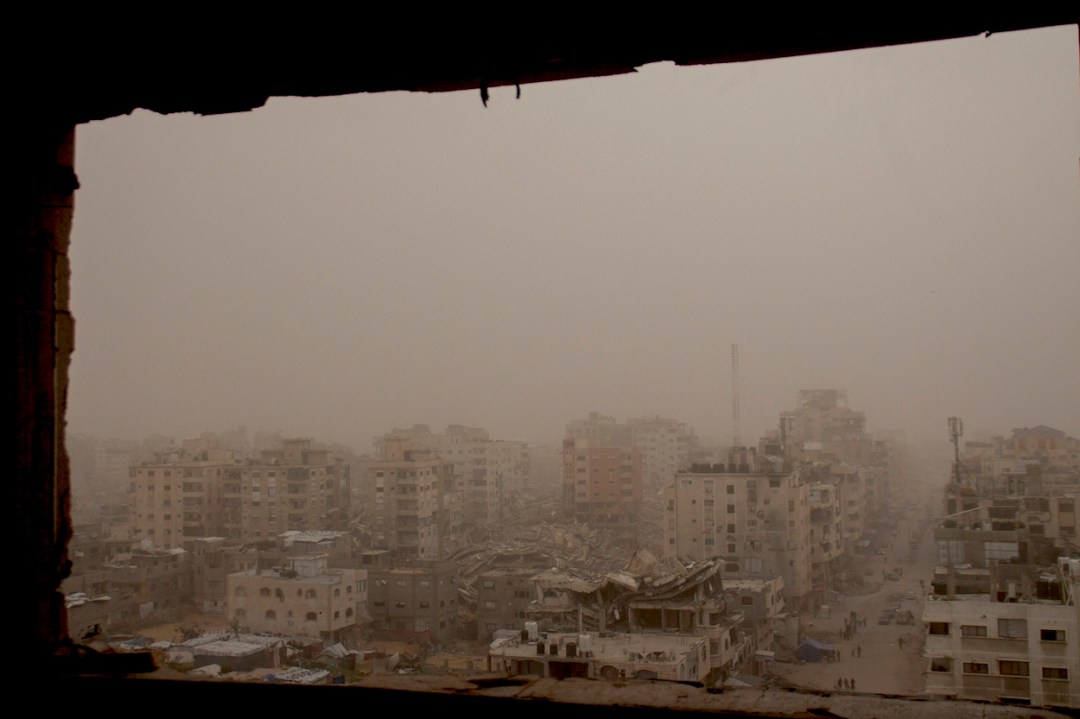
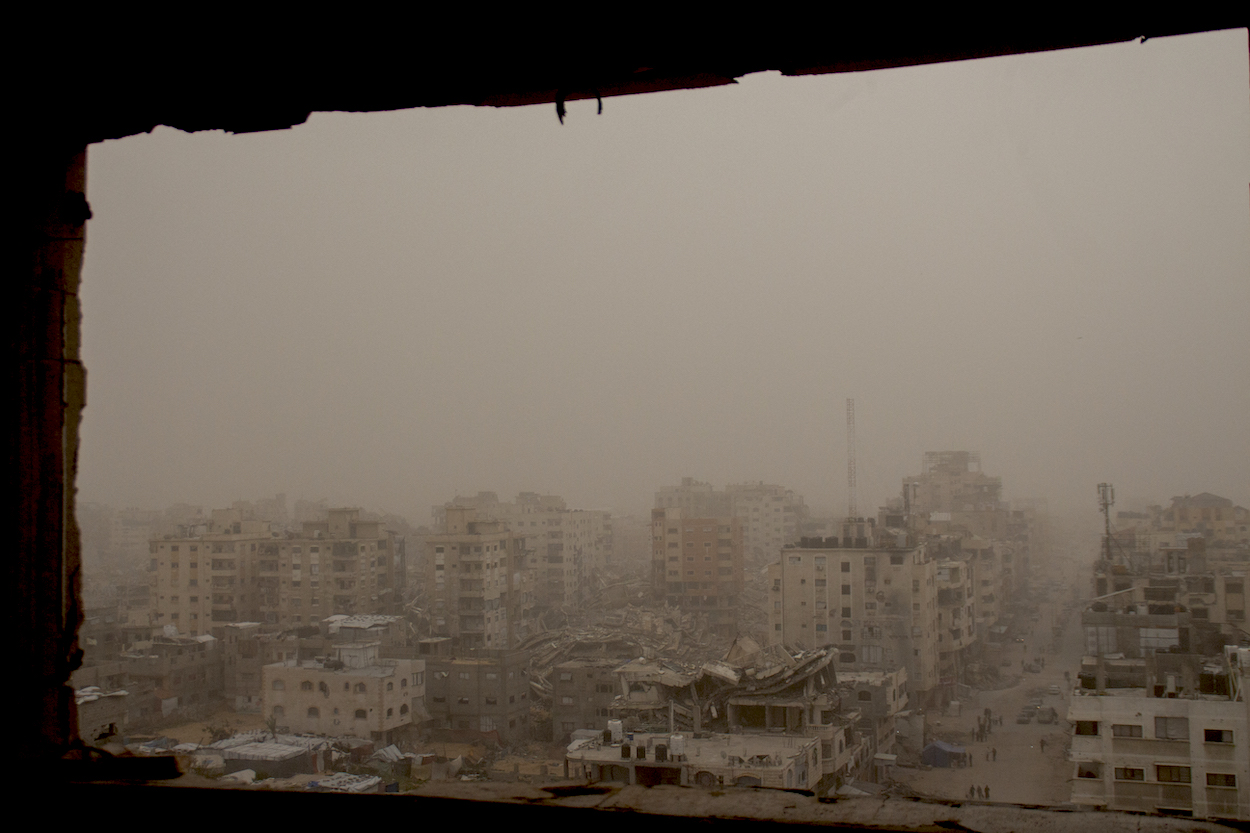
Just two days after I stood in the central Gaza Strip, touring the area and seeing the Yellow Line for myself, the IDF on Saturday announced another serious breach of the ceasefire.
The Yellow Line is a mutually agreed demarcation. Both Israelis and Palestinians are supposed to remain on their respective sides. When I was there last week, officers explained how frequently that boundary is tested. They spoke about sniper fire, explosives planted near positions, and attempts to edge forward under cover. The pattern, they said, is persistent. Israel holds its fire unless a clear threat emerges. Hamas probes.

Saturday’s incident fits that description with uncomfortable precision.
According to the IDF: “Several armed terrorists were identified in the northern Gaza Strip, most likely after exiting underground infrastructure in the vicinity. The armed terrorists took cover under debris east of the Yellow Line and adjacent to IDF troops, posing an imminent threat to their safety.”
The response was immediate. Following the identification, the IDF “struck the armed terrorists and eliminated two of them, likely eliminating additional terrorists.” The statement concluded: “This incident constitutes a blatant violation of the ceasefire agreement.” The language is firm. The pattern is familiar. But are they for real?
Before October 7, 2023, Hamas refined a strategy of sustained pressure that did not rely solely on rockets. After Israel completed its disengagement from Gaza on September 12, 2005, rockets were fired the very same day toward Sderot and nearby communities in southern Israel. Within weeks, larger barrages followed. Between 2005 and 2008, Qassam rockets struck southern Israel regularly. Israel responded with air strikes, targeted killings, artillery fire and limited incursions. When rocket fire intensified significantly, operations expanded, as in 2006 and again in late 2008.
Over time, the exchanges settled into rhythm. Rocket fire. Air strikes. Temporary escalation. Ceasefire. Repeat.
After 2011, when Iron Dome became operational, Israeli civilian protection improved dramatically. Interceptions increased. Civilian casualties dropped. Daily life in much of the country continued despite routine launches from Gaza. Bomb shelters became standard in homes near the border. Sirens were absorbed into normality – almost like a minor inconvenience. Missile defense allowed Israel to contain rather than immediately escalate. Israeli ingenuity had created a system to make the abnormal normal, the intolerable tolerable, the unlivable livable.
Containment has a strategic logic. It preserves resources, avoiding wider war and buying time. But it also carries a cost.
During the same years, Hamas invested heavily in underground attack tunnels designed for infiltration and kidnapping. Several were discovered and destroyed, particularly around the 2014 war, yet the effort continued. The Palestinians too used their ingenuity to transform ordinary items of humanitarian aid and day to day life into lethal weapons. In 2018, incendiary kites and balloons, sometimes even improvised with inflated condoms for lift, were launched in large numbers toward Israeli farmland and nature reserves, igniting fires and damaging livelihoods. Border demonstrations blurred into attempts to damage infrastructure or cross into Israeli territory. Each tactic maintained pressure below the threshold of full war.
From Hamas’s perspective, this sustained a narrative of resistance while avoiding total confrontation. From Israel’s perspective, limited strikes and defensive systems managed the threat.
Many Israeli analysts now argue that this long period of management hardened into complacency. The state became adept at interception, warning systems and targeted responses. What it did not do was decisively remove the governing force in Gaza. After the disengagement from Gaza, the argument was that once Israel removed every single soldier, civilian and corpse from the strip, the slightest aggression emanating from there could be met with a thunderous response and the world would understand. But that never happened.
The result was October 7: around 1,200 people killed and 251 taken hostage in a single coordinated assault. Two years of grueling war. A wave of international Jew-hatred.
Many inside Israel now recognize that deterrence eroded gradually, and though warnings were issued, and promises were made that those responsible would pay heavily, the cost imposed never fundamentally altered Hamas’s strategic calculus. The same now: another breach. Another statement describing a “blatant violation.” Another limited strike. Israeli forces continue to search the area. But the ceasefire formally remains in place. It is for this reason they want incidents like Saturday’s Gaza incursion to resonate beyond their immediate tactical scale.
The question is how long this equilibrium can endure. Israel is keen to demonstrate patience: it has no more hostages in the strip, dead or alive. It is comfortable letting America negotiate and threaten Hamas into demilitarization, as agreed. Israel has surrounded Hamas on every side so that it cannot re-arm or rebuild in any real sense. The Palestinians in Gaza pose little to no real threat to Israel in this current situation. If and when the US efforts to demilitarize Hamas fail, Israel will have the opportunity to go in and take care of it themselves. They are in no rush.
Extremist movements operate through increments
Israel will use repeated violations like Saturday’s to build publicly the case for their renewed military action, banking it for when that time comes. They are keen to show Hamas is testing their restraint daily. But that only works if they do carry through, if they aren’t complacent about their strength.
There is a wider lesson here. Societies adapt to chronic threats. In Israel, the Iron Dome allowed daily life to continue under intermittent rocket fire. Throughout the Western world, repeated jihadist plots and attacks have been met with more monitoring of suspects and vigils affirming our love for “diversity.” Synagogue attacks (foiled and successful) are met with more funding for more security. More CCTV is put up. Doors are reinforced. More concrete flowerbeds are planted. Over time, abnormal conditions become administratively manageable. Physically, it might make us safer, but it is also dangerous.
Extremist movements operate through increments. A rocket here. A tunnel there. A balloon drifting across a fence. A breach under rubble. Each act tests tolerance. Each restrained reply informs the next move.
Israel now stands at a delicate point. It seeks to uphold the ceasefire and avoid immediate escalation, giving the US time to pursue its carrot and stick approach with the Palestinians in Gaza. It also carries the memory of what accumulated restraint produced in October 2023. So the Yellow Line still stands, and the ceasefire technically holds.
But eventually, the equation must and will be altered permanently by real, decisive, visible victory. We in the West must also learn from that Israeli resolve and determination for victory. Anything else recreates the conditions that lead to violent collapse.



Comments