Amongst many men of my acquaintance, this season’s biggest blockbuster is not The Odyssey, but the new French epic De Gaulle. The first part, entitled Résistance, was released in British cinemas last month and has immediately become a cause célèbre with the kind of people who grumble that there hasn’t been a great war movie since the halcyon days of Where Eagles Dare and The Great Escape, and that the recent vogue for downbeat revisionism has meant that stirring and heroic tales of national fortitude have gone out of vogue. The second part of the story, Liberté, was released on 18 September. Presumably it, too, will find a ready-made audience, ready to thrill to the battle scenes and psychological duel between Simon Akbarian’s De Gaulle and Simon Russell Beale’s Churchill.
There was once a steady supply of iconic pictures being made from an industry that ploughed its own, distinctly Gallic furrow
Anything that gets audiences to arthouse cinemas to see a mainly subtitled film has to be applauded. But I cannot help feeling nostalgia for the old days of French cinema, stretching roughly between the great work of Jean Renoir in the Thirties and the mid-Nineties, when Luc Besson decided that he had had enough of making French-language films and was going to try his luck in Hollywood instead. In between these points, there was a steady supply of iconic pictures being made from an industry that coolly scrutinized American excess and British repression and ploughed its own, distinctly Gallic furrow to come up with perhaps the most stylish cinema that has ever been made.
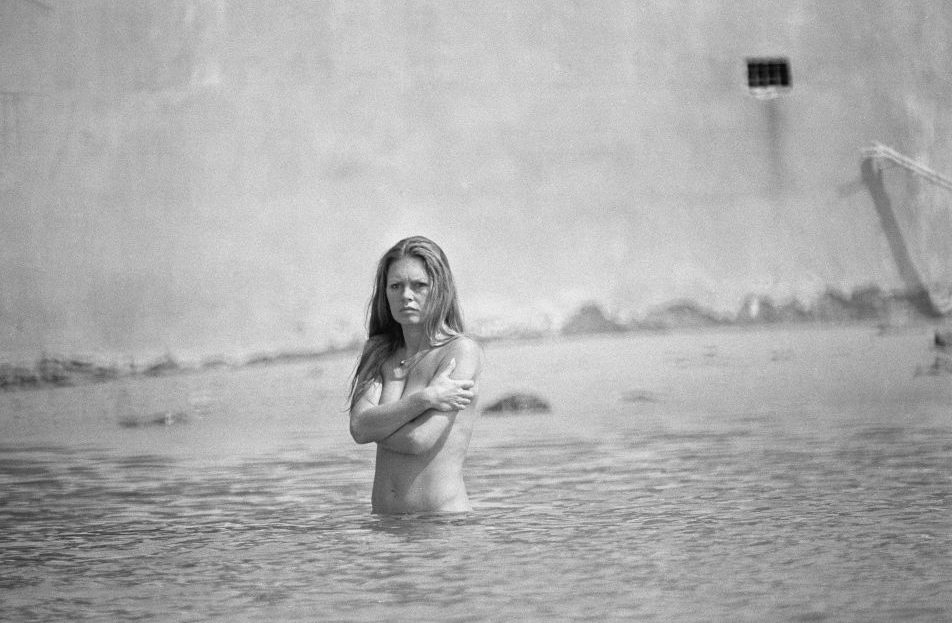
The first wave came in the late Fifties and early Sixties, when stars like Jean-Paul Belmondo, Brigitte Bardot and Catherine Deneuve emerged with impossible grace and style in such pictures as Breathless, The Umbrellas of Cherbourg and the instantly notorious And God Created Woman. These actors and their directors – who were often either married to or having affairs with their leading ladies – became the finest ambassadors for French style that the country might ever have hoped for, single-handedly embodying a shrugging sense of casual cool that simply could not be equalled by British and American actors. Even Marilyn Monroe, screen siren that she was, had to appear in comedies that made fun of her sex appeal. Bardot simply presented her unparalleled sexual magnetism on screen and invited audiences to gaze longingly at her. Many, including legions of young men who were theoretically too young to watch her X-rated debut, happily accepted the challenge.
The next point at which French cinema strayed from the arthouse and into the bedroom was in the early Eighties, when directors like Besson and Jean-Jacques Beineix invented the so-called ‘Cinéma du Look’, which deliberately abandoned intricate plots and deep characterization in favour of films that prioritized style above all else. These pictures nodded to America, where MTV and a new range of advert and music video-trained directors were using equally flashy techniques to the horror of traditional cineastes, but in their existential torpor and implicit social criticism of the Mitterrand era, they were both uniquely French and impossibly chic.
It helped that their marketing departments were adept at producing posters that looked stunning on the bedroom walls of adolescents who desperately wanted to show their hip credentials. Even if you never saw Betty Blue or Diva, if you had been young in the Eighties or Nineties, you would recognize images from those films in an instant. With their moody, enigmatic and, of course, extremely good-looking stars, they promised their curious audience an escape into a world that was far more magical than a dozen fantasy pictures. Going to see these films, which either required a trip to an arthouse cinema or repertory fleapit, was far more of an adventure than a jaunt down to the Odeon to see Turner and Hooch or whatever inoffensive piece of American product had been released that week.
It is hard to know when the decline in French cinema’s stylishness set in. It may be since Gérard Depardieu, one of its great icons, has gone from being regarded as one of the world’s finest actors to an oafish sexual predator. His conviction for sexual assault last year seems to have put an end to a career that, in its heyday, produced such cinematic classics as Cyrano de Bergerac and Jean de Florette: themselves both pictures that produced similarly iconic posters. Or it may be that in the twenty-first century, French films have found themselves becoming increasingly Americanised and slick.
It is not for nothing that Bienvenue chez les Ch’tis and Les Intouchables, the country’s highest-grossing home-grown pictures of the past couple of decades, are both broad comedies that deal, respectively, with a post office manager learning that life in Northern France is not as basic as he had imagined, and the relationship between a wealthy quadriplegic and his French-Algerian carer. The latter picture met with incomprehension when it was released internationally, but the French flocked to it in their tens of millions: proof, perhaps, that cultural sensitivities and humour alike do not always travel.
One French export that still flies the flag for Gallic style is the brilliant television series Call My Agent!, which has just been turned into a feature-length film for Netflix. In its study of essentially decent but hucksterish talent agents who are frantically managing their interpersonal relationships and diva-like clients alike, it is a welcome reminder that French cinema has always had an edge to it that our own home-grown efforts lack. Tellingly, Ten Percent, the British version of the show, flopped.
It is a sign of the times that Call My Agent’s most irrepressible star, the suave Mathias, spends much of the film having to atone for his misdeeds, not least having underestimated his younger partner Noémie. She leaves him and has sex with a younger man to teach him a lesson. Mathias has to swap his sharp suits for the kind of leisurewear that no man over fifty should ever wear in order to show that he is a changed character.
It is important that any kind of cinema – not just French – moves into the modern era and that, in our post-#MeToo age, the kind of casual chauvinism (or worse) that was a feature of these pictures on and off-screen is no longer present. But even as my peers flock to the De Gaulle films, where men are men and where moustaches are heroic rather than sported by hipsters, I cannot help feeling a wistful longing for Betty Blue and its ilk, and for a time that, I fear, will never come around once more.






Comments