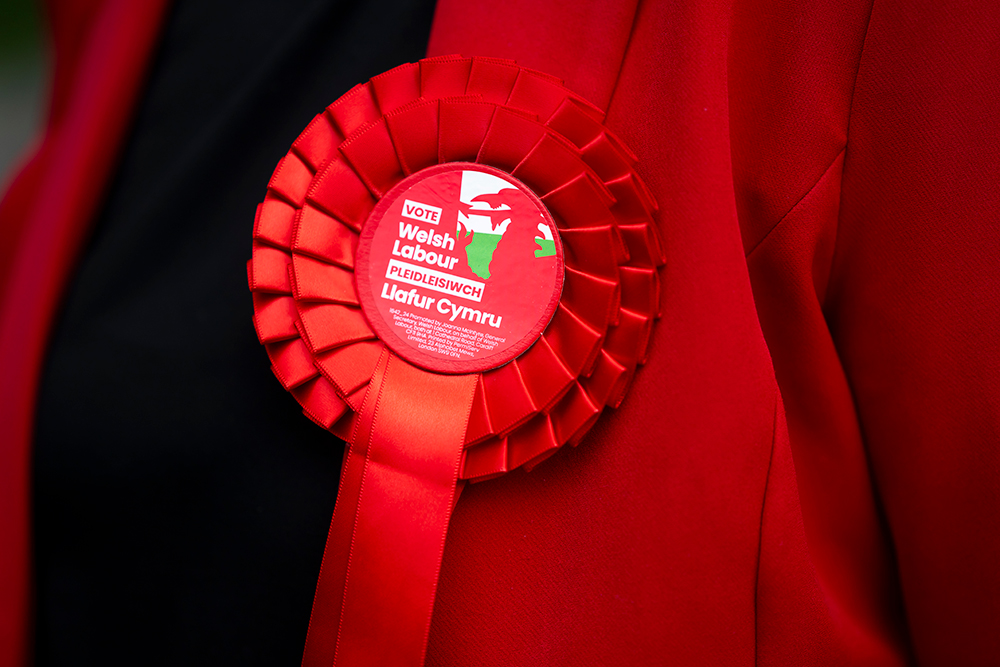


Of all Labour’s heartlands, none has more mythos or magic than Wales. Its history of pits and pulpits produced Nye Bevan and Neil Kinnock; a quarter of the party’s leaders have held seats here. More than a century ago, Keir Hardie forged Labour’s rise from the Valleys in Merthyr Tydfil. In a fortnight’s time, those same valleys could finish his namesake off.
A focus group there one recent Friday night reveals just how bad things are for Keir Starmer’s party. In a community centre, surrounded by gym equipment and sports trophies, voters asked where it all went wrong. ‘I had complete faith when Labour got in this time and nothing seems to have happened,’ remarks one woman.
Each of the eight voters in the group backed Labour in 2024 – but all were now mulling change. Having topped every Welsh election since 1999, Starmer’s party could come third on 7 May. Voters blame economic pressures but also the government’s failures. New answers are sought. The overspill of asylum seekers from Cardiff is raised by one woman: ‘People are getting pushed further and further up the Valleys… Merthyr in particular, because it’s a cheaper place to live, is being used as a dumping ground.’
The willingness to embrace change is a story playing out across Wales. I attended five focus groups with More in Common and, despite queasiness about Labour, no voter openly said they would back Nigel Farage’s Reform UK on 7 May. Several disparaged the surge of Conservative defectors: what impresses in Tory shires might fare less well in the Celtic fringes. But a decent chunk admitted to concerns around ‘infrastructure’ and ‘integration’, suggesting a potential ‘shy Reform’ vote in the tradition of ‘shy Tories’.
Farage’s party is battling it out with Plaid Cymru for first place. Both want to frame the race as a binary contest, amplifying each other and asphyxiating rivals. Both plan to go big over the next two weeks: Plaid on billboards in the Valleys; Reform on newspaper adverts. Some within Welsh Labour fear ‘Ulsterisation’ – the same process by which the moderates of the centre lost out to Sinn Fein and the DUP.
This downfall is partly of Labour’s own design, thanks to the introduction of D’hondt voting, a complicated system that favours larger parties over small ones. When Welsh Labour first proposed it in 2022, the party seemed hegemonic and believed it would be the beneficiary. But now that Labour has slipped to third, D’hondt will likely harm the party’s chances. Polls fluctuate wildly, giving it anywhere between 12 and 24 seats. ‘D’hondt is just a messy bitch who lives for drama,’ says one former special adviser.
In Port Talbot, not far from the now-empty steel works, a group of women fret over the future. ‘I feel like the world is getting smaller,’ says one, cradling her baby. ‘When I was a teenager, we could still just go to Europe and work for a little bit. You can’t do that any more… I just feel like opportunities have been taken away.’ The lady beside her reels off the cost of groceries: £4.50 for a pack of six eggs, a can of coffee now £8.50.
Many of the voters I meet were willing to vote for Starmer in 2024. The overwhelming sentiment is of disappointment: ‘indecisive’, ‘backtracking’, ‘not strong enough’ are phrases all used. Sorrow, not anger, is the general tone: several wonder if he is up to the challenges he faces. Credit is given on the Iran war: ‘Kudos to Starmer,’ remarks one.
Labour’s Eluned Morgan has made little impression after 20 months as First Minister
Labour’s Eluned Morgan has made little impression after 20 months as First Minister. ‘He’s not a leader,’ says one man, confidently misgendering her. ‘He hasn’t got that presence.’ Few in focus groups regard her as a break with the past. ‘You could swear she just attended Wales for the first time,’ remarks another, ‘and you’re screaming out, like, where have you been the last 20 years?’
Reform’s criticism of the Senedd is not without support. Farage’s party casts Cardiff Bay as the embodiment of a cosy, collectivist consensus: the third sector indulged, business penalised. Wales hosts just one FTSE 100 company; hospital stays are 40 per cent longer than in England. Yet Reform’s opponents claim it is less keen on solving these problems than becoming the pre-eminent party of the right. Senior Tories – privately bracing for a rump of just seven of the Senedd’s 96 seats – point to Ukip’s Welsh blow-up. ‘They will implode within a year,’ says one.
Plaid’s appeal is one of romance. ‘There’s always a part of me that loves that kind of Braveheart freedom stuff,’ admits a Labour loyalist in Swansea. The Plaid manifesto, says another, ‘opened my eyes a lot to what we are not getting as a nation in comparison to others’. Another adds: ‘The Welsh having more say in what goes on here – obviously it does appeal.’ The horse-trading encouraged by the new voting system is making this the Viv Nicholson election: contenders are incentivised to promise spend, spend, spend.
The Swansea West MP, Torsten Bell – whose name prompts laughter in our group – sits on the Friday committee running Labour’s campaign; Downing Street is watching developments nervously, with good reason. It fears it is a trailer for the next general election, with Plaid serving as a substitute for the Greens. Third in Cardiff would be seismic. ‘Even Jeremy [Corbyn] at his worst never lost Wales,’ says an MP. Like Coolio, the valley of the shadow of death looms large for Starmer.
Within Welsh Labour, some minds are already turning to reconstruction. Morgan’s deputy, Huw Irranca-Davies, is tipped as her successor – despite insisting he has ‘no ambitions’. Renewal requires new talent, but much of Labour’s talent has already gravitated down the M4 to London.
Hanging over the contest is the spectre of 2007, the year the SNP finished top in the Holyrood elections, heralding two decades of nationalist hegemony. Whitehall figures fear a repeat. ‘The idea Wales is decades behind on the constitutional question is not true,’ says one. ‘Levels of support for Welsh independence are rocking around the 35 per cent mark, which is where Scotland was only two or three years before the 2014 referendum.’
Comparisons between the two nations can be overdone. Yet both their electorates share a sense of disgust and frustration with their political classes. North of Hadrian’s Wall, they have a word for it: scunnered. West of Offa’s Dyke, there is no such term. But on 7 May that same sentiment will be articulated nonetheless – likely to Labour’s cost.
Additional reporting: Megan McElroy





Comments