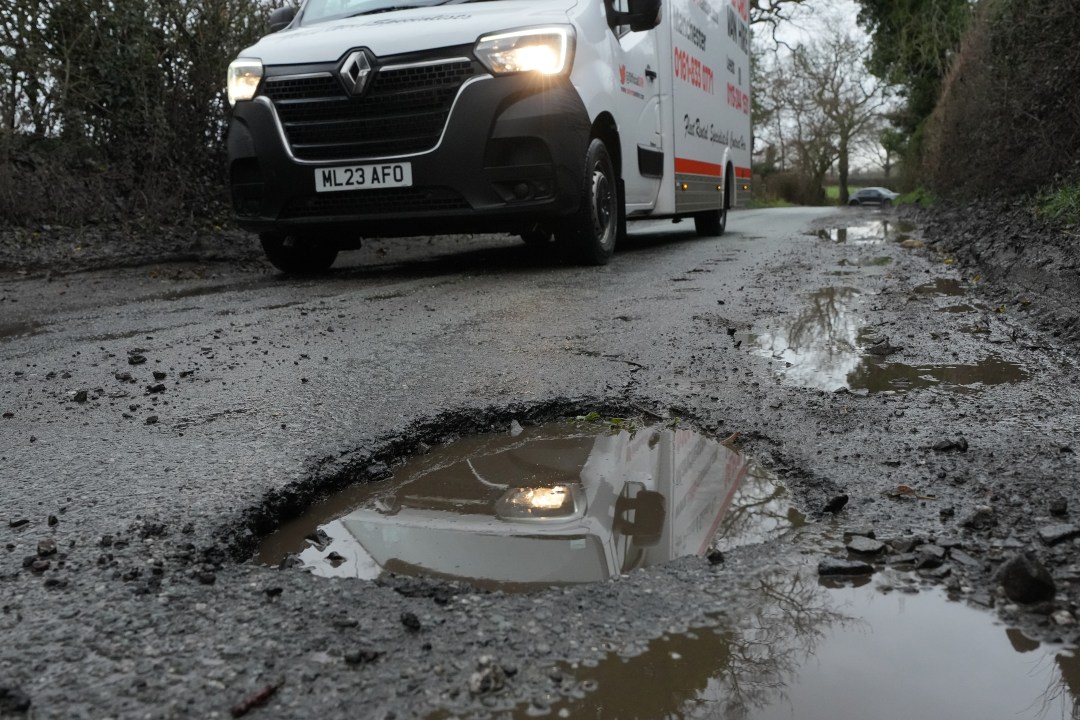
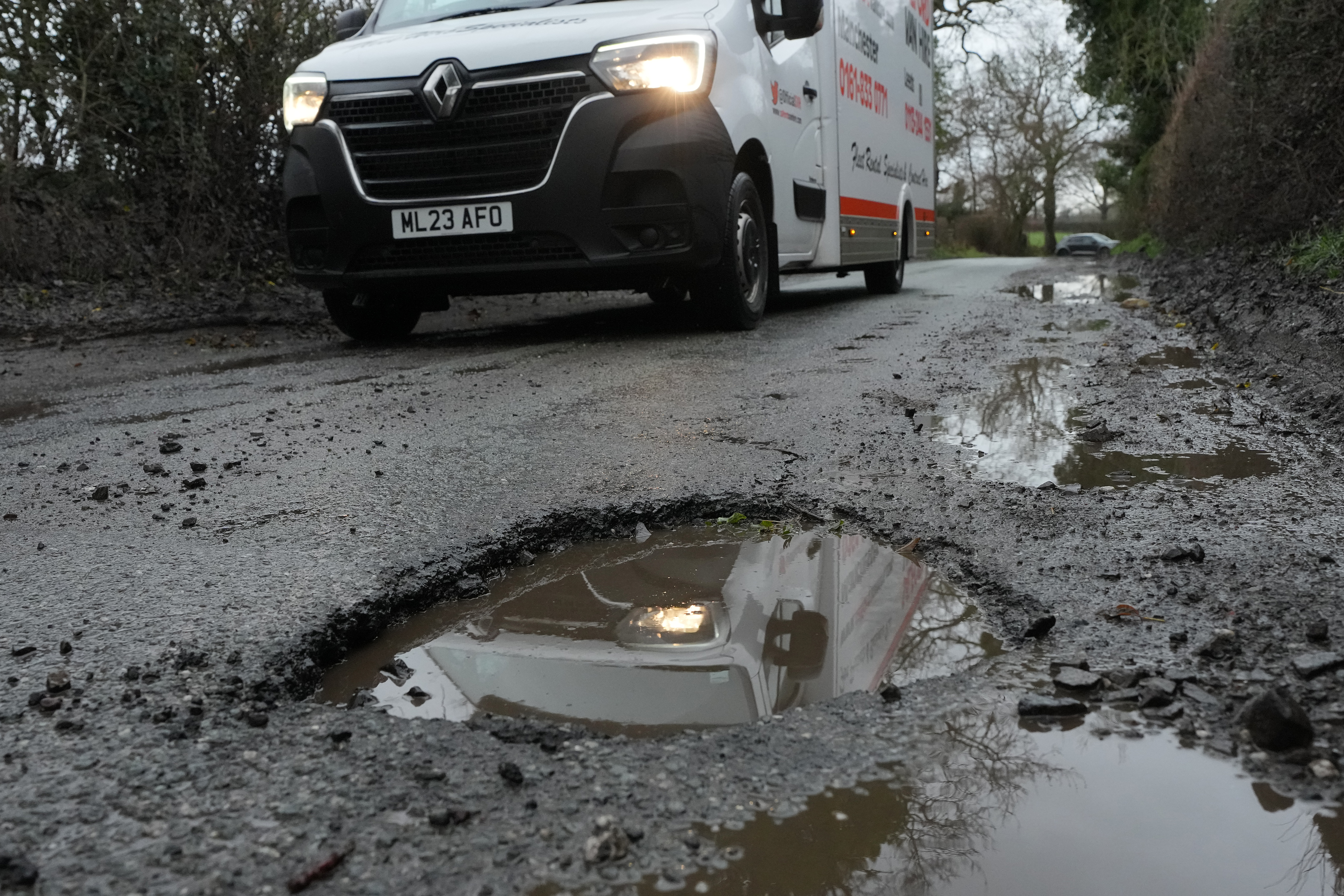
Following Russia’s invasion of Ukraine in 2022, a meme circulated on Facebook suggesting the same thing could never happen here because the potholes would prove too much of an impediment. Given the current state of the roads, I think we can safely say any invasion plans must surely now have been shelved. And thank goodness. Owing to the paucity of our armed forces, potholes would be our first line of defence. The sides of motorways would be littered with abandoned enemy vehicles if anyone were rash enough to mount a ground assault. Dazed POWs would be wondering why they’d been ordered to take over a country with a crumbling infrastructure.

Maybe it’s a cunning government ploy: instead of spending on the military, deter any land grabs by making our roads impassable. A recent BBC article suggested that £18 billion is needed to bring local roads in England and Wales up to an ideal condition. And that’s before you get to motorways and other major highways. It’s no wonder that driving these days often means zigzagging to your destination to avoid losing a wheel.
The story highlighted research by the Asphalt Industry Alliance (AIA) suggesting that roads were resurfaced, on average, only once every 97 years, and that almost one in six local roads – equivalent to over 32,500 miles – had less than five years’ structural life remaining. ‘I think all road users would agree that the condition of our local roads has become a national disgrace,’ AIA chairman David Giles is quoted as saying.
Some of the roads near me are scarcely worthy of the name. You’re thrown around as you drive along them like a particularly uneven country lane. My eldest daughter recently offered to drop our youngest and some friends off at a party out in the sticks. The following morning, I noticed that one of her tyres was flat. When I asked what had happened, she said she was on a dark road and had hit a ‘large hole’. After a futile attempt to reinflate the tyre, I took the car to the local garage. On inspecting it, the fitter said: ‘It’s not the tyre, mate. It’s the wheel. This is the umpteenth one we’ve seen this week.’ Everyone, it seems, has a similar story of craters knackering vehicles.
The near-constant rain we had for the first few months of the year has led to a spike in potholes, as water seeping into cracks forces them open. And apparently, it’s been a bonanza for garages, with increasing numbers of people needing car repairs. Indeed, a survey by KwikFit said the cost of pothole damage to UK drivers had reached a record £1.8 billion over the past 12 months. Consequently, people are turning to SUVs to get to the supermarket, which in turn is causing even more road damage.
What is to be done? I live in Bristol, where the city council, jointly run by the Greens and the Lib Dems, has, to put it mildly, other priorities. After several frustrating phone calls with a town-hall martinet, my aged father-in-law took matters into his own hands; armed with a bag of gravel and a trowel, filled several potholes himself. And back in 2022, Sir Rod Stewart made the headlines after he filmed himself fixing holes near his home in Harlow because the road had become untraversable for his collection of classic cars. Perhaps that’s the way to go. Instead of having those with Community Service Orders litter-picking or painting park benches, we could set them to repairing roads. Or we could take matters into our own hands: a citizens’ army in hi vis jackets aboard a fleet of tarmacking lorries.
It’s no wonder that driving these days often means zigzagging to your destination to avoid losing a wheel
Then again, maybe not. When volunteers recently planted £6,000 worth of bulbs in a local Bristol park, council mowers promptly arrived and destroyed the 70,000 flowers. Despite the council promising that nothing like it would happen again, direct action seems to be frowned upon. After Sir Rod’s attempt at road patching, Essex County Council cautioned individuals against acting independently due to safety and liability issues. Repairs, when made, seem to be temporary because councils use ‘cold-mix’ asphalt for rapid, emergency patching, which lasts only months. Budget restraints, combined with the extreme weather conditions, mean these patches often fail.
But there was one piece of good news for motorists recently. A judge ordered Hertfordshire County Council to fix potholes in three roads, after a local man took them to court. Derek Bennett acted under section 56 of the 1980 Highways Act, which allows anyone to request repairs to a road or footpath. ‘Rather than complaining on social media, or generally making a noise about it, we would be much better advised to simply submit the application under section 56, which is open and free of charge for anyone to do,’ said Derek.
And there you have it: stop moaning and get filling out those Section 56 notices! On the other hand, you could follow the example of the street artist who became famous after drawing risqué cartoons around potholes to get local councils to act. It worked. Councils tended to fix those potholes faster than others. Obviously, I’d recommend the legal route, but turning vigilante with a can of spray paint would probably be quicker and, one suspects, far more effective.





Comments