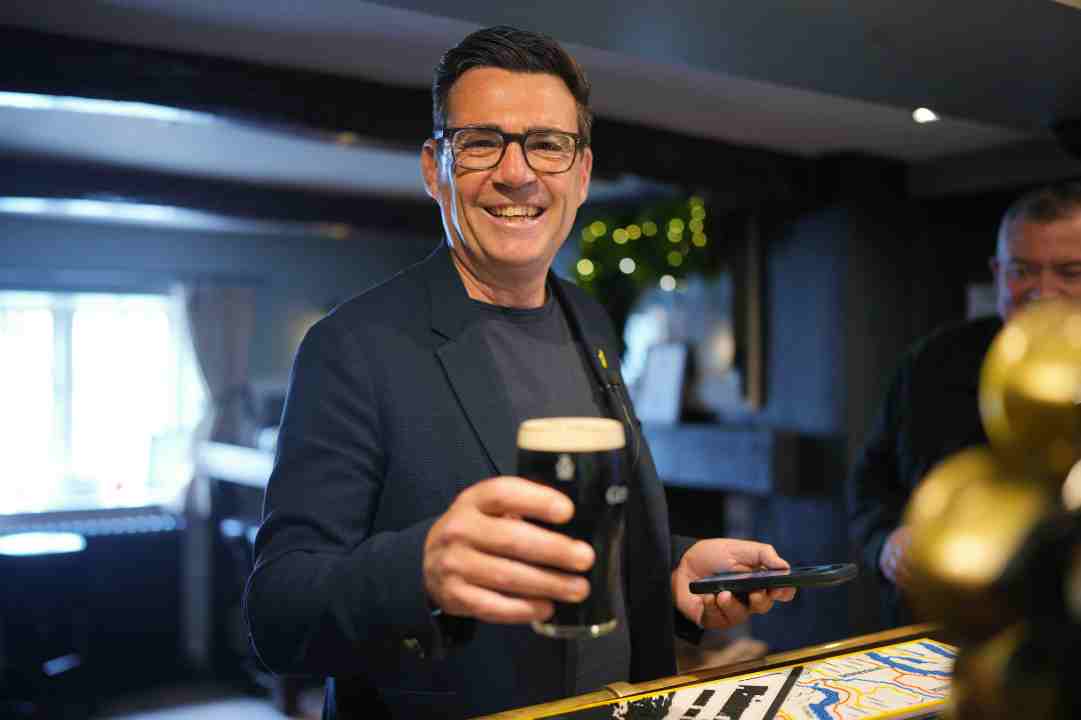
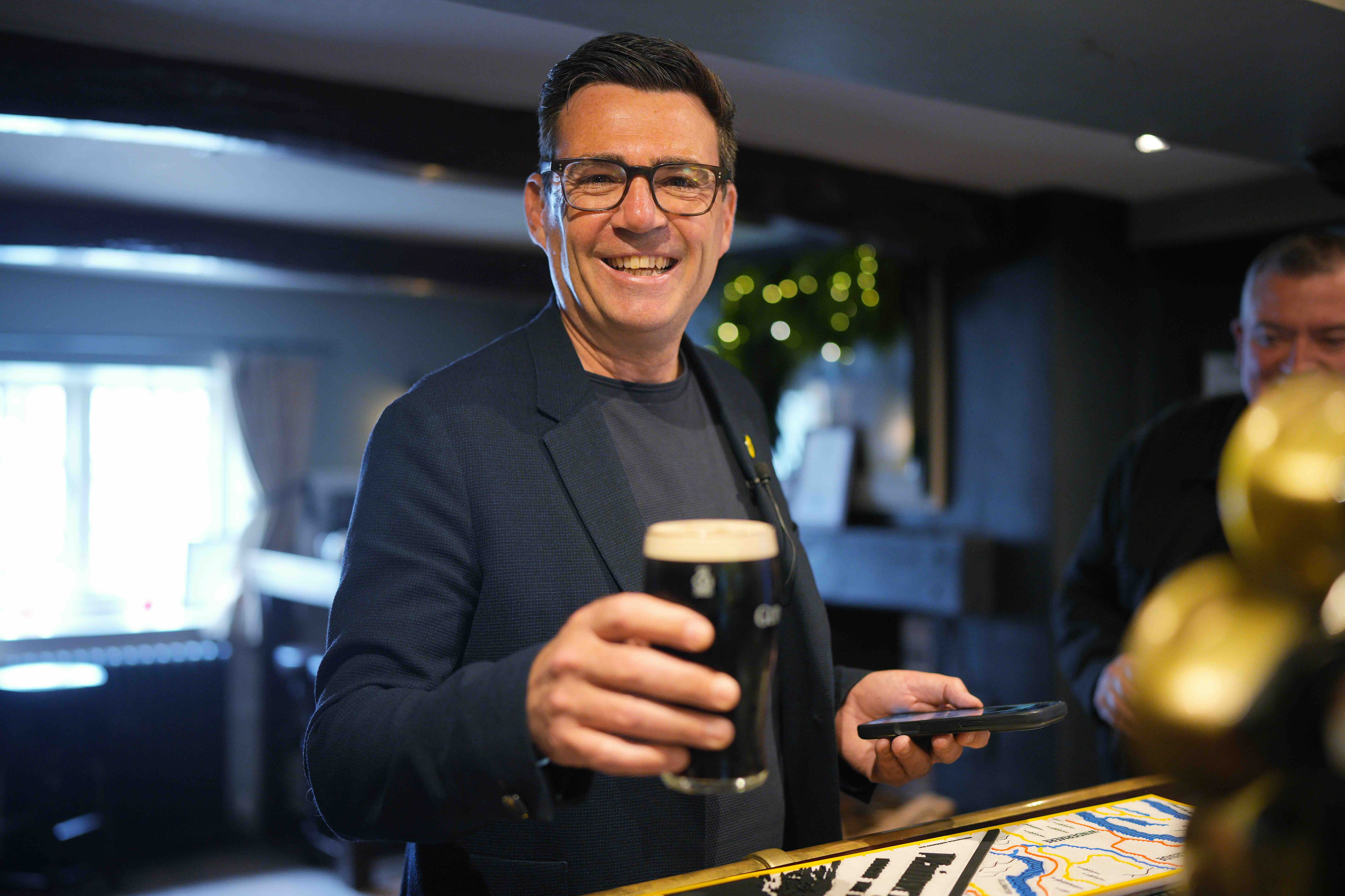
Keir Starmer is fond of a beer. We knew he liked beer when we knew nothing much about his policies except that they were in favour of everything that was good and against everything that was bad. We could be excused for feeling that the impending coronation of Andy Burnham offers more of the same. A Labour MP told the Today programme that Burnham explaining his policies was irrelevant given he’d ‘already shown he’s a very successful politician’. What we do know is that Burnham, too, likes beer. He and Starmer eagerly lean on the one point where their pose and their personality agree – Guinness for Burnham, real ale for Starmer.
Who doesn’t feel that the drinks a politician chooses, for private enjoyment or public performance, tell us something about what leaks from their soul, and not necessarily what they want us to see? Farage’s public love of beer seems too contrived, so strenuously repeated that I’m now nervous of seeing him whenever I walk past my local. (A Campaign for Real Ale (CAMRA) award winner, two doors away and always welcoming, isn’t enough to tempt me from domestic comforts, usually Burgundian.) Those close to Farage suggest he prefers wine, gin, and Champagne, although I found some accusations of Cava. Such are the demands of public life that he’s probably decided it’s prudent to let the libel stand.
Political drinking, serious or staged, has a long and undignified history. Herodotus said the Persians debated serious matters twice, the better to reach decisions: the first time drunk and the second sober. Green MP Hannah Spencer was not deferring to ancient custom when she disapproved of the less formalised drinking habits of MPs stumbling into the chamber to vote.
What shocked Herodotus was that the Persians drank wine like barbarians – undiluted. Not for them the golden mean of a generous mix of water, often at three times the volume of wine. Diluting your drinks is an act of cultural confidence but questionable taste; one’s regard for Herodotus survives, one’s faith in his wine does not. Napoleon was a diluter too, adding water to his Chambertin, while Queen Victoria was said to do the opposite, with similarly doubtful results, by adding whisky to her claret. Churchill started the day with whisky and water – mainly water – and played up his drinking for all it was worth. That was a great deal, both publicly, as the strong man unabashed by circumstances, and privately, when he drank with other politicians. Franklin D. Roosevelt apocryphally needed days to recover from a drinking session with Churchill.
In Lyndon B. Johnson’s White House, only American wines were served. Nixon had his favourite First Growth – Margaux – smuggled in, and served to him surreptitiously, without his fellow diners knowing, a side of him which to me more than makes up for Watergate. LBJ himself preferred Cutty Sark Scotch and soda in a Styrofoam cup, with Secret Service agents ready to run alongside and refill his Styrofoam Cutty as he dashed about his ranch in his Lincoln Continental, the agents’ station wagon – and its supply of ice – following on.
Rishi Sunak was fastidious, wanting Coca Cola made as it is in Mexico, with cane sugar, rather than the corn syrup often used elsewhere
Rishi Sunak was fastidious, wanting Coca Cola made as it is in Mexico, with cane sugar, rather than the corn syrup often used elsewhere. Angela Rayner makes large quantities of Venom – calling it a drink for the many, not the few – consisting of vodka, Southern Comfort, Blue WKD, and orange juice. Boris Johnson is on record favouring Tignanello, a modern ‘Super-Tuscan’ whose charms leave me cold. Go back a generation, to Clinton, and you find a man who took from his Oxford years a lifelong love of lager mixed with cider. That’s almost mystifying enough to make him seem human and leaves you wondering if a redbrick English university might have yielded a President fond of snakebite and black. What our moderns lack – none of them diluters – is eccentricity, a sense of self that’s more than a brand.
Chesterton called politicians the ‘pestilence of modern times’. We need them the way we need parking tickets: our hearts might sink, but without them the world is even worse. ‘Keep the politicians near enough to kick them,’ he said – adding, in a comment the current Speaker would not allow, that ‘it is terrible to contemplate how few politicians are hanged.’ Many hang themselves, however, with their affectation and their ambition, and give us pleasure despite their intentions. Ed Miliband avoids beer and looks deliciously awkward when he has to hold some, like someone’s just passed him a bacon sandwich.
Flattering as it is to imagine sharing a drink with them – which is what they want us to do – we don’t vote for drinking buddies. In the drinks of politicians, we glimpse how much humanity has been sacrificed for the performance, or how much survives. FDR mixed martinis himself, badly, but with great enthusiasm. Churchill – reputed to prefer his gin with as much vermouth as came from glancing at the bottle from across the room – drank respectfully when the President was looking, then tipped them into plant pots when he wasn’t.
Few of today’s politicians have more than a brand to display: a man who tips a presidential martini into a potted geranium has a self to conceal.




Comments