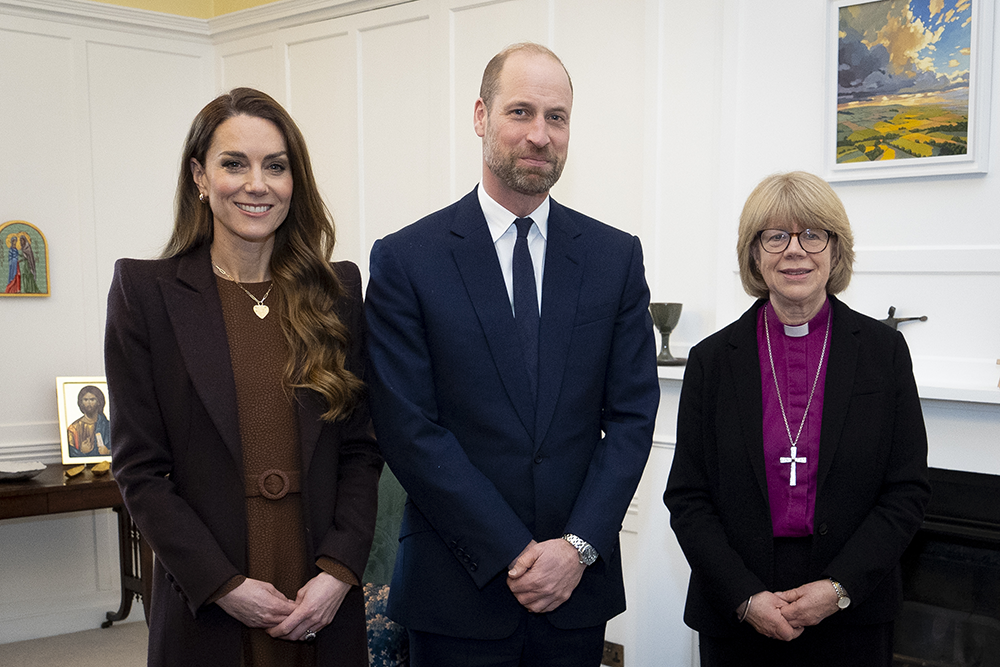
The Prince of Wales seeks to assure us that, as a friend puts into his mouth, ‘I might not be at church every day, but I believe in it.’ That formulation does not necessarily mean he believes in God or the doctrines of the Church of England. All it means is that he believes in the efficacy of the C of E and will dutifully fulfil his future role as its Supreme Governor. Actually, that is all we need to know. His great Tudor predecessor said she did not want to ‘make windows into men’s souls’; even kings are only men. The important thing, from a constitutional as opposed to a spiritual point of view, is that he acts the part with good grace, which he surely will. Whether he does so by divine grace poured into his heart is a question above all our pay grades. However, it is an interesting fact that George VI, Elizabeth II and the present King were/are all, in their different ways, serious Christians. And Edward VIII, who wasn’t, was a menace. ‘Think of pouring all those sacred words into a vacuum,’ lamented Archbishop Cosmo Lang, before the Abdication spared him that agony. When Prince William attended the installation of the new Archbishop on Wednesday, he was positioning himself appropriately.
Without proper evidence, I feel the voters’ mood is changing. For some years, it has been energetically angry, a feeling relieved only for about a month in 2024 before it became clear that the new Labour government had no idea what to do. Now I think it is becoming less cross but sadder. There was something cathartic about the rage against our conventional rulers. But now we have a better understanding of just how bad things are – that we might be facing an embryonic world war or global financial and energy collapse, might be broken by our welfare state, might be unable to control Islamist frenzy. This makes us no less dissatisfied with mainstream parties, but more sceptical of populist ones. To adapt Larkin, we find a hunger in ourselves to be more serious. There are signs in America and on the continent that voters feel similarly. So, after we have vented our feelings in the May local elections, we shall start testing the claims of Reform and the Greens as fiercely as we test Labour and the Tories. It seems likely that they will fail those tests.
George Osborne used to insist that at a general election, the Conservatives should always make a ‘retail offer’ – something from which key voters would directly, materially benefit. I seem to remember that getting rid of inheritance tax was one such, though it dribbled away into a relatively minor tax concession on one’s principal home. Reform, seeking to outdo their hated rivals, are now making an actual retail offer. They promise to cut everyone’s energy bills by £200 on entering office. As a sort of downpayment, their ‘shadow’ chancellor, Robert Jenrick, last week announced a prize draw. Enter it, says Honest Rob, and if you win, ‘Reform will pay the energy bills of the lucky winner and their entire street for a year!’. I have filled in the online entry form. The promise does not define ‘energy bills’ (Electricity? Gas? Oil? The lot?) and seems to promise not £200 off for each household but payment of all energy bills for 12 months. In a street of 200 houses, that could amount to well over £500,000 from Reform’s coffers. Does Mr Jenrick mean it, or has he failed to run the figures through the Treasury computer?
Given how much research assistance Tucker Carlson can afford, it is hard to believe he did not know he was wrong before he recently described Oswald Mosley, on air, as the leader of the opposition in Britain during the second world war. That post was held by Clement Attlee, until he led Labour into the coalition. Mosley’s party, which – as Carlson did not mention – was called the British Union of Fascists in the 1930s, never won a single seat. Yet Carlson said it anyway, adding that Mosley was ‘patriotic’ and complaining that Churchill was someone we are ‘required to deify’. Was he lying, or just arrogantly ignorant? Either way, why did he want to praise Mosley, who admired Hitler, and attack Churchill, who defeated him? For a long time now, Carlson has been airing pro-fascist views, though avoiding the f-word, and letting others air them unchallenged on his programme. The person best placed to rebuke him is Vice-President J.D. Vance, but he always declines. In his New Year interview with UnHerd, Vance said: ‘Tucker’s a friend of mine. And do I have disagreements with Tucker Carlson? Sure… [But] I’m a very loyal person, and I am not going to get into the business of throwing friends under the bus… I find the idea that Tucker Carlson – who has one of the largest podcasts in the world…who supported Donald Trump in the 2024 election, who supported me in the 2024 election – the idea that his views are somehow completely anathema to conservatism… is frankly absurd.’ In the same interview, Vance also said: ‘Anti-Semitism, and all forms of ethnic hatred, have no place in the conservative movement.’ But he did not join up the dots. How long before Tucker denounces the Holocaust as a hoax? Will Vance, desperate for the nomination, smile and say it’s just one of those things he disagrees with his old pal about?
Lord Ashcroft gave the Imperial War Museum £5 million for a gallery to show his collections of VCs. After about 15 years, they chucked them out, to his distress. Now, thank goodness, the National Army Museum is rescuing them. While they were still on show in the IWM, a friend visited with her son. She told the security man they had come to see the VCs. How sad, he said, that Ashcroft was taking them away. No, she replied, the museum was getting rid of them. That can’t be true, said the man: the museum’s ‘grandees’ had announced to staff that Ashcroft was removing his collection. What a strange form of victim-shaming to blame the donor.
Comments