
Interest in Dracula seems to go on for ever. Kip Williams has chosen Cynthia Erivo to star in his new version of the yarn about a clique of blood-quaffers who bite their victims’ necks and lick the seepings.
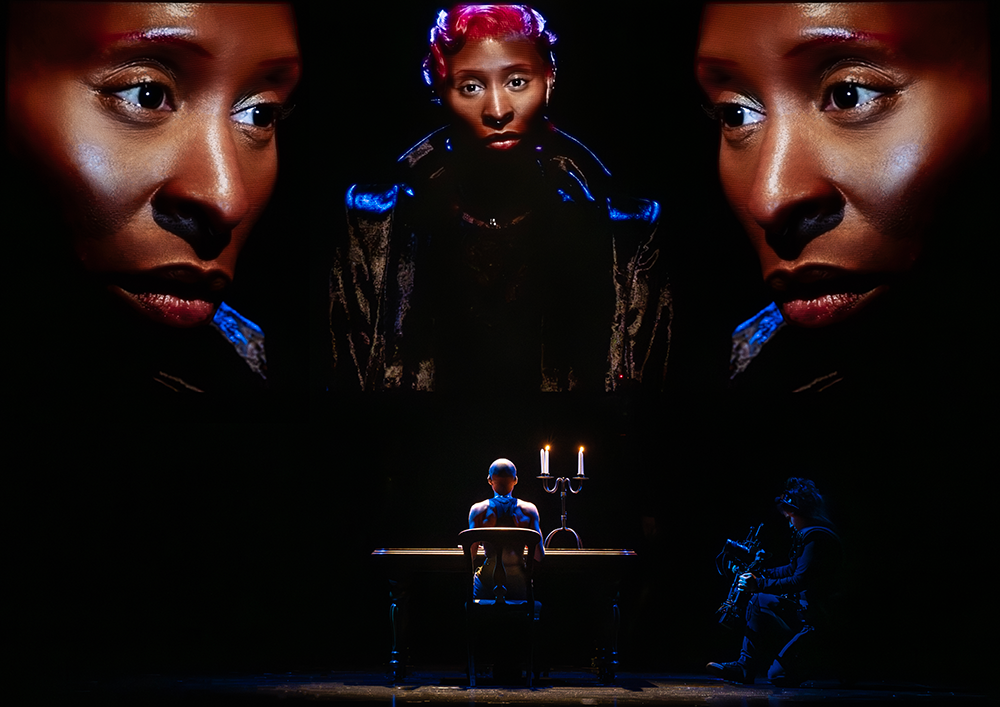
The show is staged as a read-through of Bram Stoker’s text supplemented by costumes, wigs and a few orchestral hits recorded on tape. Erivo plays all 23 roles and her performance is simultaneously filmed and broadcast to the audience on TV screens dotted around the theatre.

This creates two problems. First, Erivo can’t see or interact with the crowd because she’s encircled by wardrobe assistants and cameramen who swarm around her like gnats. Secondly, the audience are expected to look at the screens and not at the stage. This is odd. Watching TV in the theatre is like visiting a restaurant to read the menu. Erivo’s acting skills are barely engaged.
To narrate the story, she uses a clipped and rather dated 1950s accent which never varies in pitch, tone or emotional colour. She sounds like Princess Margaret reading the news. To represent Stoker’s characters, she does a range of semi-comical impersonations. The English males are all posh swaggering thickos and the women are plucky proto-feminists who like to think for themselves. Count Dracula speaks in a West African accent for some reason and he employs a doorkeeper who sounds Jamaican. These choices aren’t explained.
Nor are the weird costumes. Dracula’s mauve hairpiece shines like a cap made out of illuminated cellophane. Mr Renfield, the obsessive masturbator from Dublin, wears a blond wig and a set of fencing whites. The Dutch vampire-hunter, Dr Van Helsing, looks like Jimmy Savile in a bouffant grey coiffure. The most realistic visuals are the joke-shop fangs worn by Dracula and his victims.
At the climax, Dr Van Helsing learns that a hysterical nuisance called Lucy Westenra has joined the ‘undead’ after being bitten by Dracula. He sets out to make her properly dead. Having exhumed her corpse, he bashes a wooden tent peg through her ribcage with a mallet, which seems to do the trick. Dracula meanwhile runs away in search of fresh victims and his escape is noticed by Dr Van Helsing and his assistants who set off in hot pursuit.
They can’t seem to find Dracula anywhere, even though he’s wearing a wing collar, a white bow tie and an opera cape. He boards a cross-channel ferry and starts biting the sailors and drinking their blood. He always does things like this, apparently. He can’t stop himself. After a few more violent incidents, the tiresome story comes to an end with a downfall of snow and a song. Only when she sings does Erivo finally shake off her squad of assistants and look directly at the crowd. They seemed to enjoy what they’d just witnessed. Lord knows why.
The Holy Rosenbergs is a muddled tale about a north London family caught up in the Gaza conflict. Ryan Craig’s drama opens with two characters discussing the upcoming funeral of Danny who recently died while flying helicopters for the IDF. It’s unclear why a British Jew from Edgware found himself fighting for Israel.
Meanwhile a team of UN investigators are studying claims that Danny has committed war crimes. A protest is expected at his funeral. Then we learn that a leading member of the investigation team is none other than Danny’s sister, Ruth (brilliantly played by Dorothea Myer-Bennett). This strange coincidence prompts a series of angry discussions within the family about the legitimacy of Israel’s existence and the competing claims of the Palestinians. Ruth represents the pro-Palestinian viewpoint and her dad is inclined to support Israel.
The most realistic visuals are the joke-shop fangs worn by Dracula and his victims
In the second half, the controversy turns into a stand-up debate between two new characters, a surgeon and a lawyer, who discuss the issues in enormous detail. Their rambling chitchat reveals nothing new and reaches no conclusions. And this huge discussion should have featured Ruth and her dad. Why relegate them to the sidelines?
The show closes with a flurry of twists and turns. Secrets from the UN investigation emerge. Ruth’s younger brother staggers into the house covered in cuts and bruises. Ruth’s dad tries to cover up a crucial telephone call. The plot spirals out of control.
Nicholas Woodeson, playing the father, makes the best of a very difficult role as a garrulous, defensive and ineffably stupid businessman whose catering firm is losing large amounts of cash. The show’s greatest asset, Tracy-Ann Oberman, has few opportunities to display her gifts. She plays the anxious, house-proud mother who fusses around trying to force-feed her guests with plates of pastries and cups of tea. Her attempts to induce a visiting rabbi to eat some home-made cake prompt this rebuke from Ruth: ‘He’s a rabbi, not a spaniel.’ Great line. Pity about the rest of it.


Comments