
In September last year, shares in Kenvue, the maker of Tylenol, plunged when Health Secretary Robert F. Kennedy Jr. announced the results of an investigation into the environmental causes of autism. One of the causes discovered, RFK Jr. said, was Tylenol use by pregnant women.
Studies positing a link had already been used in lawsuits by hundreds of parents who believed acetaminophen – the drug’s medical name – had caused their children to develop autism or ADHD. Now, Kennedy said, the FDA had even more robust data to support that link. Kenvue has since lobbied the FDA to prevent new warnings about the risk of using Tylenol during pregnancy from being added to its product.
Solving the explosion in chronic diseases among children is one of the central targets of the Make America Healthy Again crusade. Just look at autism, the incidence of which has increased from perhaps 1 in 500 children in the early 1990s to 1 in 31 today – staggering growth that obviously can’t be explained by genetic factors alone.
The response to such observations from the mainstream media, leftist politicians and medical professionals has inevitably been to pour scorn. Virtually every claim that Kennedy makes, from the benefits of whole milk to the toxicity of the herbicide glyphosate, is treated as a dangerous “conspiracy theory,” the product either of discredited “quack” science or of the Health Secretary’s famous brain parasite.
Fifteen drugs were linked to autism in the child if the mother took them while pregnant
Now, a new study suggests Tylenol could be just the beginning of this story. Fifteen common drugs taken during pregnancy, accounting for more than 400 million annual prescriptions in the US, may be linked to autism. And what do these drugs have in common? Cholesterol. All of the drugs have cholesterol-lowering effects, and the scientists behind the study believe they could be interfering with crucial processes in the development of the gestating fetus’s brain.
Cholesterol is essential for the growth and health of every single cell in the human body, and the brain is the most cholesterol-rich organ of all – containing 20 percent of the body’s cholesterol. A fetus only begins to be able to make its own cholesterol about halfway through pregnancy, so disruption of the mother’s production could have serious consequences for the early stages of brain development. It’s long been known that children with low cholesterol are at enormous risk of developing autism. Three-quarters of all children with Smith-Lemli-Opitz syndrome, a rare condition that leads to chronic low cholesterol, are also diagnosed with autism.
So our bodies have a vital need for cholesterol. Yet since the 1950s, the medical establishment has waged an unceasing war, making cholesterol arguably the most demonized natural substance in healthcare and nutritional science apart from tobacco. Around 35 percent of American adults – close to 100 million people – are now on statins specifically to lower cholesterol. The new study, published in the journal Molecular Psychiatry, looked at six million children born in the US between 2014 and 2023, of whom 3.8 percent had autism.
Fifteen drugs – antidepressants, heart medications, statins – were linked to an increased incidence of autism in the child if the mother took them while pregnant. The drugs were sertraline, fluoxetine, bupropion, buspirone, aripiprazole, cariprazine, haloperidol, trazodone, metoprolol, propranolol, nebivolol, atorvastatin, simvastatin, rosuvastatin and pravastatin.
Around 11 percent of the mothers in the study took one or more of these medications. Exposure to at least one of the drugs during pregnancy increased the risk of autism in the child by 47 percent. For four or more drugs, the risk was more than double. The researchers were careful to isolate the risks and account for confounders – other factors that could be responsible for the association observed. They noted a correlation between the increased the risk of autism and a drug’s known cholesterol-lowering ability.

To ensure they had isolated the correct variable, the scientists then ran another analysis on six commonly prescribed prenatal drugs with no known effects on cholesterol production. These included treatments for allergies, constipation, acid reflux and nausea. These medications, by contrast, showed minimal effect on autism risk.
The implications of this study are huge and wide-ranging, given the 400 million annual US prescriptions accounted for by the 15 drugs. The researchers themselves, being rational actors and smart enough to look out for their own best interests, urge caution. These drugs are still safe for adults, they say, but we should recognize drugs that are safe for adults may have very different effects on children, and we should do more to ensure those differences are taken into account when safety-testing and prescribing them. As far as I’m concerned, that’s a bare minimum.
Our understanding of cholesterol is wrong, and until we do something radical to change it, we’re going to continue causing immense harm, not just to children but adults too. The Minnesota Coronary Experiment, a double-blind randomized controlled trial that took place between 1968 and 1973 in mental institutions and nursing homes, showed that every 30mg/dL decrease in blood cholesterol was associated with a 22 percent greater increase in risk of all-cause mortality – that’s death from every possible cause, including heart disease and stroke. The findings were not fully published for 40 years because they demolished the prevailing orthodoxy on cholesterol and showed that lowering it was actually endangering life, not saving it.
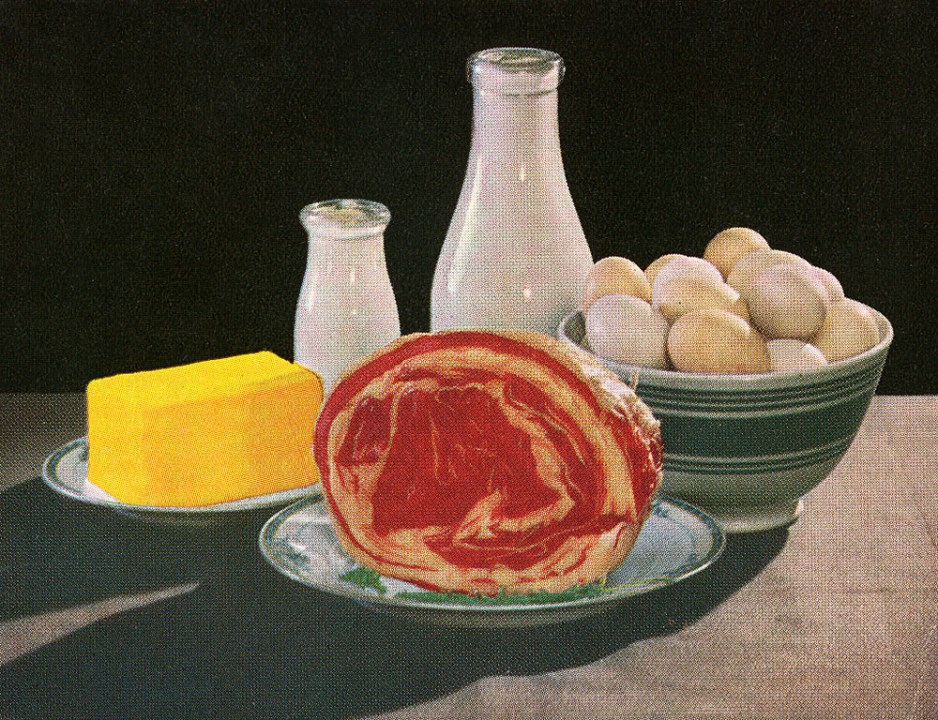
Robert F. Kennedy Jr., a man who mostly eats steak and eggs and can do more push-ups than the average man half his age, knows all of this. And because he knows it, he’s already upended the cursed Food Pyramid, placing meat, dairy and animal products back in their rightful place as the foundation of a healthy diet.
He has also recommended drinking whole milk, although he stopped short of saying it should be raw too, on the advice of lawyers – or so I’m told. Now, with this new worrying evidence, he should help Americans fall back in love with that most important of molecules, cholesterol, again.






Comments