Flanders and Swann; Tom and Jerry. Some things come in pairs. Like Turner and Constable, even though our two most famous painters were more like chalk and cheese than cheese and pickle.
They were close contemporaries: Turner was born in 1775, Constable a year later. Both painted landscapes. But that’s almost all they had in common. In every other way that matters, personal and artistic, they could hardly have been more different.
Turner was a prodigy, a student at the Royal Academy Schools from the age of 14 and an associate (ARA) at 24. That same year, Constable had only just enrolled in the Schools, and was not elected ARA until he was 33. Constable did not become a full RA until the age of 52, while Turner had been one since he was 27.

The curator, the Tate’s excellent Amy Concannon, was clearly well aware of what can seem a yawning gulf between this legendary duo, and yet decided to take the challenge head on. The first room lays out the glaring differences in a timeline tracing their careers.
The exhibition functions as a series of confrontations, sometimes with a whole room devoted to Turner set against another given over to Constable; or, more daringly, leaving them to battle it out within the same space. It could have been a disaster to have set the work of the two artists in the same media alongside each other this early on. But the contrast in their development is neatly swerved, and so attention turns from Turner’s astonishing early watercolours and oils to some painstaking drawings by Constable and a series of exquisite – the scale is significant – little oil sketches.
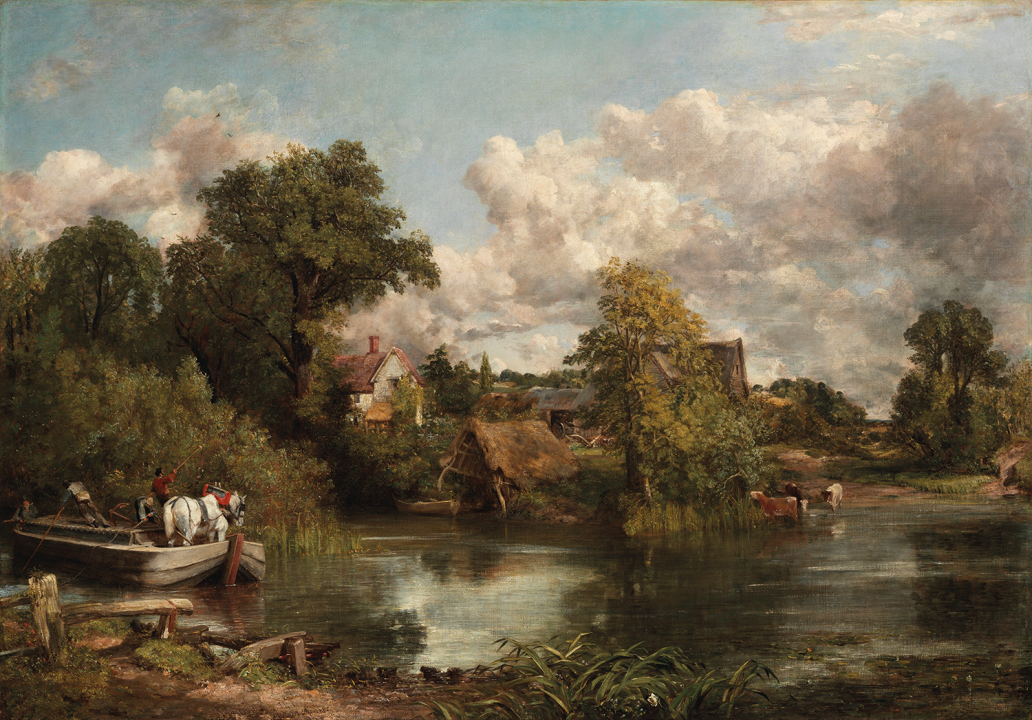
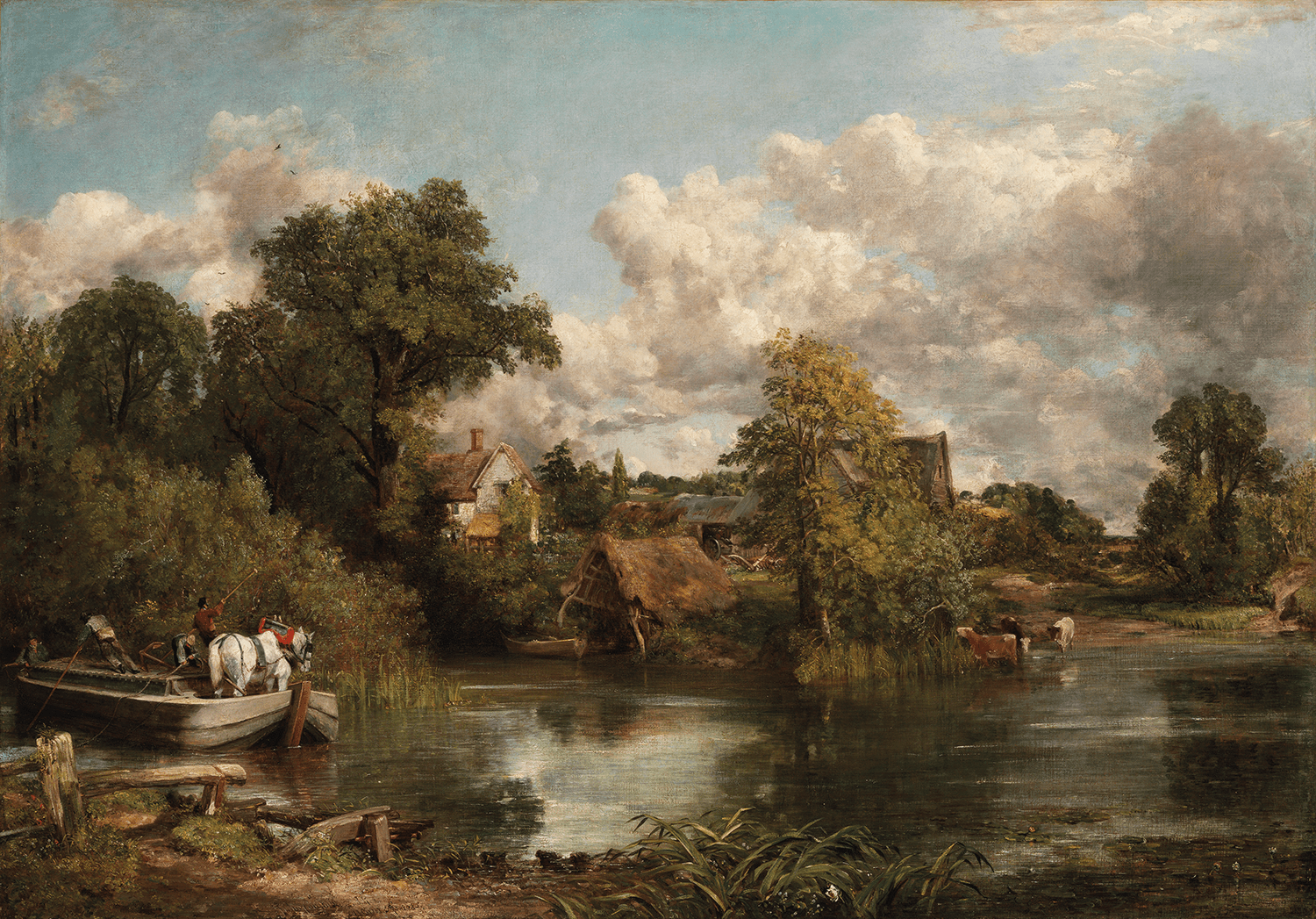
Then, in Room Seven, there is the most dramatic shift: the triumph of the whole show. Up to this point, Constable has been struggling to make up ground. But at last Constable takes the plunge and turns to creating landscapes on the same scale as Turner. The result is ‘The White Horse’, exhibited at the RA in 1819. It is as though someone had turned on the lights. And in the very next room there is the most dramatic juxtaposition imaginable, as we see Turner’s glowing ‘Caligula’s Palace and Bridge’ next to Constable’s glowering ‘Salisbury Cathedral from the Meadows’.
In every other way that matters, personal and artistic, they could hardly have been more different
These two massive pictures last met in the RA exhibition of 1831, where the comparison was invited by Constable himself who had chosen the hang, positioning his own painting at an advantage. Turner was not thrilled.
In 1819 people had started to compare – and contrast – the two artists for the first time. For example: ‘The White Horse’, according to one critic, had ‘none of the poetry of Nature like Mr. Turner, but … more of her portraiture’. That term ‘portraiture’ had been current in artistic circles at the turn of the century to distinguish landscapes that accurately portrayed a particular scene. It was thought unconventional to do so, since landscapes in the European academic tradition normally took motifs from nature in order to shape an ideal composition: evoking, if you like, ‘the poetry of Nature’.
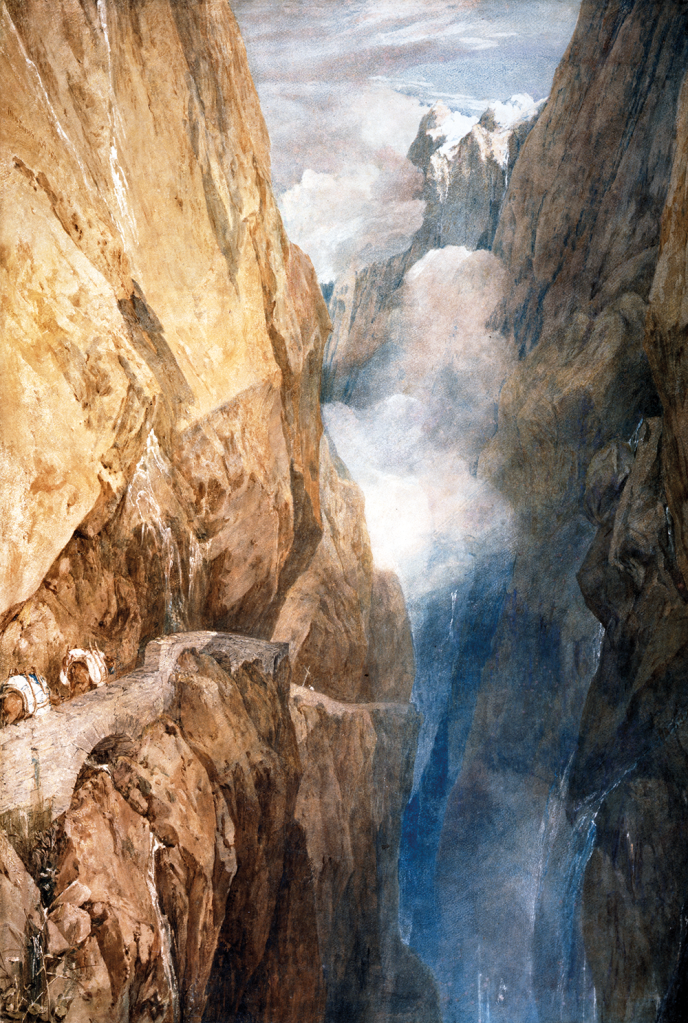
As that critic perceived, Turner and Constable had quite opposite conceptions of landscape painting. Turner was an academic painter through and through, and he usually viewed his landscapes as ‘history paintings’, and so they were frequently based upon a few specific lines from a text, in order to conform to approved practice.
The exhibition functions as a series of confrontations
Constable, in contrast, wanted to create what he called ‘a natural painture [sic]’. This is why it was Constable, not Turner, who changed the course of French landscape painting when he exhibited ‘The Hay Wain’ in 1824 at the Paris Salon, where it won a gold medal. As everyone could see, this was an heroic image, on the scale of a history painting, and handled with all the necessary grandeur. And yet it was just an everyday scene in the countryside.
At last, the way was clear to leave the academic model behind and paint directly from nature. Hello, impressionism.
That story is not told here. It does not need to be. The tale this outstanding exhibition tells is on an appropriately epic scale with some 190 works on view. They have been selected and displayed with unerring skill.

Comments