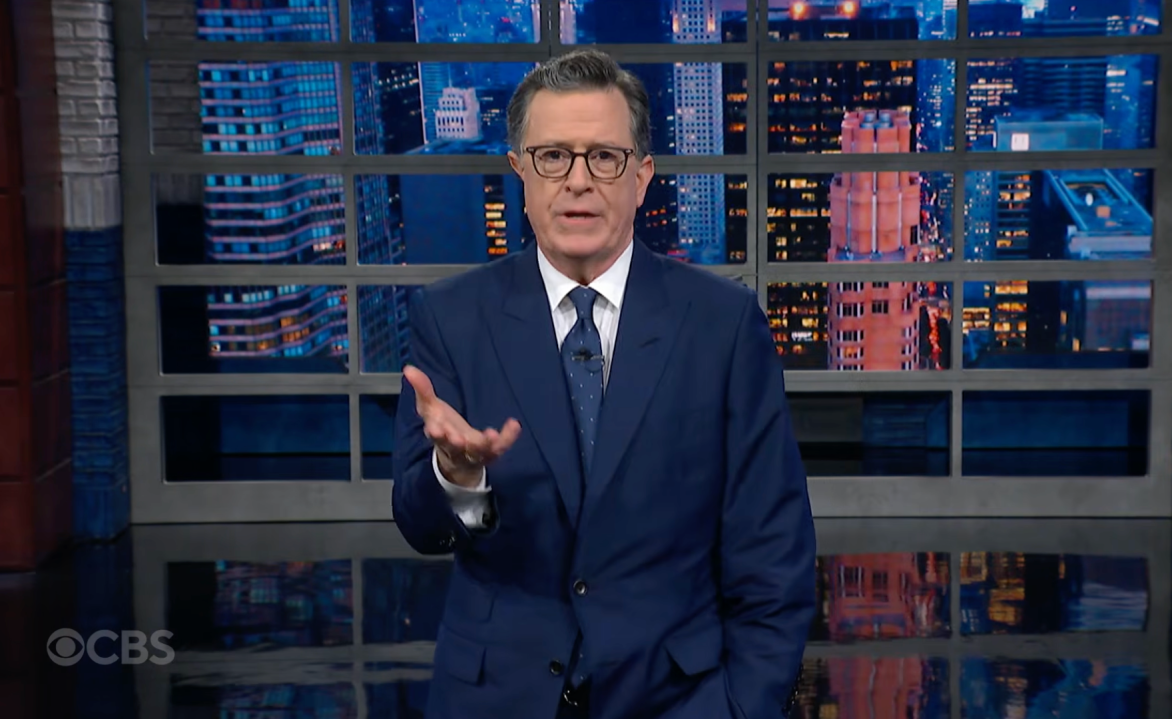
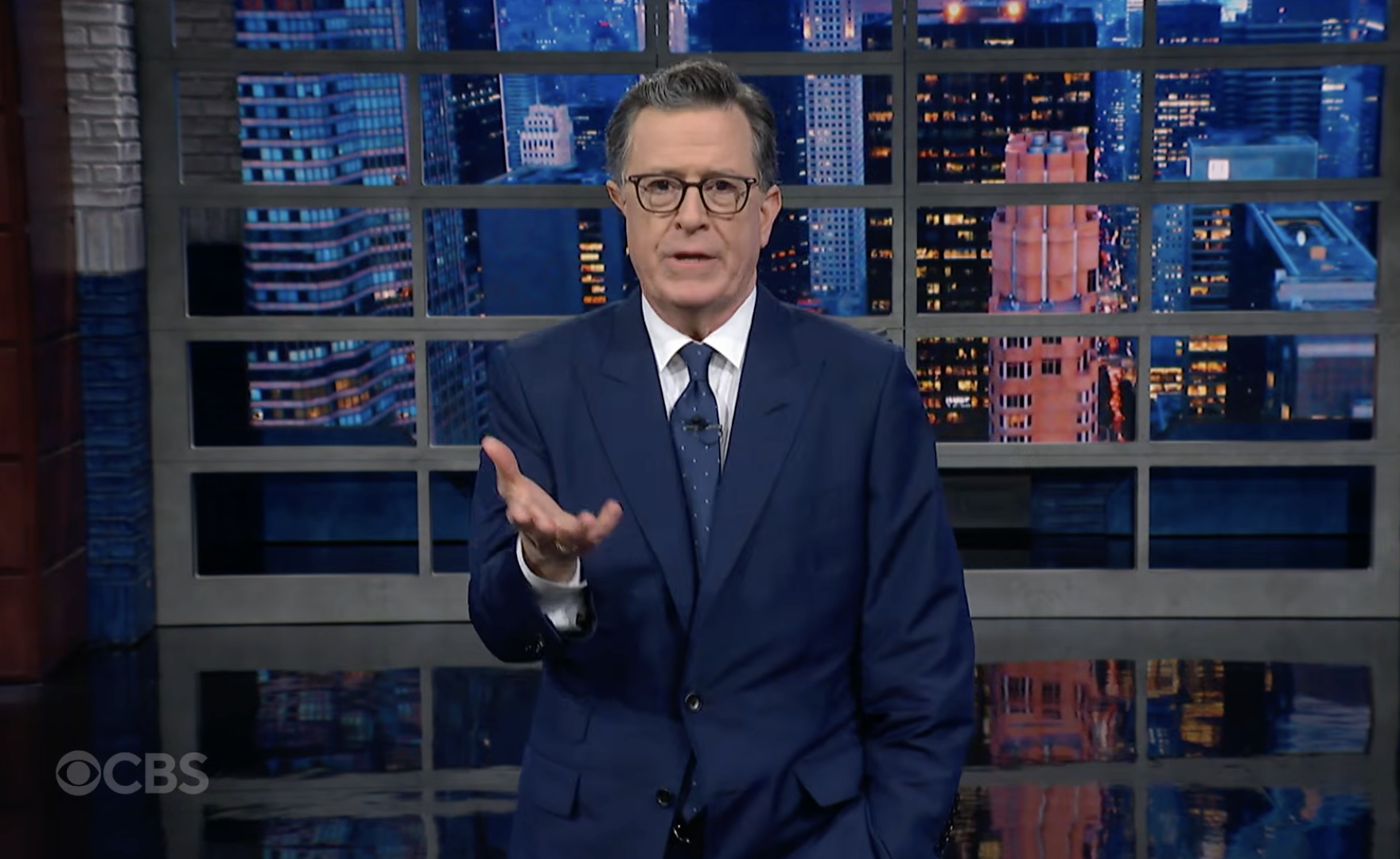
Before the final episode of the Stephen Colbert-hosted Late Show, President Trump was asked what he thought about the demise of a program that was as well-known for the digs that it leveled at him as for its comedic monologues and high-profile special guests. Trump replied, ominously, “I’ll have a message at a later date.” And the verdict duly came in, as Trump wrote on Truth Social that “Colbert is finally finished at CBS. Amazing that he lasted so long! No talent, no ratings, no life. He was like a dead person. You could take any person off of the street and they would be better than this total jerk. Thank goodness he’s finally gone!”
It was broad, self-referential, star-studded and played it very safe. It wasn’t even particularly political
Colbert is indeed gone, and he departed the CBS stage in what would either be seen as a blaze of glory or with his tail between his legs, depending on your perspective. Amid persistent rumors that Paramount Skydance’s decision to cancel the show was politically motivated – they have claimed that it was financial, but few are convinced this is true – Colbert, like Jimmy Kimmel before him, has gone on an unlikely journey from mainstream entertainer to tribune of the liberal left. Kimmel, notoriously, was canceled then reinstated, but it looks as if Colbert will be heading off to spend some more time with hobbits than hosting another chat show of this nature. Will he be missed?
On the evidence of the last ever Late Show, his legacy will be as polarizing as the last few years have been. He was, of course, surrounded by partisans, both in a selection of faintly cringe-inducing special guests and in the adoring audience, and his opening monologue struck a largely sentimental, valedictory note, as Colbert said “We call this show the Joy Machine. We call it the Joy Machine because to do this many shows it has to be a machine, but the thing is, if you choose to do with joy, it doesn’t hurt as much when your fingers get caught in the gears, and I cannot adequately explain to you what the people who work here have done for each other, and how much we mean to each other.”

If Colbert saw this final show as an audition to host the Oscars when its new regular host Conan O’Brien tires of the responsibility, it was not a bad call, even if the idea was better than the execution. There was the expectation that it would end with a very special guest, and it had even been mooted, apparently semi-seriously, that this might be the Pope – Colbert is a devout Catholic – although in the end this was turned into a running joke, just as a parade of star cameos, led by Bryan Cranston, Paul Rudd and Ryan Reynolds, all leant into the cutesy meta idea that they were not worthy of being anointed as Colbert’s final guest. Cranston asked if he could be the “surprise celebrity cameo popping up out of nowhere”, only for Colbert to reply, “no Bryan, those always feel kind of forced.” My sides remained unsplit.
There was, of course, an A-list special guest, in the form of Paul McCartney, currently promoting his forthcoming album The Boys of Dungeon Lane. Nobody would expect penetrating inquisition on a show of this nature, but Colbert went even easier on McCartney than usual, allowing the former Beatle to rhapsodize about the Ed Sullivan Theater, where the show was recorded from 1993 until the present day and where the Beatles made their debut in America. The problem is that McCartney, if unchecked, falls easily into “wasn’t-it-a-grand-old-time-back-in-the-day” mode – otherwise known as “your grandpa remembers” – although there was a modestly pointed moment when Macca, after saying “where all the music we loved came from, all the rock ‘n’ roll, the blues and the whole thing…America was just the land of the free, the greatest democracy,” remarked, “Yes, that was what it was. That’s what it still is, hopefully.”
The show ended with a pair of musical performances, featuring a suitably star-studded selection of guests. Colbert himself demonstrated reasonably impressive vocals on a pre-recorded performance of Elvis Costello’s “Jump Up” with Jon Batiste, Louis Cato and Costello himself, and the song’s knowingly mournful lyrics – “No tombstone would ever surprise me” – were of a piece with the sentimental, slightly schmaltzy feel of the final Late Show.
But, of course, the grand finale featured McCartney, Colbert et al on a suitably valedictory “Hello Goodbye,” harmonizing to no great effect, and inadvertently reminding the viewer of how much better the original was. Then an apparently endless stream of staffers come on the stage to sing and dance and celebrate, before Colbert and McCartney are filmed mournfully shutting down the building’s power for the last time, whereupon the Ed Sullivan is zapped by a green lightning bolt and turned into a snow globe. I am not making this up.
In other words, The Late Show’s finale was everything that longtime Colbert – or Letterman – viewers would expect. It was broad, self-referential, star-studded and played it very safe. It wasn’t even particularly political at the end, meaning that Trump’s criticism felt unnecessarily mean-spirited, but as Colbert bade his viewers farewell, only the most fervent fans might feel that this show really was quitting before its time.




Comments