In news that will surprise no one, it emerges that vegan children are thinner, shorter and – dare we say it – sicklier than their counterparts. A recent study by the University of Florence details how children who follow a vegan or vegetarian diet are deficient in vitamins and minerals and consistently exhibit a lower BMI than their omnivorous peers.
Although children who follow a vegetarian diet consume more fibre, iron, folate, vitamin C and magnesium than omnivores, the only way for plant-based children to grow healthily is with a carefully planned regimen of supplementation – think pills with your brekker every day until you leave home. And while Dr Monica Dino from the University of Florence cautiously states that a ‘vegan diet can be adequate’ but does ‘require additional support’, Professor Martin Warren from the Quadram Institute for Bioscience goes further: ‘risks of micronutrient deficiencies remain real and should not be underestimated’.

At least someone seems alarmed. What Professor Warren also sagely alludes to in his comments is the lack of accounting for the ‘confounding factors’ of ‘socioeconomic status’ and ‘parental education’ in the study. In short, what your children eat is a matter of your class.
If you are middle class or have hiked your way up by the skin of your teeth from the working classes to the lower middle, what your children eat is an extremely important vector of your newfound status. Because lurking in the small print on the back of any item of frozen or processed food is the fear that chicken nuggets or frankfurters or McCain’s oven chips are, frankly, just a bit common. And that will not do for your children. No, they shall not bear the same branding of processed palate as you did.
Instead, they will eat vegan-friendly organic houmous and fresh pesto and turn their noses up at anything that does not look like an heirloom tomato. They will have allergies and intolerances galore and will believe that what is offered to them at the spotlessly clean, anti-bacced kitchen table is the ‘correct’ food. No vegan child can eat supper without the side plate of food snobbery handed to them by their parents: it is what gives it its distinctive taste (and price).
Where once social anxieties resided in the arcane traditions of which knife to start with, whether you called it supper or dinner, and what appeared out of the dumbwaiter, these days it is the food itself that is freighted with social panic. I would wager that many plant-based or vegetarian parents would rather die than set foot in an Aldi supermarket, see their child eat a packet of Hula Hoops or allow a loaf of Mighty White to enter the organic-only zone of their kitchens.
But quite apart from the unbearable nouveau snobbery of vegan parents, there is also the lamentable evidence that this attitude is bad for their children’s development, resulting, in extreme cases, in megaloblastic anaemia and irreversible neurological impairment. Try as you might, you cannot find vitamin B12 in a plant; it can only be found in food such as liver, salmon, eggs and dairy. Scrambled eggs on toast, followed by fried chicken liver, should fix it, but perhaps the social risk is too great.
No vegan child can eat supper without the side plate of food snobbery handed to them by their parents
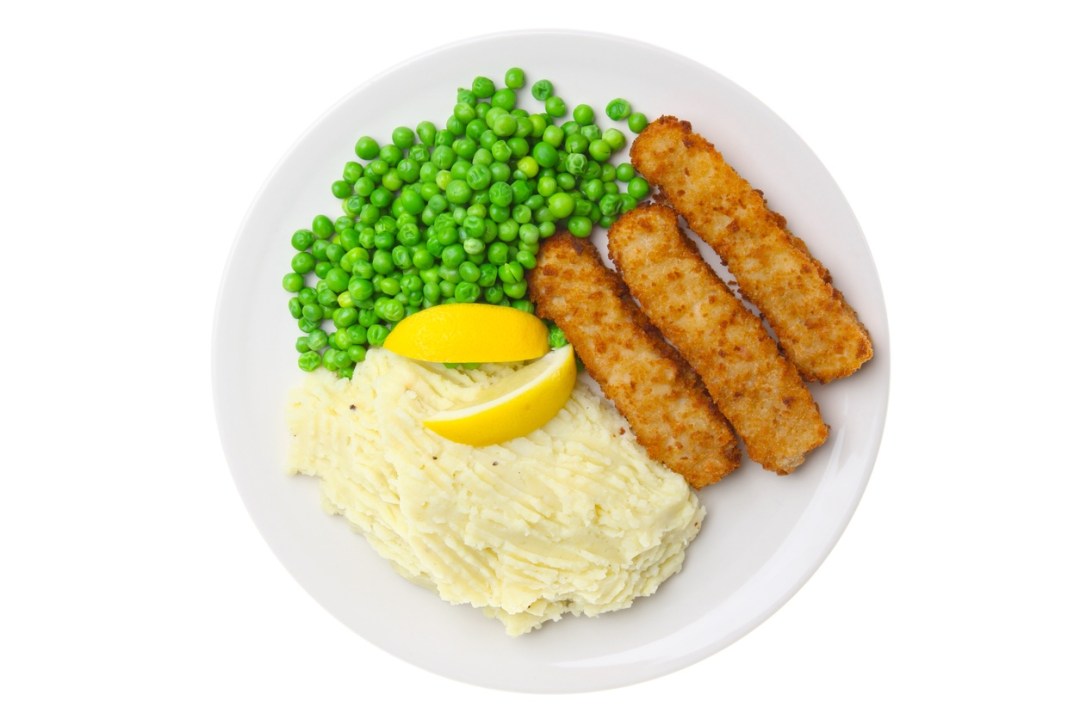
All of which makes me long for the nursery food of my childhood: shepherd’s pie, pâté sandwiches on white bread, microwaved petit pois and ketchup, spaghetti hoops on toast (see Alan Bennett) and a very great deal of sausages with Smash instant mashed potato. If we were thirsty, we were given tap water or milk; if we were hungry in between lunch and supper (a frequent occurrence), we were told to a) bugger off or b) have a piece of fridge-hardened Edam cheese.
Nursery food was never classless exactly but it possesses the rare phenomenon of reverse snobbery: so low it is actually very high. Many aristocrats will tell you, without the slightest hint of shame, that they like to eat Jelly Babies in the below-stairs kitchen with a Nescafé while reading the Telegraph or they prefer to have a ham sandwich on white than eat ortolan in the dining room. For the plant-based vegan and vegetarian parent, such blatant disregard for the potential of food to signify class drives them wild with anger.
And so it goes on: the Pots for Tots vegan recipes claiming ‘real food for real tummies’, the Annabel Karmel cookbooks and, of course, the supplements delivered via Amazon designed for little mouths. Apart from the expense, a brief search of vegan recipes for children on Google is almost always appended with the term ‘for picky eaters’. I am not surprised: it looks perfectly disgusting but I cannot stop – my children’s oven chips are ready.


Comments