
There is not one drop of English blood in my body. I know this because, like many others, I succumbed to the DNA testing fad. I spat into a test tube and forked out 79 quid only to be told what I already knew: I’m a Mick.
Ninety-three per cent of my DNA is from the west of Ireland. There’s a smattering from Scotland and an even smaller splodge from Wales, conjuring up the delightful image of one of my peasant ancestors bumping uglies with a lost Welshman 800-odd years ago. But Englishness? Not a speck. Cupboard’s bare, as I believe you English folk like to say.
I am not a ‘blood and soil’ person. A man is more than his DNA. And yet, it’s not insignificant, is it?
Does it matter? My instinct is to say no. I am not a ‘blood and soil’ person. A man is more than his DNA. And yet, it’s not insignificant, is it? I may have been born in England but every one of my ancestors was from somewhere else. I’ve spent my entire life ticking the ‘White Irish’ ethnicity box on official forms. It would be mad, not to mention rude, if I were now to turn to someone called Dave Smith and say: ‘I’m as English as you, pal.’
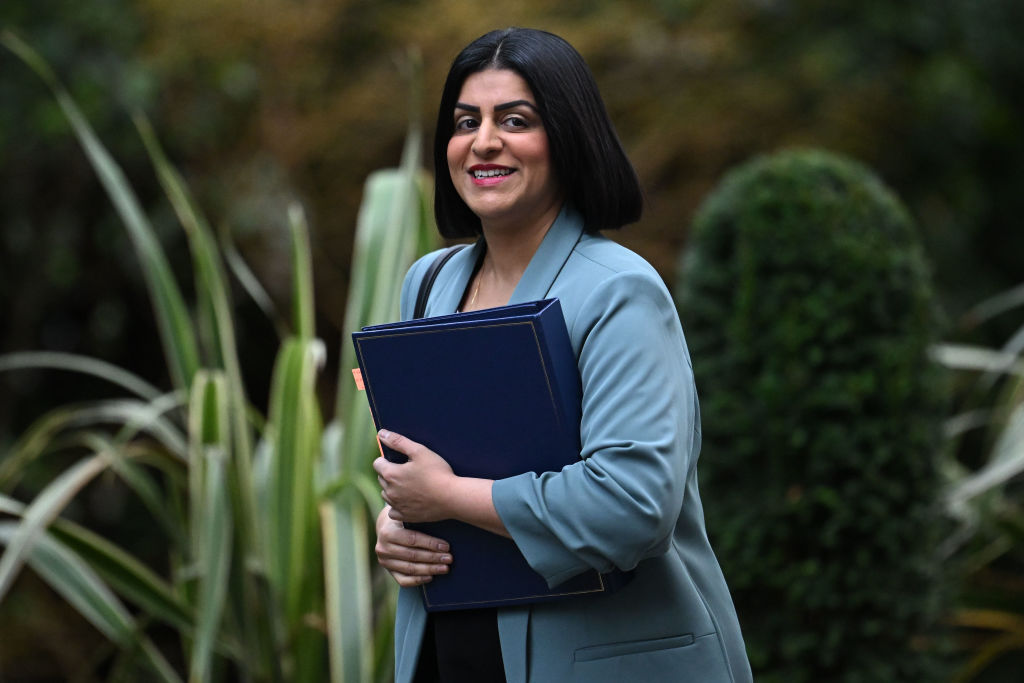
Am I English? This rather navel-gazing stickler whacked me again last week when Home Secretary Shabana Mahmood said she ‘identifies’ as English. In her speech outlining Labour’s immigration reforms, she talked about people like her parents who come to Britain to make a home, and then ‘just decades later, children of theirs may unthinkingly call themselves English’.
On Sky News Trevor Phillips pressed her, especially on her use of that curious word ‘unthinkingly’. Do you, ‘without reservation or hesitation’, call yourself English, he asked? ‘Yes!’ came the hearty reply. I’m a Brummie, English and a Brit, said Mahmood. Cue another skirmish in the culture war, as digital mobs assembled either to deny her Englishness or affirm it.
I hope it goes without saying that Mahmood is a Brit. Phillips, too. Their parents, like mine, may have been born elsewhere – Mahmood’s in Pakistan, Phillips’ in Guyana. But they were born here, and what an impact they have had. Mahmood has ascended to one of the highest offices in the land. Phillips is a bottomless font of British decency and wisdom. I’d far rather entrust the nation’s future to a man like him than to any of those hard-right hotheads whose sole contribution to the culture war is posting homoerotic AI images of Rupert Lowe on a horse.
But how English are we? I think we who hail from elsewhere have a duty to be honest. I can’t speak for others but I very rarely rubbed shoulders with English people during my north-west London childhood. My RC school was about 90 per cent Irish. Our parents used the term ‘the English’ to refer to those outside of our community – native Brits, basically. Prim, Protestant, not like us.
‘Home’ meant one thing only: Ireland. Every day my parents would bump into fellow Irish people who’d ask: ‘Are you going home this year?’ Some went ‘home’ permanently, including my best friend in junior school. It hardly screams ‘Englishness’, does it, this gnawing vision of another home, far off, which you might one day disappear to?
There is no point denying the problem of dual loyalties. Mahmood says when England plays Pakistan in the cricket, she supports ‘England all the way’. She’s a better person than me. I, hand on heart, could not say the same for an England-Ireland football clash. Of course, I stand for the British national anthem but I only feel the hot sting of tears when I hear the Irish one. Is that bad?
It seems to me that both sides in this infernal discussion have gutted Englishness of meaning. One thinks you’re not English unless you’re directly descended from a peasant who witnessed the coronation of King Æthelred. The other thinks you’re English if you like tea and cricket. That’s me screwed: I have no ancestry whatsoever in these lands, don’t drink tea and couldn’t give a toss about cricket.
Englishness finds itself hollowed of all virtue, of all depth, and is treated either as a solely ethnic category or as a pantomime performance of twee habits. Either as an accomplishment of blood or as a thin garment anyone can pull on. It’s simultaneously too rigid and too elastic. What gets lost is the history, the ideas, the meaning of England. I don’t care about your blood or your preferred beverage – tell me the thing in England’s soul that inspires your love and loyalty for this nation?
For me, everything changed with Brexit. When I saw the Irish government and commentariat do everything in their power to scupper that beautiful English revolt, I knew exactly where my loyalties lay – not with the land of my ancestors but with ‘the English’. With the fine people of Bolsover, Hartlepool, Doncaster and beyond. I happily wrapped myself in the flag of England against those anti-democratic usurpers in Dublin. Who knows, one day I might even feel tearful upon hearing ‘God Save the King’. Here’s hoping.


Comments