Good morning from behind the bar, where the beer is still pouring – just. So far this year I have been involved in the sad, and probably permanent, closure of three family-owned pubs. The choice was stark in each case: bankruptcy or fold up. Three families almost ruined, three perfectly good business that employed over a dozen staff and three villages that had already lost their churches, their post offices and – the final nail in the coffin – their pubs.
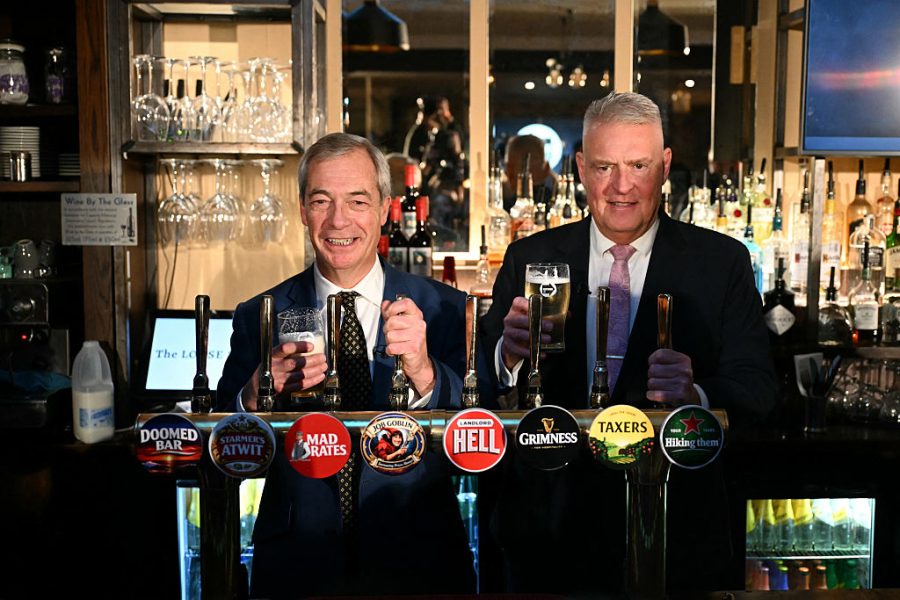
I watched Nigel Farage and Lee Anderson, pint in hand, holding a live-streamed conference from behind a pub bar on Wednesday. Reform UK had decorated the beer taps on the bar top with satirical puns on the names of popular beverages: ‘Taxers’, ‘Doomed Bar’, ‘Mad Rates’ – things that I and every other publican in the UK have been forced to drink more of since Labour came to power. There has been no great call from the government for moderation on those particular poisons.
Farage unveiled a five-point plan to save the great British pub. Tax cuts form the core of the plan, with a 10 per cent reduction in beer duty (from around 49p per pint), halving VAT on hospitality to 10 per cent, and exempting the sector from the employer National Insurance (NI) rise. Duty increases have hurt: Reeves’s 3.66 per cent hike in the autumn Budget added 38p to a bottle of gin, prompting my own 20p price rises last week.
We are losing our ability to argue and socialise
A duty cut could trim 5p from a pint if it was passed, reviving wet sales. VAT relief would help us compete with supermarkets, boosting turnover on our slim 10 to 15 per cent margins. Scrapping the NI hike counters what is otherwise a major cost surge, helping pubs to retain staff and keep doors open.
Far more importantly, it will allow pubs, restaurants and hotels to keep employing young people in that all-important first part-time, weekend, summer-at-home-from-university job that gives a person so much more than wages. The life and people skills learnt washing dishes at 15 in the local pub, or quiet Monday nights pouring pints for all walks of life are invaluable. But the various increases and vast amounts of paperwork required to employ young people have essentially made it unviable.
Farage also laid out his argument for maintaining the current drink-driving limit, rejecting Labour’s plan to reduce it in England and Wales to the lower level found in Scotland (from 80mg of alcohol per 100ml of blood to 50mg). Farage argues that the reduction is unnecessary, as it would damage rural pubs where customers travel distances for an evening out.

He has a point: under today’s limit, a typical driver might manage two pints of standard-strength beer or a large glass of wine. Labour’s reduction would restrict most to one small drink or none to stay legal. This mirrors Scotland, where the limit often means just half a pint or a single spirit. Classic Labour: they can never resist their inclination to intervene, to correct us, to micromanage our everyday lives. As if the biggest problem facing the country is the builder stopping off on his way home for a couple of pints in his local.
By fixating on micromanaging the daily lives of us ungrateful proles, it allows the government to avoid the serious matters of state and economics and avoid making any real decisions. Even better, they get to hector and lecture with the smug holier-than-thou attitude that all Labour MPs seem to learn almost by osmosis.
No one wants a return to the 70s and the 80s; drink driving back then was scourge. But as always there is a sensible and sane middle ground. Reform’s ‘pub’ policy overall gets a B+ grading from me as a publican. As a conservative, however, I am hopeful that Kemi Badenoch will improve on Reform’s offering and aim for an A* grade from hospitality.
Reform’s emphasis on enterprise and on removing government bureaucracy is something we saw work for the pub industry during the Covid pandemic. Back then, the hospitality sector did what the private sector does best: it adapted, it innovated and it excelled as always in spite of – not because of government. ‘I am from the government and I am here to help’ is still the most terrifying sentence in the English language to anyone who runs a business.
But will Reform’s policies make a difference? Will they save pubs? The answer is broadly yes: the tax breaks and rate abolitions they are proposing would tackle the industry’s key financial strains. Not only would they stop many hundreds of pubs from closing, but these measures would also allow us to lower prices and, for once, give something back to the punter. Farage’s position on keeping the drink-drive limit in place in its current form is the sane, sensible compromise between risk and rights. Labour’s aim to lower it would virtually wipe out rural pubs and would hugely damage suburban locals as well. Nevertheless, Reform’s plan to save pubs is incomplete: without addressing energy costs and supply issues, it solves only part of the quagmire the hospitality industry finds itself in.
Here is where the Tories can get an A* from publicans and win back some trust from rural communities. Pubs deserve this support, properly implemented and including help on energy costs. Pubs, more than anywhere else, can help fight the epidemic of loneliness and disconnection, the siloing of society. They can also tackle the increasing sense of disconnection from our neighbours and any kind of national identity, which is endlessly exacerbated by our culture of instant gratification.
Deliveroo, Netflix and Amazon Prime mean we never have to leave the house; Zoom, Facebook groups and online hangouts mean we don’t have to go to the pub or drive to visit friends. But it’s not the same, and we are losing our ability to argue and socialise. To paraphrase the warning from the writer and politician Hilaire Belloc: when we have lost our inns, we will have lost the last of England.



Comments