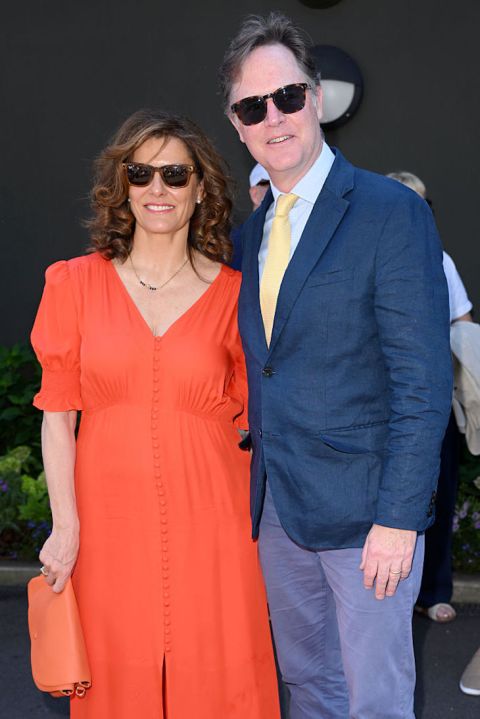
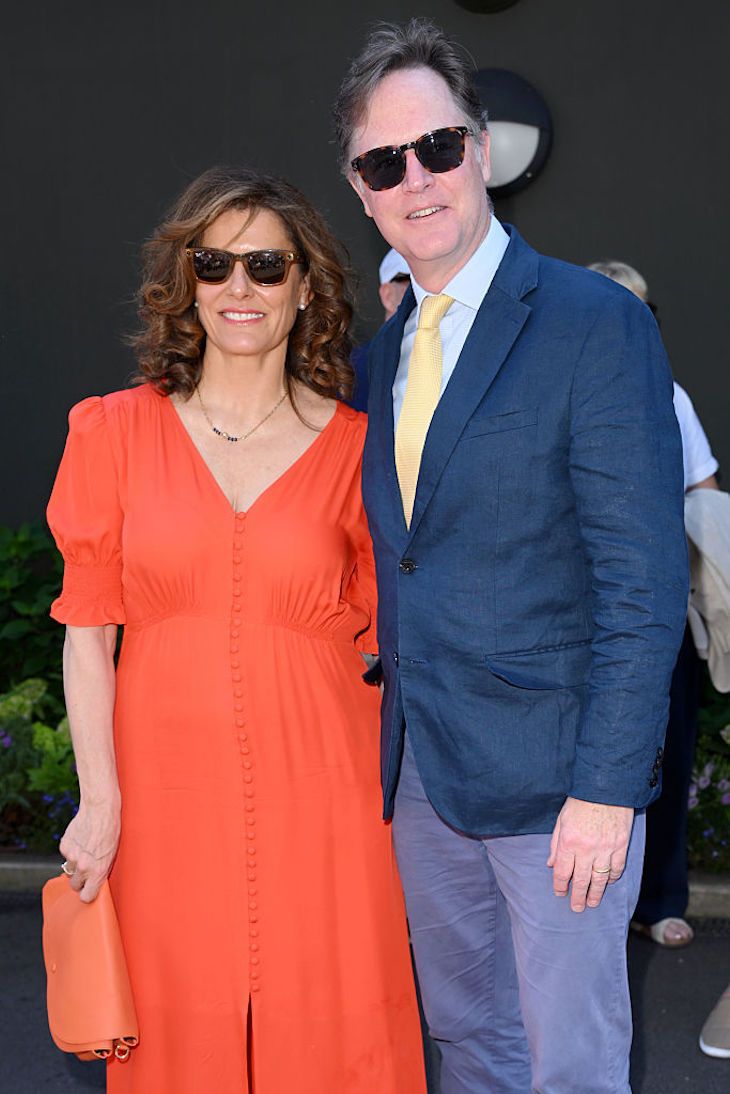
Miriam González Durántez, the wife of Britain’s former deputy prime minister Nick Clegg, has launched a new political party to contest Spain’s general election on 29 November.
Resisting conventional ideological labels, her party, Democracia21, is pitching for voters weary of choosing between Spain’s bitterly antagonistic political blocs. At the party launch in Madrid on Saturday, she urged ‘those who hold their noses when they vote’ to support her new party.
It is just possible, then, that from a standing start a well-run campaign could achieve a parliamentary foothold
This year’s Pew survey found that 68 per cent of Spaniards were dissatisfied with how their democracy works. Spain has now fallen from 30th in Transparency International’s Corruption Perceptions Index in 2012 to 49th in the latest rankings, below Botswana and Rwanda.
González Durántez wants to curb political patronage and strengthen the independence of the institutions that hold government to account. Political corruption in Spain, she told El País, is ‘a social scourge and one of the main obstacles preventing us from moving forward’. She also highlights the plight of young people who work and study but cannot afford a home.
Many Spaniards will recognise her description of two entrenched blocs that do nothing to foster consensus and ‘are squandering the country’s potential’. Her 2019 book Devuélveme el Poder (‘Give Me Back the Power’) is an excoriating exposé of a political class that, since the death of Franco, has made itself increasingly comfortable at the country’s expense.
In that book, she estimated that Spain had between 300,000 and 400,000 politicians – proportionately almost twice as many as Italy or France. ‘It is simply impossible,’ she wrote, ‘for all those politicians to have enough work to keep them occupied.’

González Durántez reserves particular scorn for aforamiento, under which certain politicians can face criminal proceedings only in designated higher courts. As a result, cases can remain unresolved for years after the events occurred. In her book, she put the number of Spanish politicians enjoying aforamiento at around 2,000, compared with just one in each of Portugal and Italy.
She finds it incomprehensible that such privileges do not provoke greater public outrage or receive more persistent attention in the press. Why, she asks, are government leaders of every political persuasion not repeatedly challenged about them until they are abolished?
Perhaps her most devastating criticism is reserved for the ‘infantilising’ system used in elections to Congress, Spain’s lower house. Voters aren’t even trusted to vote for individual candidates, only for a closed party list. Their votes determine how many MPs each party gets, but it is the party leaders controlling the lists who determine who those MPs are. Politicians’ careers depend on pleasing the party leadership rather than listening to the electorate.
It’s a system that encourages unthinking obedience and discourages precisely the people the country needs: capable, independently minded Spaniards. A country rich in talent ends up being led by mediocre politicians.
But voters do not escape González Durántez’s criticism. Those who knowingly vote for corrupt parties and politicians, she argues, cannot wash their hands of the consequences. They may bear no criminal liability, but they do bear an ethical responsibility.
Nor does calling oneself ‘progressive’, as Spain’s socialist party does, confer any moral superiority. Her book criticises the left’s retreat from its traditional concern for social justice. She also takes aim at progressive media outlets – she names the Guardian – for demonising anyone who disagrees with them.
Turning disillusionment into parliamentary seats will be very difficult. González Durántez does, however, start with advantages denied to the founders of many tiny parties. An accomplished international trade lawyer and an established public figure, she also has organisational experience as the founder of España Mejor (Better Spain) and Inspiring Girls International. She will be difficult to dismiss as an inexperienced amateur.
At Saturday’s launch, she announced that Democracia21 would contest only Madrid and Barcelona. That makes sense. Fledgling parties risk squandering money and energy fighting small provincial constituencies where they have little prospect of winning a seat. Focusing her campaign instead on two large constituencies gives González Durántez a more plausible opening. In Madrid she has the chance to attract national media attention.
It is just possible, then, that from a standing start a well-run campaign could achieve a parliamentary foothold. Once in parliament, she would be better placed to pursue her longer-term ambition of building a national party capable of transforming Spain’s dismal political life.
In her book she recalls a Latin American president telling her: ‘In Spain, everything except politics is brilliant.’ I tend to share that sentiment, and I wish her well. But the many who benefit from the present system will not readily surrender their privileges.






Comments