

The horrible murder of Ann Widdecombe is being used both by Reform and its critics as a means of fighting about everything they want to fight about. One example is discussion of the security of MPs, despite the fact that Miss Widdecombe left parliament 16 years ago. Is it impossible to wait until charge and trial, as used to be the rule? I suppose the simple answer is ‘Yes’. So much the worse for our country.
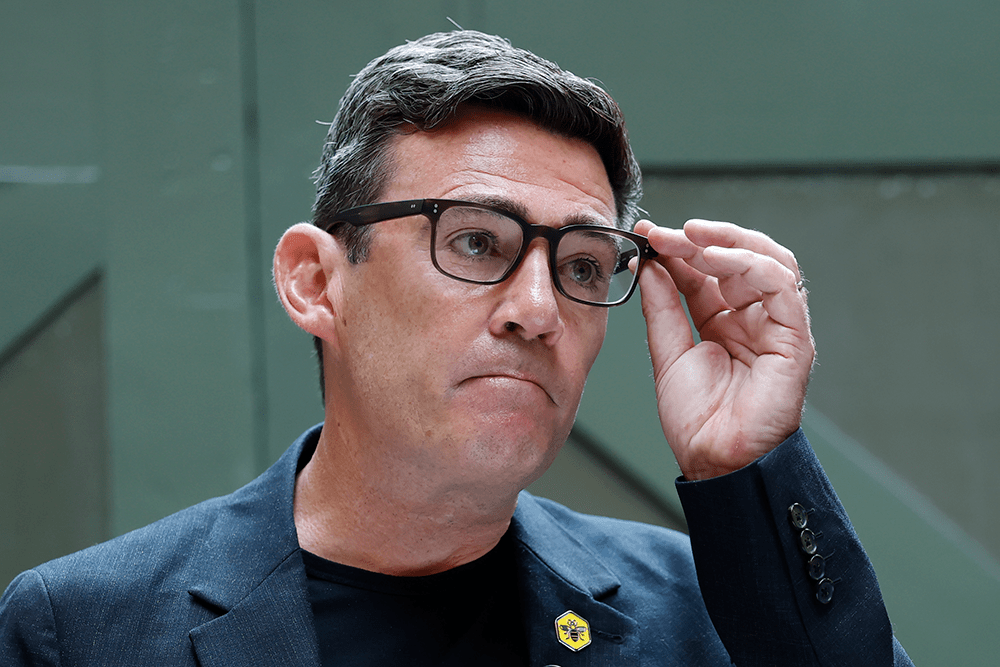
A virtue-signalling Labour government worried by its own unpopularity also deploys something else, a toughness-signalling intended to placate the insurgent right. Take the case of the 73-year-old Shabir Ahmed, the Rochdale grooming gang leader, recently released from prison. Ministers loudly demand his deportation. Andy Burnham says: ‘Like everyone, I want this vile predator out of the country.’ The plan is to alter the Immigration Act of 1971 which exempted from deportation those who had arrived before 1973 and had lived at least five years in Britain. Why should this change be made? People, however vile, should not have their rights retrospectively removed. Nor should Pakistan, whence Ahmed came, have to accept him. His actions have nothing to do with his country of origin and he has been here for more than half a century. Besides, the whole thing is fatuous, since Pakistan cannot be forced to take him. No politician seems to be making these obvious points. Presumably none dares do so, for fear of being called soft on paedophiles. Similar bogus toughness was shown in Sir Keir Starmer’s sacking of Sir Olly Robbins, head of the Foreign Office. Embarrassed by his own appointment of Lord Mandelson as British ambassador, Sir Keir took it out on Sir Olly for not telling him about Mandelson’s lack of security clearance. Yet it had been Starmer, not Robbins, in such haste to get Mandelson in post. The dismissal violated the due process which Starmer loves invoking and ejected a public servant for behaviour which was not iniquitous. Now Sir Olly is seeking a judicial review, and Sir Keir, once our proudest legal eagle, may have his wings clipped. Once again, terror of being soft on paedophilia played its part – the paedo being Mandelson’s friend Jeffrey Epstein. In both cases, ‘tough’ action denotes fear, not courage.

Travelling on the Tube this week, I noticed an advertisement which said: ‘Be discreetly extraordinary. Become a sperm donor.’ Is this a good way to be discreetly extraordinary? Sperm donation contains definite ethical difficulties. For example, is it right that the children you spawn will not know their father? A traditional way to be discreetly extraordinary in Britain is to join the intelligence services. Now, however, the ‘Hillsborough Law’, agreed this week, criminalises discretion. It creates a ‘duty of candour’ which can override the secrecy which intelligence, almost by definition, requires. I suggest that potential sperm donors check whether the duty of candour will apply to them in relation to their children before they go forth and multiply.
My Tube journey was taking me to the commemoration of someone who really was discreetly extraordinary. Ruth Godson, mother of my friend Dean, the director of Policy Exchange, who recently died, aged 98. Ruth escaped Nazi persecution because her father presciently foresaw that the rise of Hitler would doom European Jewry – and duly took her from her native Prague to Palestine in 1933. When Ruth was 16, she secretly joined the Haganah, the Jewish defence group of the British Mandate era. She was being trained by the British authorities who were preparing for the anticipated attack by the Afrika Korps. Ruth did not tell her parents, but was surprised, when attending its gatherings, to find her father there. Neither acknowledged the presence of the other. When the state of Israel was created in 1948, four Arab armies attacked. Ruth was enlisted to procure weapons from the newly communist state of Czechoslovakia, an act which David Ben-Gurion regarded as crucial to the victory. No one knew about this until her old age. For that generation, discretion and extraordinariness went together.
Ruth’s first memory of politics was during the 1936 Arab revolt against the Mandate, fuelled by the anti-Semitism of the Grand Mufti of Jerusalem (who later fled to Hitler’s Germany). One day, the local Arab handyman brought watermelons as usual. Ruth’s mother noticed one had been serrated. Opening it she found a swastika carved inside. The handyman vanished. This was the shape of things to come, including 7 October 2023.
Canon Alistair Macdonald-Radcliff is rector of the famed Anglo-Catholic Advent church in Boston. He recently boarded the Queen Mary 2. As he always does when travelling by sea, he asked if he might conduct services of Holy Communion. His request was refused by Cunard, the owners. It now has a land-based bureaucracy, so decisions are no longer made on board. A man entitled the Deputy Entertainment Director told him that he could not hold a service without agreement before boarding – a rule never before mentioned. The QM2 does have a service conducted by the captain on voyage, but of course no captain can administer the sacraments. The new rule goes against long-standing practice. Strange, since many passengers want Christian services. So do many of the crews. On a previous voyage where, unusually, no Roman Catholic priest was on board, Canon M-R found himself administering the Eucharist to 250, many of whom were Filipinos. ‘What sort of sacraments do you want to use?’ asked the deputy entertainments manager, as if they were electrical equipment or firearms. In the end, the canon made enough fuss to be granted a room, but it was permitted so late that the ship’s bulletin was not able to advertise it. Sad, given the strong tradition of Christian concern ‘for those in peril on the sea’.






Comments