
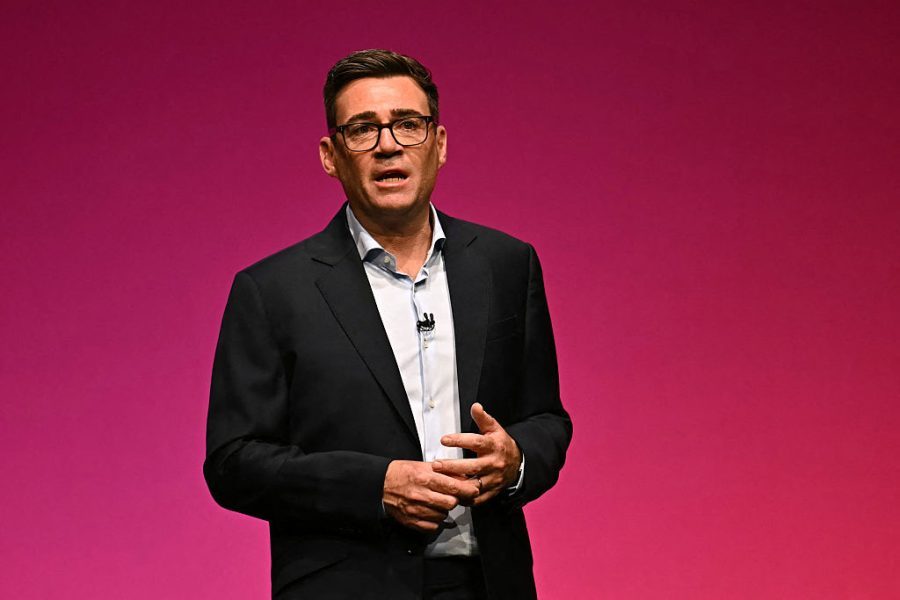
Andy Burnham tells us that he left the House of Commons in 2017 because he was disillusioned with the place. It was not at all because he had lost the 2015 Labour leadership campaign to Jeremy Corbyn and fancied his chances of building a power base in the Manchester mayoralty, just as Boris Johnson had successfully done in London. But did he have to go and hide his head under a stone after he left Westminster?
Burnham now seems to think that he has an answer to Brexit. Let’s discuss a slate of options and then all rally behind the consensus choice. ‘We could stay as we are,’ he told the Labour party conference:
That’s definitely an option, if people think this is the right place to stay. We could look at what George Osborne has said about a customs union, we could look at what the Liberal Democrats said at their conference about the single market, or we could go all the way.
Now that the UK public, on the Prime Minister’s instruction, has stopped doomscrolling and is starting to pull together, we will all surely coalesce around the chosen option. We can make a grown-up decision either to stay outside the EU, rejoin, or some arrangement in between.
The UK public has always been, and remains, hopelessly split on Brexit
Or maybe not. What on earth was Burnham doing on the evening of 27 March 2019 when the Commons went through exactly this process: debated and then voted on eight different options, ranging from leaving the EU immediately without a deal to revoking the legislation to leave the EU altogether. The ‘indicative’ votes, as they were known, were held in the hope that at least one of them might command a Commons majority. Alas, none did. The one which came closest was the proposal for a customs union, proposed by Ken Clarke, but that was defeated by eight votes, 264 to 272, with 98 abstentions. A proposal to hold a second referendum on the withdrawal deal achieved a few more votes than the customs union idea but was defeated by 27 votes: 268 to 295.
Five days later the exercise was repeated, this time with only four choices, in the hope that this might make it easier for MPs to achieve a majority on at least one of the proposals. It didn’t help, perhaps, that the speaker, John Bercow, chose which four would be voted upon and chose to leave out the hard Brexit options. Again, no majority could be secured, although the customs union idea only failed by three votes this time.
But even had the customs union option been supported by MPs, would it have been what the public wanted? Quite possibly not, because when the public, later in the year, were asked to vote in a general election they plumped for Boris Johnson and his oven-ready deal, which certainly didn’t involve a customs union. Jeremy Corbyn’s Labour, which proposed to hold a second referendum within 6 months, went down to its heaviest defeat since the 1930s while Jo Swinson’s Liberal Democrats (anyone remember her?), who promised to cancel Brexit altogether, disappeared without trace.
The truth is that the UK public has always been, and remains, hopelessly split on Brexit. Remainers take comfort from polls which show a majority currently in favour of rejoining the EU. Wiser heads, though, can read little enthusiasm for reopening old wounds: polls have been volatile and have often shown rather higher majorities agreeing with the proposition that Brexit has been a mistake than actively want to rejoin.
That is why Keir Starmer, who spent much of his time in opposition demanding a second referendum, steered well clear of rejoining once he was in office. He could see that repeating the agonising years of Brexit negotiations wasn’t going to be popular. What would happen if the EU demanded that a rejoining Britain also join the Euro and the Schengen Agreement? We would land back in the kind of stalemate which ravaged the Commons while Burnham was absent. He may end up wishing he had never reopened the debate.






Comments