
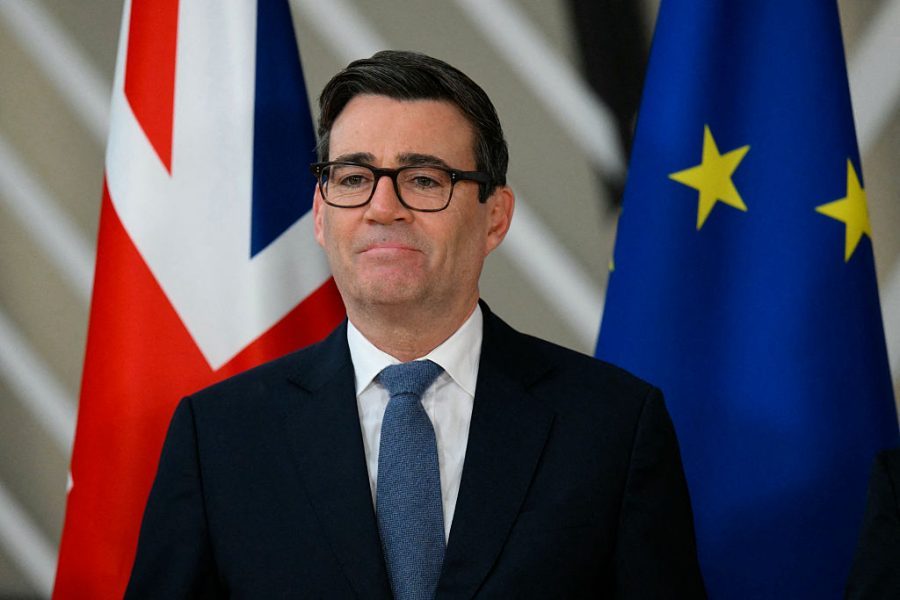
On the basis that every prime minister is an equal and opposite reaction to their predecessor, Andy Burnham is really giving the impression of ambition and confidence that Keir Starmer never mustered. This Prime Minister has still only been in the job four months and has already suggested that he has huge ambitions for social care reform, welfare reform and reopening the Brexit deal. Today, he added another straw to the camel’s back by suggesting to MPs that he could campaign for another In/Out EU referendum. It is not so much that he is opening Pandora’s box as he is clambering into it and making himself comfortable with its inhabitants.
Burnham was giving his statement to the Commons on his talks in Brussels and his longer-term plans to reset Britain’s relationship with the European Union. He insisted that:
The agreement reached in Brussels on Friday holds out the very real prospect that the next decade can be a better one for Britain than the one we have just lived through.
Burnham is enjoying a fair amount of good will from his own backbenchers
As a result of the Prime Minister’s own announcements since entering Downing Street, the next decade should include a major overhaul of the benefits system, an expensive and controversial reform to social care, and lengthy negotiations with the EU. That’s a lot, even for someone with Jensen Huang-levels of bandwidth and time management. And it’s not unreasonable for previous occupants of the job – including Tony Blair – to wonder whether Burnham might end up getting derailed by Europe and therefore unable to do the other things. Indeed, it’s not unreasonable for any of those previous occupants, including Starmer, to suggest that Burnham could be derailed by any of those three issues on their own, let alone trying to do all of them at once.

It was when Tory MP Bernard Jenkin asked Burnham to agree that it would be ‘unthinkable’ for a government to take the UK back into the bloc without a referendum, that Burnham replied: ‘Yes, it would be unthinkable.’ Given Burnham’s private desire for the UK to rejoin is well known, this is not a hypothetical, no matter how much he argued today that he would not recommend a deal that was in the UK’s interests, or that all options were on the table. The point is that rejoining is one of those options.
That it is one of the options is why so many campaigns on both sides of the In/Out divide have already got up and running. And it means that Brexit will now dominate political discussions, regardless of whether MPs themselves have any inclination to dredge up a period that many of them who were in parliament at the time would rather forget.
Now, a prime minister can perfectly easily tackle a number of big issues at once, provided they have a strong ministerial team and nimble government machine behind them. They also need to have a party that is loyal and trusts them. Currently, Burnham is enjoying a fair amount of good will from his own backbenchers. But the problem with European reform, benefits reform and social care reform is that each of them will burn a good amount of political capital within the party, leaving less trust and faith in the Prime Minister for the next big issue.
Keir Starmer could tell Burnham that: he burned so much good will over welfare reform that he couldn’t get MPs to back other priorities. Starmer could also tell Burnham that bandwidth isn’t totally elastic: he was paying so much attention to foreign affairs at the time of his benefit cuts that he totally failed to recognise the rancour building in his own party until it was too late.
Burnham has only so far said that he is prepared to stake a lot of political capital on social care, but he will know that welfare and Europe will have the same effect. At some point, he will have to choose; otherwise, he will find that he achieves none of those three and ends up looking far more like the man he replaced than he would have imagined.




Comments