
Should public utilities be in public hands? I am prepared to see both sides of that argument, especially as some privatised companies – Thames Water, for one – have hardly been great adverts for private enterprise over the years. Monopolistic private companies seem to me to be as bad as monopolistic nationalised ones. If we can’t have competition, then maybe state ownership in some cases is the lesser of the evils.
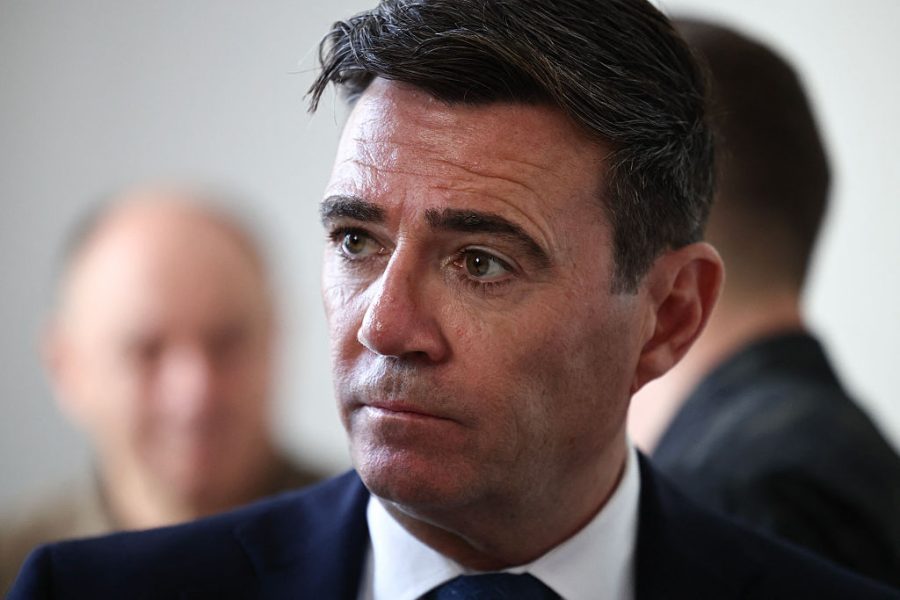
But Andy Burnham doesn’t want to stop there: he is apparently going to tell the Commons today that public control of utilities is the only way to grow the economy. Really, the public sector, the fount of all economic growth?
What Burnham and the anti-austerity lobby have come to believe is a perversion of Keynsianism
It is a delusion which is sadly all too common on the Left. It is the underlying belief of the ‘anti-austerity’ movement: cut public spending, goes the argument, and you will cause contraction in economic activity. It does not seem to occur to such people that private spending might also boost the economy and that by taxing people too heavily in order to fund the public sector you are restricting that private spending. Moreover, by transferring resources from private to public sector you are suppressing the more productive side of the economy and boosting a public sector where productivity has hardly grown in three decades.
If the entire economy behaved as the public sector has done over the past three decades, we would never get richer as a society, ever. Productivity is unlikely to be growing in the foreseeable future, either, given that Burnham has just followed Rachel Reeves in chucking fat pay rises at favoured groups of public sector workers – i.e., the train drivers which Burnham relies on to reach his No. 10 North – without any requirement for them to adopt improved working practices.

What Burnham and the anti-austerity lobby have come to believe is a perversion of Keynsianism. It starts with a reasonable proposition: that deep in a recession, when many individuals and businesses are too scared to spend, it can make sense for the state to step in, borrow some money and build things. It was how the Hoover Dam got built, for example. Well-conceived state spending in such instances can help the economy twice over: by providing immediate work for the unemployed as well as by building infrastructure to help business growth when confidence returns.
But this has evolved over the years into a belief that high state spending needs to be maintained throughout the economic cycle, in good times as well as bad, even when businesses and individuals are bursting with confidence. The anti-austerity brigade has forgotten the other half of Keynes’s prescription: that come the end of recession, the government should start paying back the money it borrowed during the bad times and build up a surplus to provide some armoury for the next downturn. The failure to take this action has led to governments of both colours running deficits for each of the past 25 financial years. It has left us with debt that is costing taxpayers £100 billion a year in interest payments.
If every month I put more on my credit card than I earned, I don’t think my wife would call it ‘austerity’. Since making his foolish remark last year that we should feel less ‘in hock’ to the bond markets (without actually paying off debt), Burnham has tried to convince us that he didn’t really mean it, that he does believe in fiscal responsibility. His latest pronouncements suggest the opposite: he is a big state man who has fooled himself into thinking that only by taxing and borrowing to fund yet more state spending can we grow the economy. He is heading for a very big disaster.





Comments