
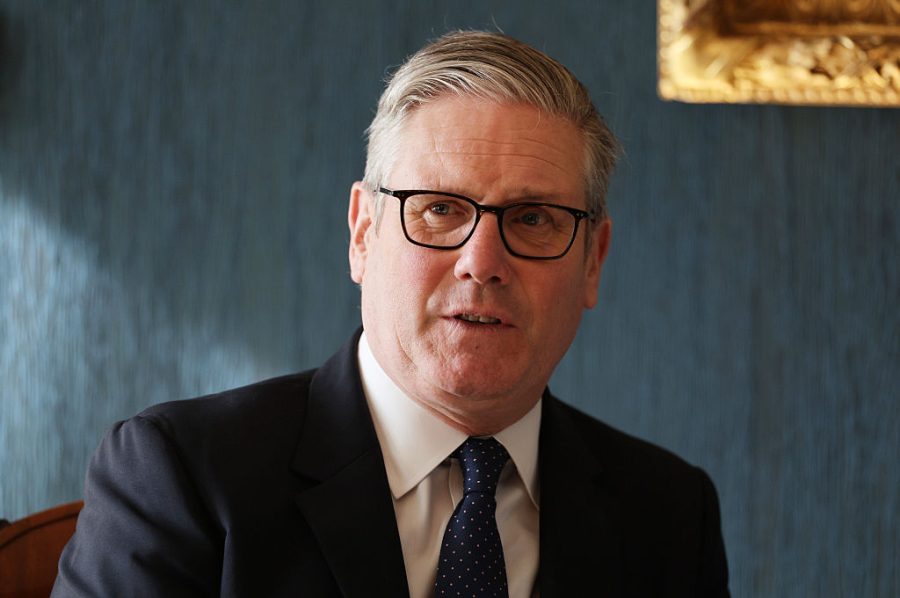
Whenever Keir Starmer and his ministers are pressed on the lack of a plan to raise Britain’s defence spending with any speed, they skirt the question with the reply that ‘we are delivering the largest sustained increase in defence spending since the Cold War’. But are they actually?
Earlier today, Nato published its general secretary Mark Rutte’s annual report for last year, which outlines the work of the alliance across the globe. Included in it are several tables of figures which set out how much each Nato member is estimated or known to have spent on defence each calendar year going back to 2014. The figures in today’s report have been updated to include the latest estimates for each country for 2025 – both as a percentage of GDP and in real terms.
This places us below the Netherlands, Turkey and Greece in terms of share of GDP
The data reveals that the UK is estimated to have spent just 2.31 per cent of GDP – or just over £70 billion – on defence last year. Damningly, this represents a downwards revision of Britain’s spending: in a report published halfway through last year, Nato officials forecast the UK to be on track for spending 2.4 per cent of GDP. This new set of defence spending figures places us below the Netherlands, Turkey and Greece in terms of share of GDP. Added to this, Rutte’s report has also locked in and revised down Britain’s defence spending for 2024: from an estimated 2.33 per cent of GDP to a final figure of 2.28 per cent.
In real terms, it appears that the UK has spent approximately £42 million less on defence than Nato expected us to last year. While this is an admittedly small sum in real terms, with regard to GDP this sets Britain even further back from our pledged aim to reach 5 per cent of GDP on defence spending by 2035. Even Starmer’s aim to reach 2.5 per cent of GDP by next year seems less attainable now.

And as for Labour’s claim that they are overseeing the ‘largest sustained increase in defence spending since the Cold War’? Well. Nato’s latest figures show that between 2014 and 2025, Britain’s share of real GDP spent on defence amounts to just 0.18 per cent.
Appearing before the House of Commons liaison committee earlier this week, Starmer promised that he would be setting out ‘in due course’ how he intended to go ‘further and faster’ with defence spending. But the Prime Minister’s dithering is already costing the country’s defences in numerous ways.
In the past few weeks alone, we have seen Royal Marines forced to practise exercises in the High North off a German submarine because none of our own were available for use, while the government’s decision to send HMS Dragon to Cyprus has forced the Navy to carry out duties in an upcoming Nato expedition off a German ship.
How long can Starmer continue to kick the can of defence spending down the road? The pressure on the Prime Minister is piling up: there is still no indication of when the defence investment plan – first expected last autumn – will be published. Similarly, military chiefs have warned Starmer that, to fulfil current defence commitments, let alone any made in future, the armed forces face a funding gap of £28 billion. Beyond a vague commitment to reach 3 per cent of GDP in next parliament (i.e. not before 2029), there is no roadmap for how Britain will reach 5 per cent of GDP by 2035.
But with the next Nato summit not due for over three months and Chancellor Rachel Reeves’s next Budget at least half a year away, there is every chance Starmer will continue to promise ‘soon’ and do little to act. So brace yourselves for more bad news.


Comments