
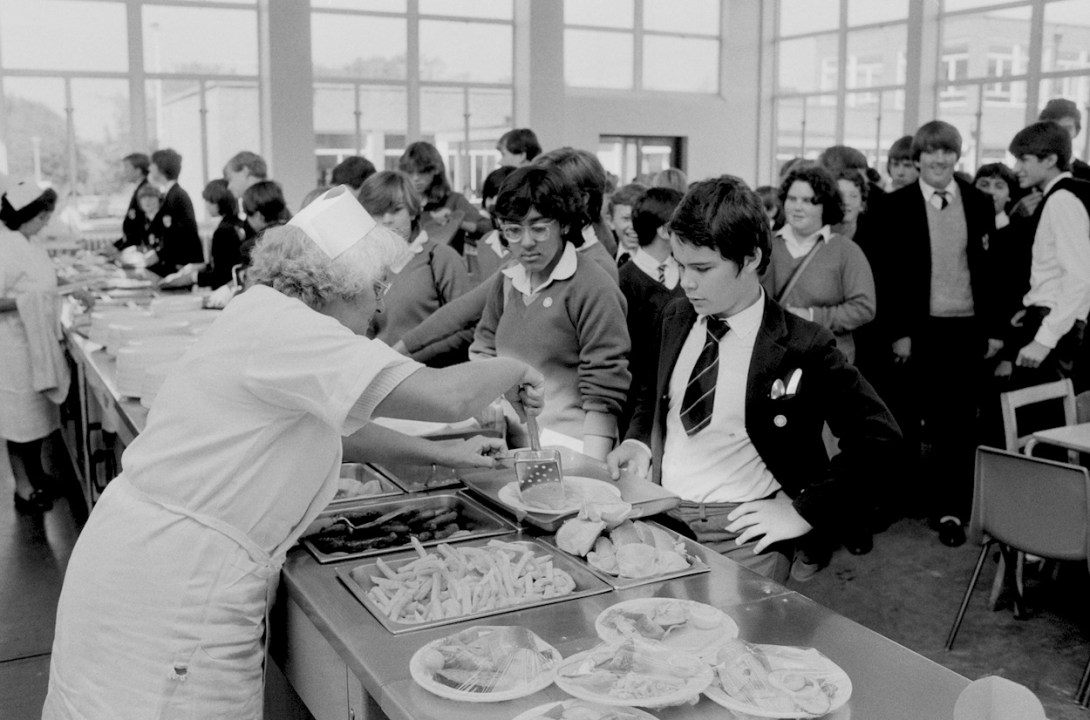
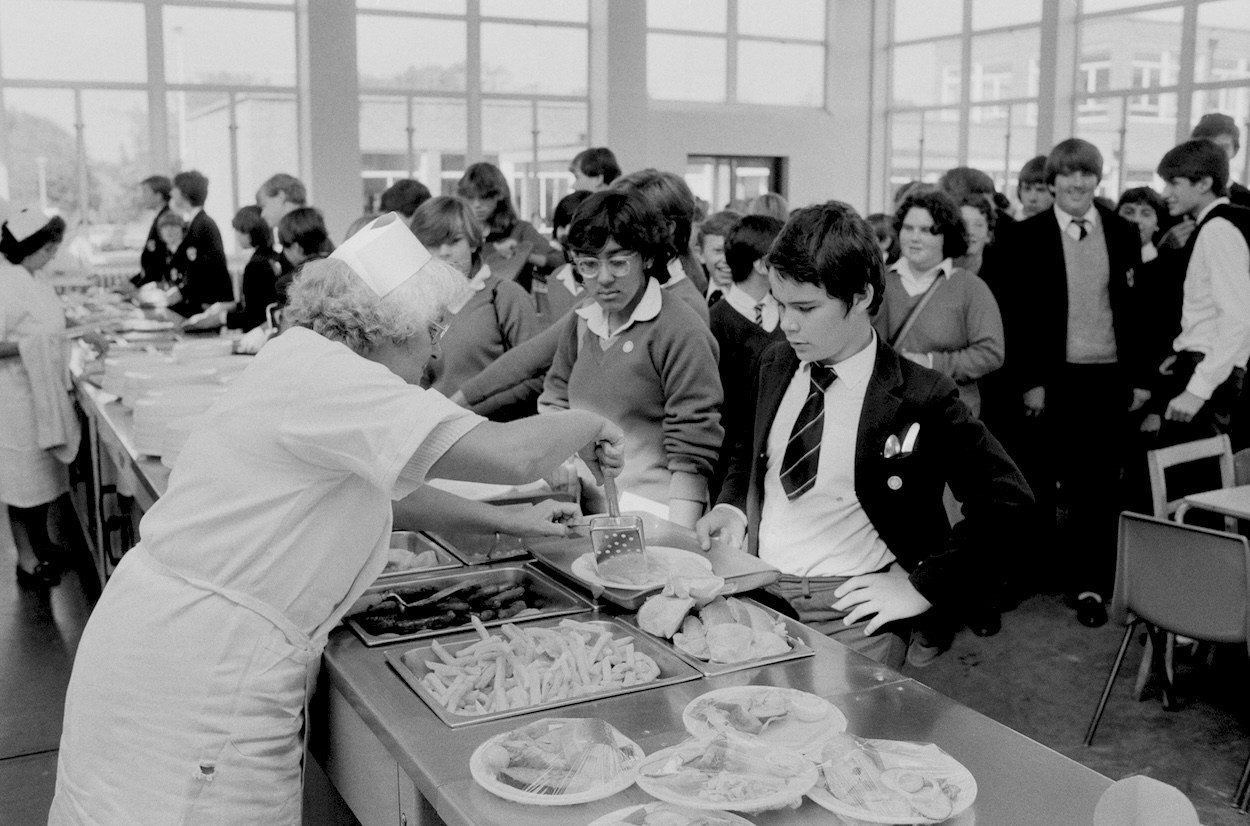
The first crusade against school dinners saw Jamie Oliver defeat Bernard Matthews and rid the canteen of Turkey Twizzlers. The latest diktat from Whitehall means that from September next year a whole range of English school dinner staples will be banned or severely limited. Deep-fried carbs will be gone, so no proper fish and chip Fridays. Cakes and sweetened desserts will be restricted to twice a week, so fewer crumbles, jam roly-polys and Angel Delights. Will sponge with jam and coconut even survive the witch-hunt? There’ll be fewer sausages and less ham but more lentils and chickpeas. And no iced buns at breakfast.
What has led to the pastry purge? Well, the government is panicking over a supposed increase in the number of fat kids. The National Child Measurement Programme (NCMP) weighs all of the half-million ten-year-olds in English state schools. It already thinks that 22 per cent of these children are obese with a further 14 per cent being overweight, up almost five percentage points since 2007 – and thinks the proportion is set to increase.
The fear is that fat kids become fat adults. Already two-thirds of British adults are overweight, and almost a third are obese, according to the Health Survey for England. The World Health Organisation says that physical inactivity is the fourth leading risk factor for global mortality and NHS research says that people who are physically active have a 20 to 35 per cent lower risk of heart disease or stroke compared with couch potatoes.
A serious problem, sure. But are the numbers fair? Chris Snowdon has already documented the issue with the government trying to determine how many fat kids there are. In the 1980s they based it off the orders of uniform sizes (and who knows if they controlled for the number of parents who might order a blazer one or two sizes up). In 1995 the first proper survey concluded that some 15 per cent of 11- to 15-year-olds were obese, three times more than in 1990. The NCMP has historically tweaked its models and datasets to try and get a better picture of childhood obesity, but the core problem is that it uses its own thresholds, not clinical ones, to judge which children are obese. This means that the proportion of obese children is probably 7 per cent lower than they claim.
Even so, if the figures are correct and the number of obese and overweight children is increasing, will cutting out two slices of cake and reducing the amount of baked beans they eat really help? As the WHO and NHS reports say, physical activity is also important in trying to deal with obesity. The Youth Sport Trust says that across the country almost 4,000 hours in PE were lost in state schools last year alone.
Labour has already expanded the provision of free school meals to all children in households on universal credit, which is around half a million pupils. The change helps poorer families financially, and targets children from deprived backgrounds who are more likely to be obese. Even if the total number of obese children from the NCMP is erroneous, the distribution of obese and overweight children still stands. In their figures, obesity rates for the most deprived decile are 29 per cent, but drop every decile to 13.5 per cent for the least deprived.
Similar gaps are seen between regions. Again, the NCMP claims that a quarter of Year 6 pupils in the North East and the West Midlands are obese. But this drops to a fifth in the more affluent East, South East and South West of England.
How effective this will be in places like the North East is another matter. For many pupils in secondary school, it’ll still be easy enough to grab a steak slice on the way in or a cheap burger on the way home, or sneak out at lunch for 50p can of Euro Shopper energy drink. After all, in Newcastle, there are around 19,000 pupils in state secondary schools and 32 Greggs. That works out to more than one Greggs for every school.
With that in mind, how long before the government makes another change to the menu?






Comments