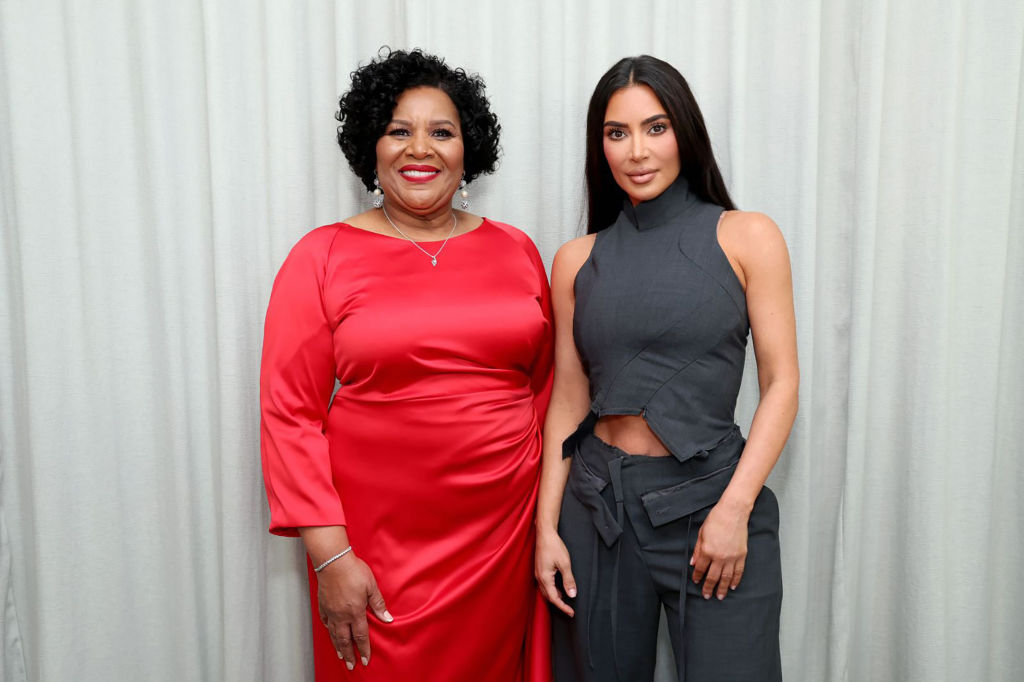

Late in his first term, Donald Trump pardoned a Memphis woman named Alice Marie Johnson, who was serving life in prison without parole. While in prison, Johnson was a more than exemplary inmate, becoming a certified hospice worker for the dying, writing plays and acting as a spiritual leader and mentor to her fellow female prisoners.
Alice Marie Johnson is a voice for people, especially women, who are in jail for the wrong reasons
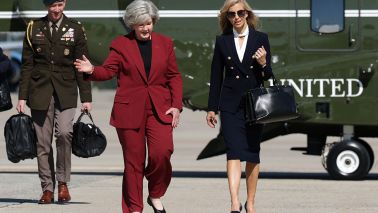
After her release, Johnson published a book called After Life: My Journey from Incarceration to Freedom and became a public advocate for clemency. In February last year, Trump named her the US’s first-ever “pardon czar,” an informal advisor for pardons and clemency in his administration. “Alice has been just incredible,” Trump said. “She knows many, many people that have been put in prison… and whether they should have been or not.” Johnson added: “I’d like to say, President Trump, thank you for having mercy upon me. I promise I will not let you down.”
The second Trump administration, at least on the surface, is the most tough-on-crime presidency in decades. Yet Trump has made quite a show of issuing presidential pardons, giving out more than 1,600.
Nearly 1,500 of those were handed to January 6 defendants, and quite a few others seem to have business connections with the President, such as a Florida nursing-home operator whose mother raised millions of dollars for his campaign. Trevor Milton, the founder of the electric-truck manufacturer Nikola, was pardoned after being convicted of wire fraud and security fraud. But, according to Trump, “they say the thing that he did wrong was he was one of the first people that supported a gentleman named Donald Trump for President.”
Very little of that is in Johnson’s lane. She was born in Mississippi in 1955 and raised five children under conditions of extreme financial hardship. This struggle was relieved somewhat when she became a communications liaison for a Memphis-based drug ring. In 1996, she was arrested and charged with multiple drug offenses, including conspiracy to possess cocaine with intent to distribute, money laundering and related offenses, even though she had no prior criminal record and wasn’t involved in any drug-related violence.
She got life without parole due to drug and conspiracy laws which allow someone to be held responsible for the entire amount trafficked by the group, even if they didn’t personally handle the drugs. She became a symbolic victim of the War on Drugs. News of her spotless record and saintly prison conduct reached a higher authority in the form of burgeoning lawyer Kim Kardashian, who adopted Johnson’s case, met Trump’s son-in-law Jared Kushner about her and eventually went to the Oval Office to present a plea to the President. In June 2018, Trump granted Johnson full clemency and she walked free, receiving a rare full pardon in 2020.
Johnson has devoted the rest of her life to advocating for criminal-justice reform. Her actions were so consistent and profoundly inspiring that Trump appointed her “pardon czar” last year. Her informal role includes reviewing clemency petitions and helping the administration identify unjust or excessive sentences. Johnson advocates for nonviolent offenders; those who have shown remorse and rehabilitation and have plans for re-entry into society; and cases where she believes past sentences were, she told Fox News, “harsh, unfair or outdated.”
“Some say you do the crime, you do the time,” Johnson said during a speech at the RNC in 2020. “However, that time should be fair and just. We’ve all made mistakes. None of us want to be defined forever based on our worst decision.”
That said, there are some politics at play in the world of Trumpian clemency. It’s not just innocent drug-war victims benefiting. A lot of Trump’s pardons have gone to industrialists and celebrities (or near-celebrities). Among those who have benefited from Johnson’s advocacy are Carlos Watson, founder of Ozy Media, who Trump pardoned on the eve of his imprisonment; reality TV personalities Todd and Julie Chrisley, who Johnson said were victims of a “weaponized justice system” and Gangster Disciples founder Larry Hoover. The commutation last November of private-equity executive David Gentile’s proposed seven-year sentence for a multi-billion-dollar fraud scheme raised eyebrows.
Johnson has said, when asked how she decides which cases to take on: “I look for those who are still in prison, and some of those, their cases are so absolutely terrible that those laws are not even in effect anymore – I think those individuals would be worthy of a pardon.”
Other beneficiaries of her advocacy include Judith Negron, who was given 35 years for her part in a Medicare fraud scheme. The White House said she had spent her life in jail “improving her life as well as the lives of her fellow inmates.”
Tynice Nichole Hall, who was handed an 18-year sentence for nonviolent drug charges, was freed after she “accepted responsibility for her past behavior and worked hard to rehabilitate herself.” And Crystal Munoz, with whom Johnson served time in Texas, was released after her 2007 conviction on marijuana distribution charges. She had “demonstrated an extraordinary commitment to rehabilitation,” the White House said.
“Anyone who thinks that these women should not have been granted clemency has not looked at their cases,” Johnson told Fox News. “They should be celebrating that these mothers are being reunited with their families.”
Presidential pardons have always been a bit of a political football, with friends, business partners and even Rod Blagojevich getting free passes when perhaps they shouldn’t. But Johnson is a rarity in presidential circles: a voice for people, especially women, who have been in jail for too long and for the wrong reasons. “Now that I have a voice,” she told NPR in Chicago, “I’m going to use it to fight for those who are still incarcerated, who don’t have a voice like I have right now.”
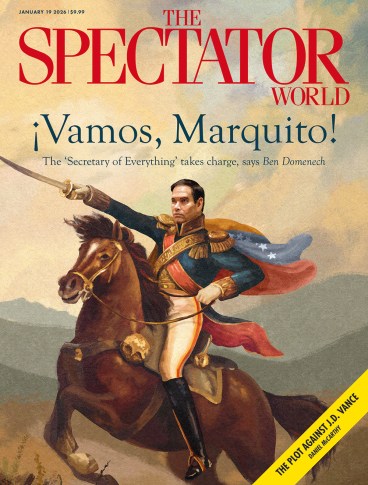
This article was originally published in The Spectator’s January 19, 2026 World edition.


Comments