
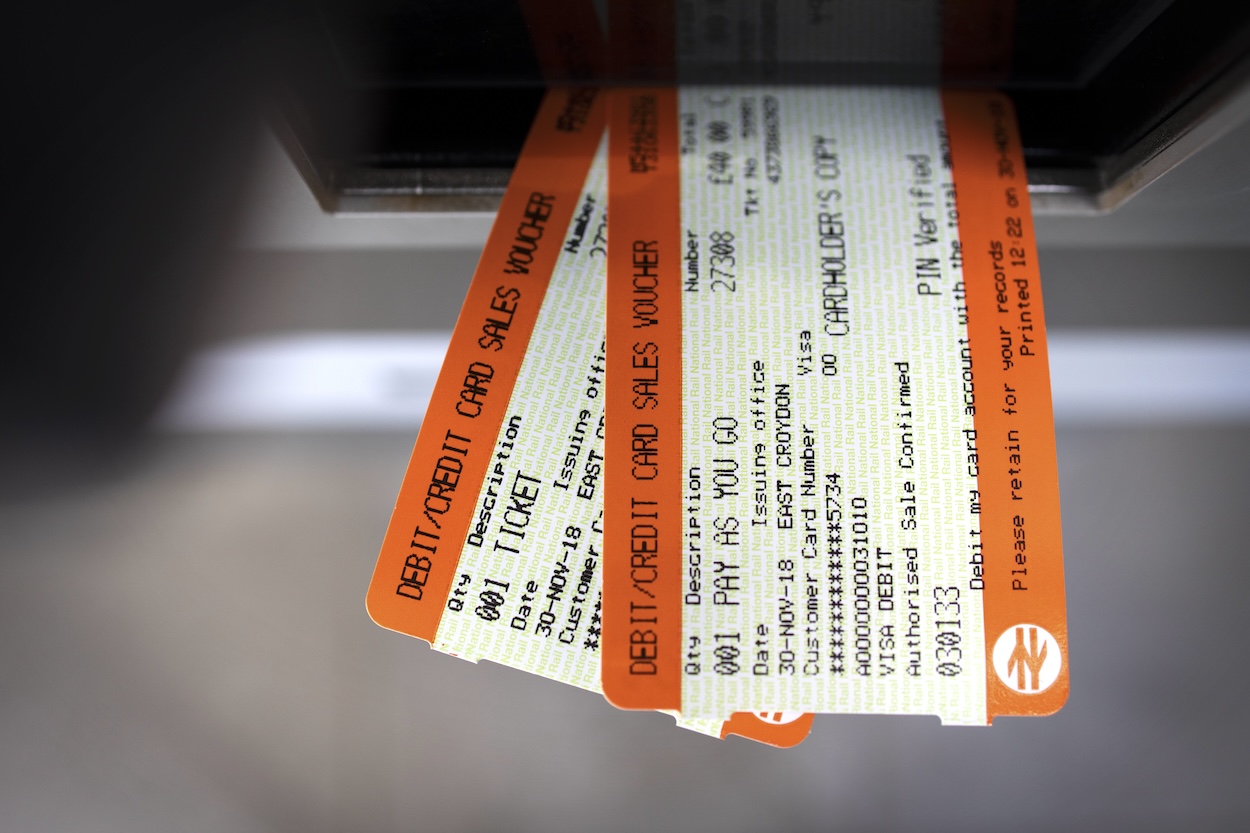
Normally rail ticket prices are raised in line with the Retail Prices Index (RPI) plus 3 per cent. This January, unusually, they didn’t increase. But that is not how it will feel if you fancy a short break in Edinburgh. In that case, you may well find yourself paying double what you used to pay.
Say, on the spur of the moment, you fancy a short trip to the Scottish capital from London this weekend, but you are not quite sure which train you can leave on and when you want to come back. In the past, you could have bought a Supersaver Return, which allowed you to take any off-peak train there and back.

But LNER, which operates most of the trains on the East Coast Main Line, has recently abolished these tickets, forcing you either to book advance tickets for the outward and return journeys or to cough up £404.60 for two ‘anytime singles’. Apparently, according to the company, it is all part of ‘simplifying’ the ticketing system – so it is all for our benefit. Except, of course, it is not.
The snag is that advance tickets are only valid for a particular train and, as their name suggests, can only be bought in advance – meaning they are of little use to people who might have to travel at short notice, say for a family emergency. If you miss the train that you are booked on, you have to pay again. If you get on the wrong train by mistake – say the 30-minute delayed 10.35 rather than the official 11.05 – you will be charged a penalty fare.
How outrageous that these privatised rail companies are ripping us off, you might be tempted to say. Labour’s renationalisation cannot come soon enough. Except that LNER already is nationalised and has been since the previous operator, Virgin Trains, surrendered its franchise in 2018.
By chance, however, there is still a private train company on the London to Edinburgh line called Lumo that operates under what are called open access arrangements, which allow a limited number of private trains to compete with the main franchises. Lumo’s own anytime tickets cost less than half what LNER’s do: £186 for a return from London to Edinburgh.
If you are hoping that renationalisation will lead to lower fares, forget it. If LNER is anything to go by, Great British Railways – as the latterday British Rail is to be known – looks like acting more rapaciously than the privatised rail companies ever did. It will be driven to do so, given the way that costs are now running out of control even more rapidly than they have in recent years.
Apparently, according to the company, it is all part of ‘simplifying’ the ticketing system – so it is all for our benefit
Just look at the way the government nodded through a fat pay rise for train drivers in its first week in government last year, with no strings attached and no requirement to improve their productivity or working practices. Day-to-day running of the railways is already costing taxpayers £11.9 billion a year in subsidies – a little more than the £11.5 billion in income from fares. Yes, costs are so high that even £400 returns from London to Edinburgh are not covering the bills.
And do not assume the likes of Lumo will always be around to offer us affordable fares. So far, the government has not said it will abolish them, but that is what the train drivers’ union, ASLEF, wants: wholly public ownership of every train, track and station. It will not be a surprise if the government at some point decides they are an inconvenience to Great British Railways.
Rail privatisation never really succeeded because there was never enough competition. In most cases, private operators enjoyed a monopoly over their routes – which they ruthlessly exploited. But no, a state monopoly is not going to serve us any better. It is likely to be far worse.




Comments