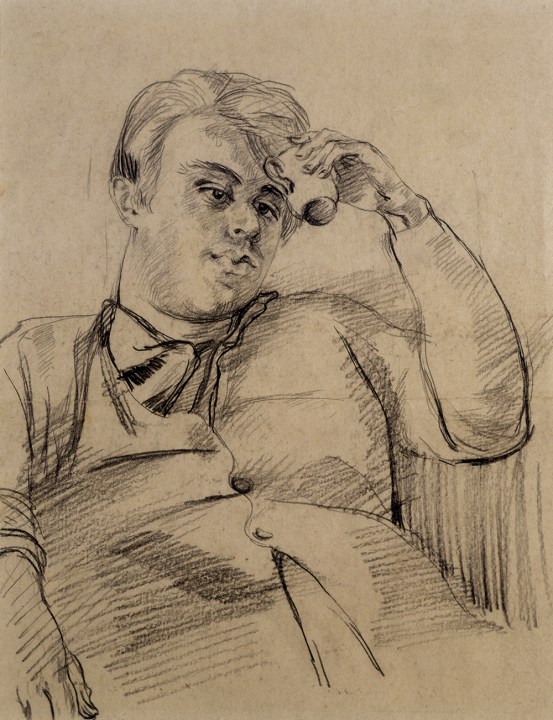
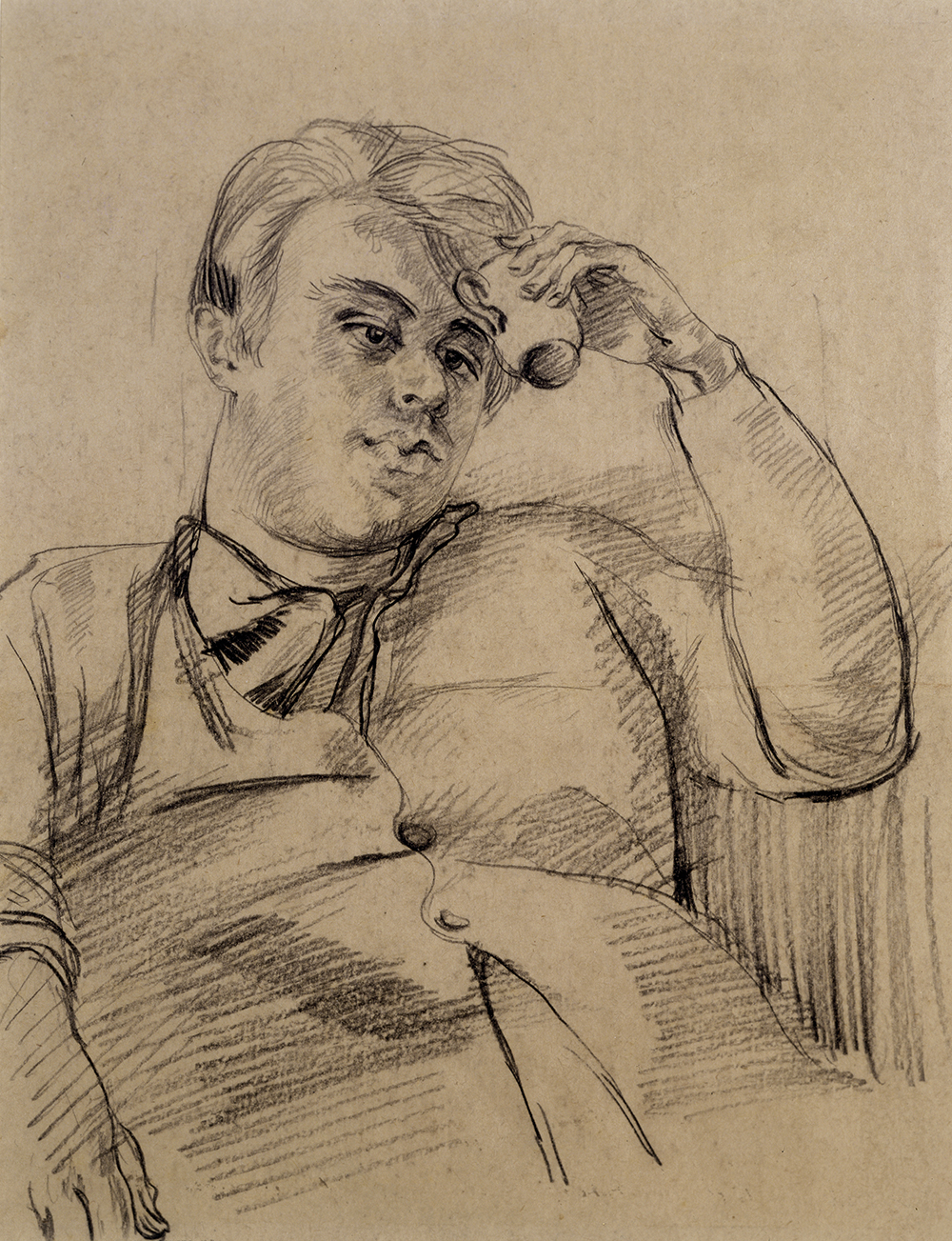
For a time, Robert Colquhoun and Robert MacBryde were at the heart of the in-crowd. Stories of Francis Bacon, Lucian Freud and their wartime circle often make reference to the two young painters from Scotland. Feted in the 1940s for their modernist styles – Colquhoun typically portraying figures, MacBryde preferring still life scenes – they later lapsed into painful, drink-sodden obscurity.
Damian Barr’s novel, The Two Roberts, is a tender and evocative act of resurrection. It portrays the men’s lives from the time of their first meeting as students at Glasgow School of Art to the moment in the mid-1950s when, penniless and out of fashion, they retreated to an ancient cottage in Suffolk. Meticulous in its verisimilitude, it is the story of a prolonged love affair – one that was tentative in the beginning, and urgent (sometimes blazingly fractious) in later years.

More than anything, The Two Roberts is a study of divergent characters: the voluble, bold Bobby MacBryde and the quieter, coiled Robert Colquhoun; the one Catholic and poor, the other Presbyterian and hailing from a more arriviste but no less stifling background. ‘Robert never forgets a word. Bobby never forgets a feeling’ – such an antithesis, typical of Barr’s compressed style, evinces their temperaments.
Barr has drawn upon a variety of historical sources, including letters, but much of the small detail of the novel (including some of the correspondence) is imagined. For instance, he ventriloquises a letter written by the Roberts’ friend John Minton – a fellow artist and third wheel for a time in their relationship – which recounts a long-delayed return to Ayrshire in the mid-1940s. Minton’s imagined account of Colquhoun’s reunion with his parents is one of the novel’s more tragic, desperate incidents.
‘It’s like they didn’t exist until they got to London,’ remarks Minton in the same letter. In fact much of the novel deals with Bobby and Robert’s prewar, pre-London life. With an attuned sense of place, down to the smallest specifics about streets and rooms, Barr dwells on the period when they lived together in a Glasgow attic – the slow ignition of their relationship, the eccentricity of their landlady, the heartbreaking separation entailed by Robert’s war service. The narrative perspective oscillates between the pair, as if to imply the nearness of one’s consciousness to the other’s. Action and thought follow each other in brisk progression.
Barr is never ponderous. Sometimes, though, one desires a break in the tempo or a more lingering depiction of interiority. There isn’t any sustained sense – at least at first – of the mutual nature of the men’s desire. Then, quite suddenly:
Robert’s mind is full of the possibility of what he knows is wrong – what he’s been imagining since he was a boy, what presented itself in Bobby’s lips that first time he sketched him, what he dreams about every night in their attic.
The two Roberts lived
in continual awareness of
prejudice and the law
This is a prime example of Barr’s ability to shift from fluent, elegantly functionary prose to something more wayward and ambiguous.
There is a drollness to the writing and a vibrancy and precision to the imagery that propel the story forward. ‘As castles go, Maybole’s has almost gone,’ we are told, during a flashback to Bobby’s childhood in the small South Ayrshire town. Much later, when the middle-aged Bobby drops a bottle of whisky he has been cradling, it slides ‘straight down between his legs like some miracle birth’, crashing to the ground.
In the middle of the novel, Barr recounts the pair’s adventures in France and Italy on the brink of the second world war, following the awarding of a joint travel scholarship. There are transient references to their sexual goings-on (‘They’ve unclothed plenty of men on their travels – collected a button from each’), but these remain largely under cover of night. Such reticence, not uncommon in contemporary novels, here befits the historical moment: the two Roberts live in continual awareness of prejudice and the law. At one point, Bobby thinks to himself that ‘pictures of sex, like stories about dreams, should never be shared’.
Bobby, who was always considered the follower in their double act, takes centre stage in Barr’s story. His ironic, irreverent personality sings through, with Colquhoun’s stiffer (probably less generous) nature acting as a counterpoint. Real historical figures – the debonair patron Peter Watson, the excitable Cyril Connolly – are brought deftly to life. Bacon is resurrected, a touch caricatured, in all his boozy loucheness.
In the main, though, Barr steers clear of the hackneyed fables and stock settings of wartime bohemia: the Colony Room club and its foul-mouthed proprietor Muriel Belcher are no more than passing details. The humour, compassion and tragedy of the story are invested in the incompatible, inseparable characters at its heart. In the space of a few pages, we find them chasing each other naked around a London garden – one brandishing a knife – and then settling down in the timeless countryside. The ‘happily ever after’ ring of the novel’s closing pages has a subtle, aching irony to it: the paradise won’t last, but it hardly seems to matter.




Comments