On my second day as Britain’s ambassador to Yemen, just after the so-called “Arab Spring” in January 2011, I visited one of the capital’s more important tribal sheikhs. This was not, by diplomatic standards, an entirely routine call. I had 23 armed bodyguards, an advance reconnaissance party, and a considerable convoy of vehicles for what was, in geographical terms, a fairly short journey through the capital, Sanaa.
The precautions were justified. My predecessor but one had been attacked with an RPG by a young terrorist acting on behalf of al-Qaeda in the Arabian Peninsula. Yemen has always been a country where hospitality and danger sit surprisingly comfortably alongside one another.

What I remember most vividly from that first lunch, however, was neither security nor terrorism but lobster. It had been driven up from Hodeidah, the nearest port, thousands of feet below Sanaa, which sits improbably high in the mountains. Yemen is a country of extraordinary contrasts: ancient, impoverished and dangerous, but also beautiful and unexpectedly generous.
Before arriving in Sanaa, I had only a sketchy knowledge of Yemen’s extraordinary historical importance. I knew that it was one of the oldest centers of civilization in Arabia, but I had not fully appreciated the extent to which the country had been a wellspring of Arab culture, commerce and power.
Three thousand years ago, Yemen was part of the Queen of Sheba’s empire. According to the Bible she traveled north to Jerusalem to test the wisdom of King Solomon, bringing gold, spices and precious stones. The two monarchs represented wealthy and sophisticated powers at opposite ends of the great trading routes.
That historical context matters when looking at Yemen today. The country could be a trigger for a significant escalation in the ongoing hostilities between the US and Iran. For months, the Houthis – in control of Sanaa – have threatened a blockade on Saudi Arabia’s Red Sea ports. Yemen and the Kingdom have been in conflict since 2004, owing to the Houthis’ alliance with Iran. On August 9, the Houthis struck a Saudi oil refinery with a drone. This morning, they attacked oil interests in four Saudi cities. In retaliation, the Saudis hit Yemen’s Jubah district east of the capital Sanaa.
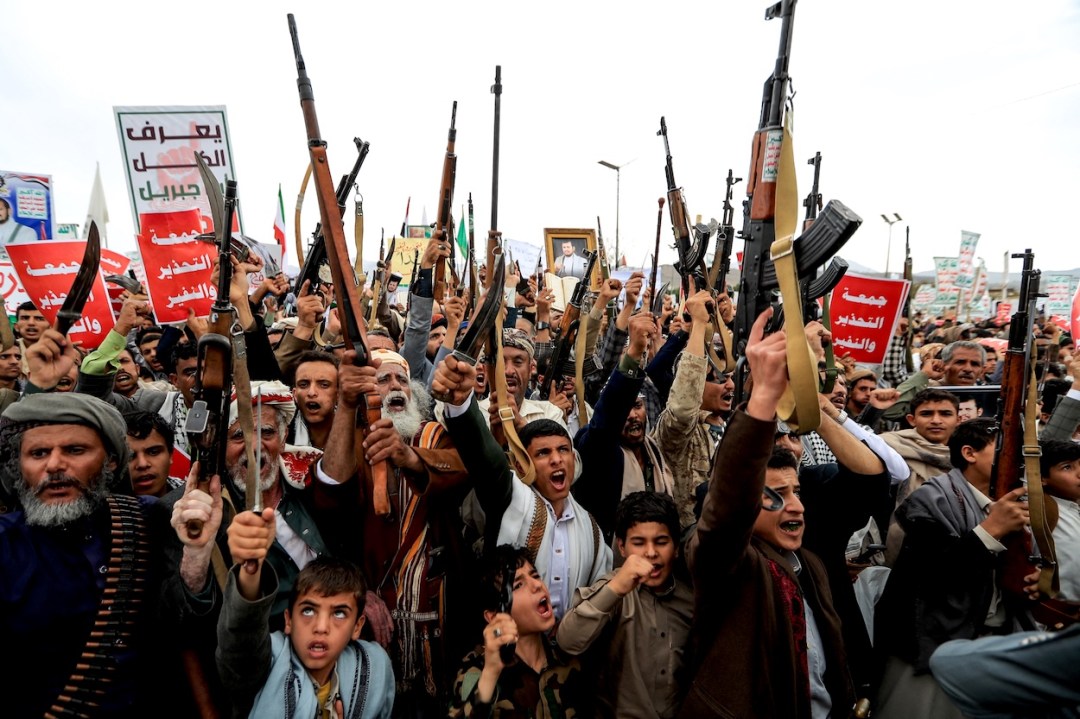
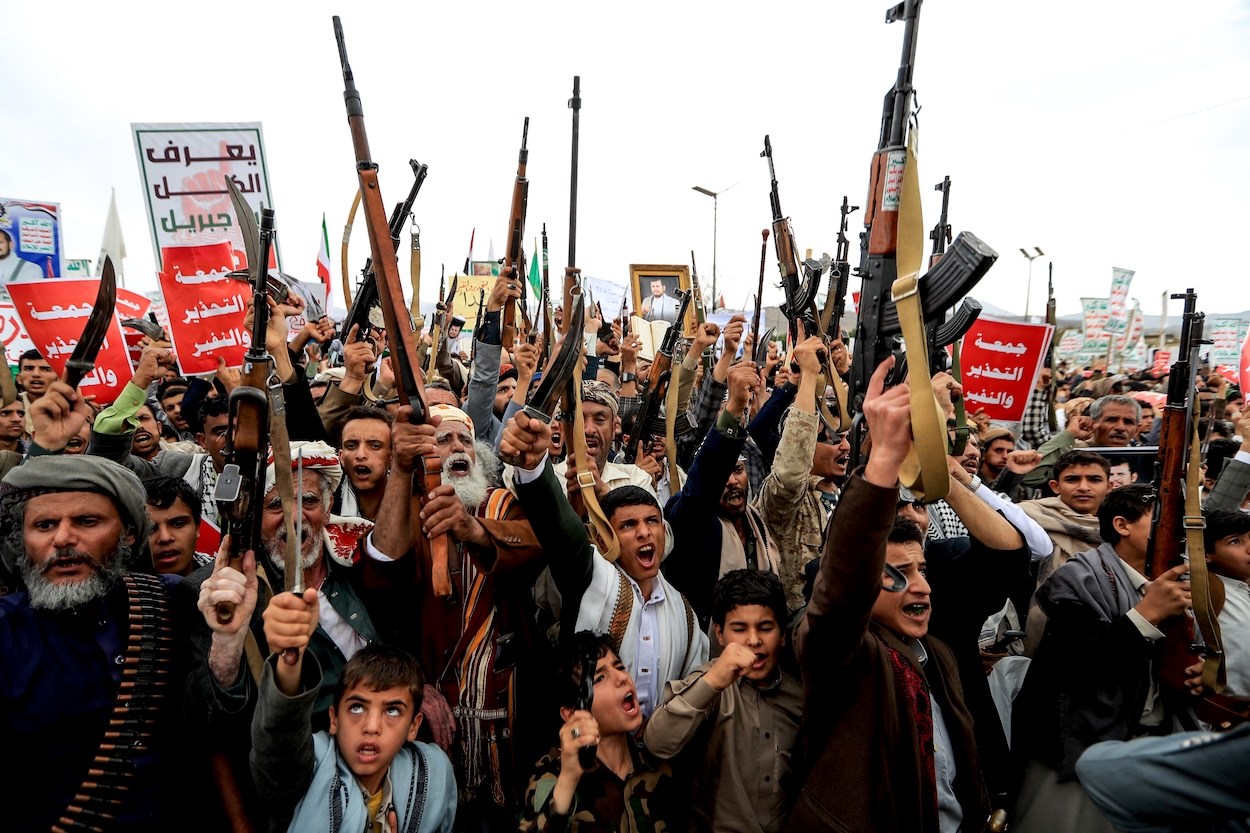
When I was in Sanaa, the Houthis were already a serious force. In 2012, they mobilized protests over the Danish cartoons of the Prophet Mohammed – demonstrations that included a siege of the US embassy, just down the hill from our compound. We were on high alert, though mercifully not tested.
The Houthi threat was also apparent when a young and adventurous backbench MP came to the capital in 2012. Visiting the Queen of Sheba’s citadel outside Sanaa, Rory Stewart and I were sitting on a rocky outcrop watching the sunset when reports came of Houthi fighters moving up the road in Toyota Land Cruisers. Whether they were looking for us or simply responding to rumors of foreigners was unclear. Either way, my bodyguard judged discretion the better part of valor, and we left in a hurry.
In 2013, I met two Houthi representatives for discreet diplomatic talks. I found them austere, taciturn and swarthy figures in contrast to the more cosmopolitan and elegant mainstream Yemeni politicians. Both were killed a few years later in the war with Saudi Arabia.
Following the Arab Spring, when the long-standing dictator Ali Abdullah Saleh was forced into exile by a popular uprising, the United Nations and Gulf Cooperation Council planned to exclude the Houthis from Yemen’s transitional government. This became one of the drivers of the later stages of the conflict between the Houthis and the Gulf nations. In the last couple of years, however, there has been a period of relative quiet. A UN-brokered truce in 2022 helped reduce violence, and a conflict which had seemed to have no end was essentially frozen.
That is why the events of recent weeks are so alarming.
In July, an Iranian plane carrying a Houthi delegation returning from the funeral of Iran’s former Supreme Leader Ali Khamenei was prevented from landing at Sanaa. The runway had been struck by missiles. The Houthis blamed Saudi Arabia and retaliated with their own barrage of missiles. The four-year period of relative calm suddenly looked distinctly less secure.
The US/Iran war means that Yemen now matters at a geopolitical level. At the southern entrance to the Red Sea lies the Bab al-Mandab – literally, and rather ominously, the “Gate of Tears”. It is one of the world’s great maritime chokepoints, between the south-west tip of Yemen and Djibouti. Ships passing between Asia and Europe through the Suez Canal must first pass this narrow strait.
Before the recent crisis, roughly 12 percent of global trade and almost 10 million barrels of oil moved through this Red Sea corridor. So, the new Houthi threat to shipping is not merely a question of whether a few tankers are hit. If the strait, like Hormuz, becomes sufficiently dangerous, insurers raise premiums, ships turn around and the Cape of Good Hope becomes the alternative. Journeys lengthen, freight costs rise and energy prices follow.
The Suez Canal might then be affected too. The two waterways are links in the same chain. A ship sailing from Asia to Europe cannot use Suez without first passing Bab al-Mandab.
If the Islamic Republic of Iran – still disrupting maritime traffic through the Strait of Hormuz – induces their Houthi ally to close or seriously disrupt the Bab al-Mandab, it would possess an extraordinary ability to squeeze the world economy from both ends of the Arabian Peninsula. When I was in Sanaa, this was seen as the nightmare scenario. It may now become a reality.
The temptation, understandably, is for the US and its allies to reach for missiles. If the Houthis attack shipping, destroy them. If Iran supplies the Houthis, punish them. Military power has its uses. But there is a point at which military superiority – and America’s is not in doubt – becomes a seductive illusion. As we have seen in the Strait of Hormuz, to close a narrow chokepoint waterway, all you need to do is persuade the maritime insurance companies to raise their premiums.
Yemen already faces one of the world’s most acute humanitarian crises
The United States and its allies should therefore resist the instinct to escalate the conflict in Yemen as part of the wider confrontation with Iran.
That does not mean appeasing the Houthis. Nor does it mean pretending that Iran’s support for them is benign. It means recognizing that the Houthis are now an intractable and powerful Yemeni political and military actor, and that the Saudi-Houthi channel remains indispensable to any durable settlement.
As one Yemeni contact tells me: “The Houthis know that this war is coming to an end soon and would rather side with the presumptive victor: Iran… The Houthis are no one’s proxy. They are simply an influential tribal collective that wants some form of domestic dominance.”
More war would be grim. Not just for the global economy but also for Yemen itself, which already faces one of the world’s most acute humanitarian crises. More than 18 million Yemenis face acute food insecurity, and about three-quarters live below the poverty line.
In the US-Iran war so far, Yemen has been strangely quiet. But we should not assume that quiet will last. If the Bab al-Mandeb closes, the consequences will not stop at Hodeidah or Sanaa. They will be felt in Suez, in European ports, oil markets and ultimately household bills.





Comments