Suez Canal

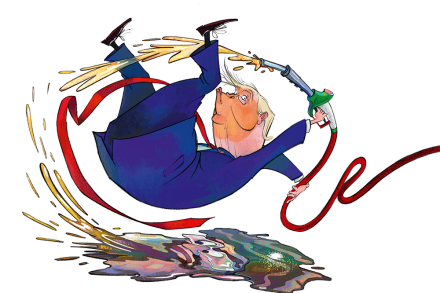
The Iran war is Trump’s Suez crisis

Clarissa Eden famously declared that "in the past few weeks I have really felt as if the Suez Canal was flowing through my drawing-room." Does Melania Trump feel the same about the Strait of Hormuz? Or perhaps Donald will be reminded of the strait every time he hits one over the water at Bedminster. He ought to be. The Iran war will define his presidency. It is his legacy – just not in the way he imagined. In 1956, a British prime minister discovered that we were no longer a great power. It was an end to illusions. We liked to think we had the best navy in the world, but that was irrelevant to whether we could keep a canal in Egypt.

suez

The Panic of 1873 seems eerily familiar

From our UK edition

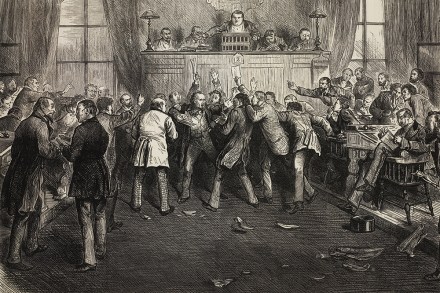
On 18 September 1873, the leading American bank Jay Cooke & Co collapsed after a disastrous bet on the railroad boom. Like the bankruptcy of Lehman Brothers in 2008, it was a watershed moment in an unfolding global financial crisis. Yet ‘the first Great Depression’, which lasted until 1896, is now mostly forgotten, despite some intriguing parallels to contemporary events and a fascinating dramatis personae, which includes the Rothschilds, Ottoman sultans and Otto von Bismarck. The Panic of 1873 and its aftermath took place in a period of financial globalisation and technological growth, with bond markets funding the epochal projects of America’s first transcontinental railroad and the Suez Canal. US railroads were the artificial intelligence investment of the day.

The only living being on our banknotes should be the monarch

From our UK edition

This Middle East conflict ought to be much easier than the oil embargo which followed the Yom Kippur war of 1973. The Arabs came quite close to winning, whereas Iran has no chance. The embargo, imposed on all countries, including Britain, which had supported Israel in the war, was backed by almost all Arab states, few of which were fanatically Islamist, and by the Soviet Union. It lasted for six months. America depended on Saudi Arabia alone for 25 per cent of its oil (only a bit over 5 per cent of imports today). The price rose by 400 per cent. The economic disruption was massive. In 2026, by contrast, almost all Middle Eastern states detest Iran and want their oil to flow without let or hindrance. There is plenty of money and power in the world to reopen the Strait of Hormuz.