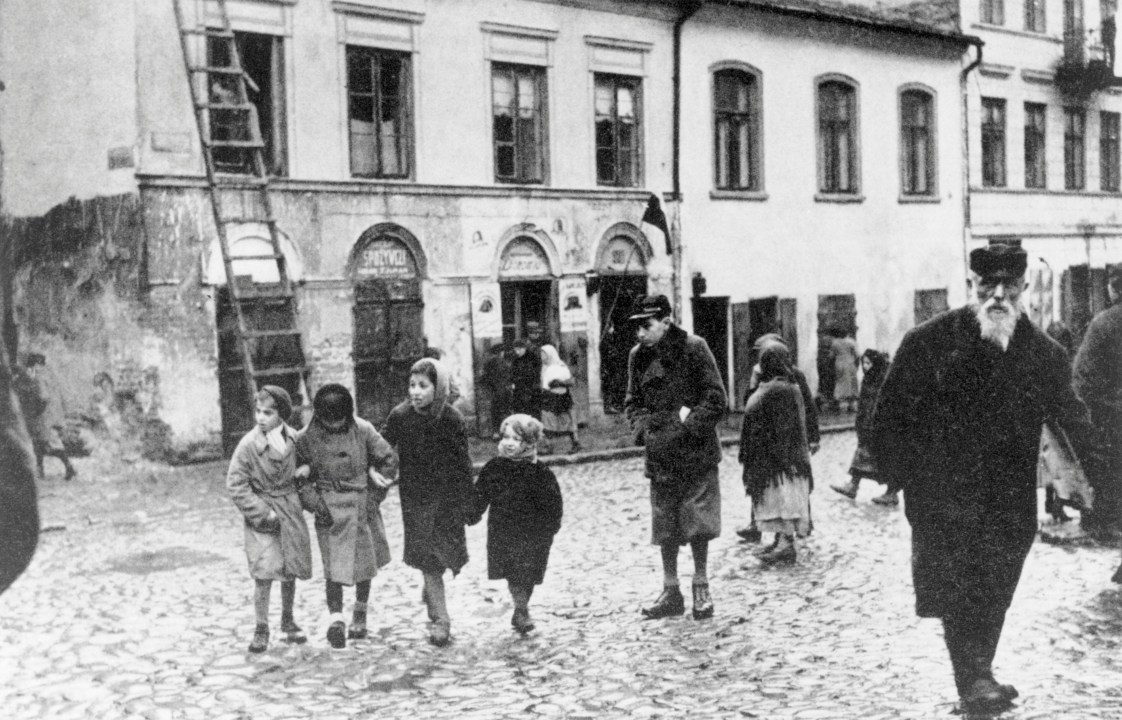
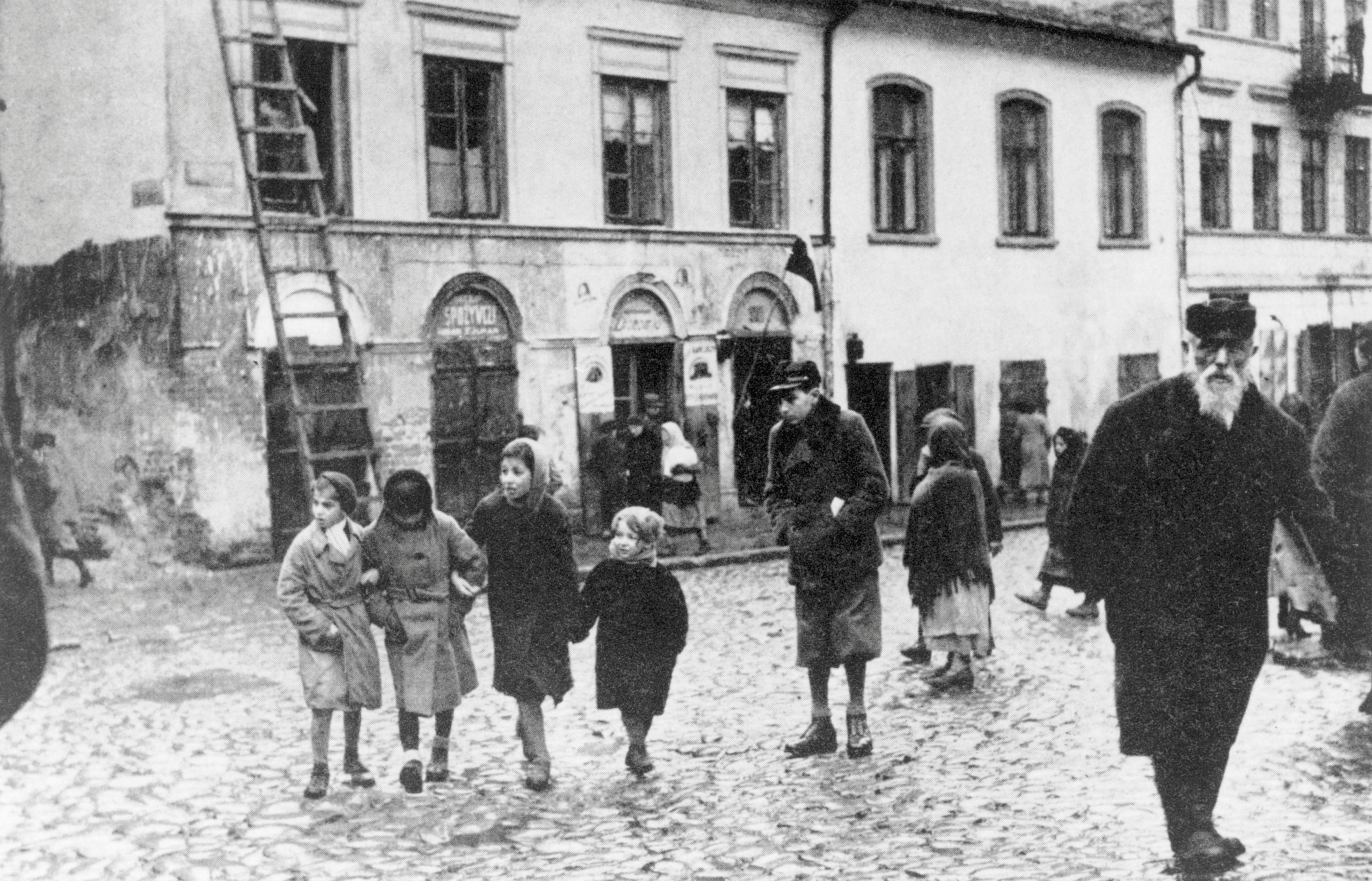
A Real Pain was one of my favorite films of recent years, a tragicomic exploration of family, history, place and identity featuring two Americans in Poland – specifically in Warsaw and Lublin.
My wife was also quite smitten – with Lublin as much as the film – and on the back of this began planning a weekend in the eastern Polish city. I was a little wary of such an overtly fan-like step – this felt one notch down from trying to emulate an influencer, of all the awful modern things. But she’s very good at arranging interesting weekends overseas on a minuscule budget so on this question I relented. And so it was that I found myself recently arising at 3 a.m. and heading to London’s Luton airport, on which I felt sure Poland would prove an upgrade.
The first thing I noticed on landing was that Lublin was the coldest place on earth. Or certainly the coldest place on earth that I have ever been to. And I come from northern Scottish stock out of Canada so I’m not one to complain about a wee chill – but this was another order of cold entirely. Lublin was the kind of cold that freezes your eyeballs, the kind that makes you struggle to think straight. I don’t think the thermometer crept above minus eight at any moment during our stay. The day after we left it would reach minus 22 degrees Celsius. There was snow two feet deep piled to the side of every street or sidewalk. And those streets were almost empty so forbiddingly frigid was it.
Consequently, our tourism was conducted in very short bursts – to the castle on the hill that dominates the old city, for example. There we found a municipal gallery with a good clutch of the work of Art Deco painter Tamara Lempicka and a fifteenth century chapel with extraordinary Christian murals on every surface. There was also room after room of overblown nineteenth century depictions of galloping hussars, wolf hunts, snowy sleigh rides – and one epic showing Napoleon’s retreat from Moscow in 1812 – a journey I was able to relate to as we trudged back through the biting cold to our Airbnb. Another brief sortie took us along the boulevards of the modern city center where one of those novelty portal things allowed us to wave to people out shopping in… Ipswich, England. Which although plainly milder, looked a lot bleaker than Poland.
On the question of bleakness, I had warmed up for our trip by googling “best Polish films” and opting for the one Kieślowski listed that I hadn’t previously seen, A Short Film About Killing (1988). In it, Poland is depicted in the last days of Soviet subjugation and appeared as bleak as bleak can be.
Thankfully, Lublin was not like that. It felt well looked after, not remotely shabby, nor murderous. At least not at first glance. And certainly far more welcoming than, say, Luton or Ipswich. And my wife had found us another gem – our room looked out at the snow-covered turreted castle, so staying in, with the heating on max, was no hardship.
You’re never short of tragedy in Poland
As well as that film, I’d been looking for something relevant to read over the weekend and had identified a book that was very local – Isaac Bashevis Singer’s 1960 The Magician of Lublin. This turned out to be so celebrated here that there’s a statue of said magician, on a tight rope, with a monkey, between the upper stories of two buildings in the old town. If this makes it sound like it might be a twee piece of proto-magical realism – it isn’t. It’s much straighter and darker than that, as Lublin seems to demand.
The book, which I liked a great deal, is principally a meditation on Jewish identity – which brings me back to A Real Pain, as that is also, in many ways, about the same thing.
We visited two of the locations depicted in the film. First there was the old Jewish cemetery where the two cousin characters lay stones on a historic grave as an act of symbolic remembrance – though its gates were closed for Shabbat so we could only peer in from outside.
Then later we ate at the restaurant, Mandagora in the old town, where troubled Benji (Kieran Culkin) plays the piano and David (Jesse Eisenberg) reveals the extent of his trauma at losing their Holocaust survivor grandmother. On our visit there was also music, Yiddish folk performed by a trio playing variously clarinet, violin, accordion and double bass, which evoked the old shtetl. The menu evoked the same: I had fried carp and “Jewish caviar,” or chopped liver and eggs. Mandagora was extraordinarily atmospheric but I suspect that this was an ersatz recreation of how Lublin – “the Jewish Oxford” – might have been before 1939, rather than an authentic survivor. There were precious few of those.
The only place that I met any Jews, to my knowledge, was around the corner from the cemetery, at the Ilan hotel, where I got talking to a party of American students on a year-long placement in Jerusalem and from there visiting Lithuania and Poland. Like the cousins in A Real Pain, two that I spoke to, from New York, had had ancestral links to Lublin.
The party leader, who had grown up in Edgware in London, told me that before becoming the hotel it is now, this building had originally been a yeshiva, an academy for rabbinical studies, the largest in the world when it opened in 1930. But barely a decade later its entire library was piled up and burned in what is now the hotel car park and its students systematically slaughtered in the months that followed.
There was the echo of murder all around us – and not just of Jews. Next to that cemetery, for example, a sign proclaimed: “This place is hallowed by the blood of Poles, prisoners of Lublin Castle, executed by the Nazis on 23 December 1939.”
If you want more in that vein there’s a concentration camp, Majdanek, where 78,000 people died, a short distance out of town. You’re never short of tragedy in Poland.
Enjoying oneself in these contexts is a strange idea. But, as far as this was possible, we had. Lublin had repaid our casual interest generously.


Comments