
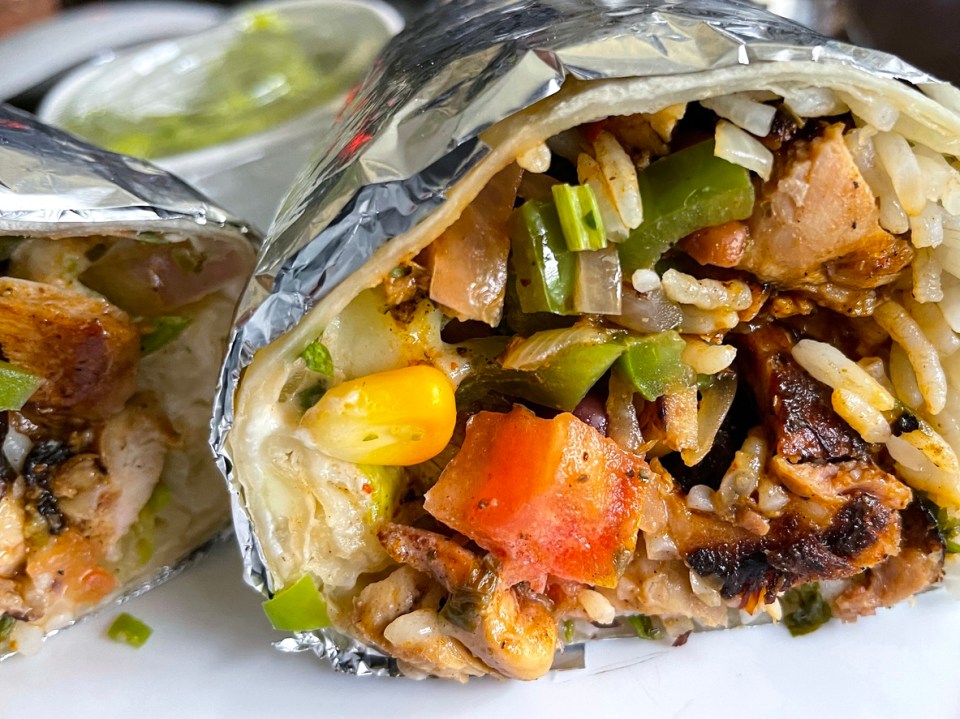
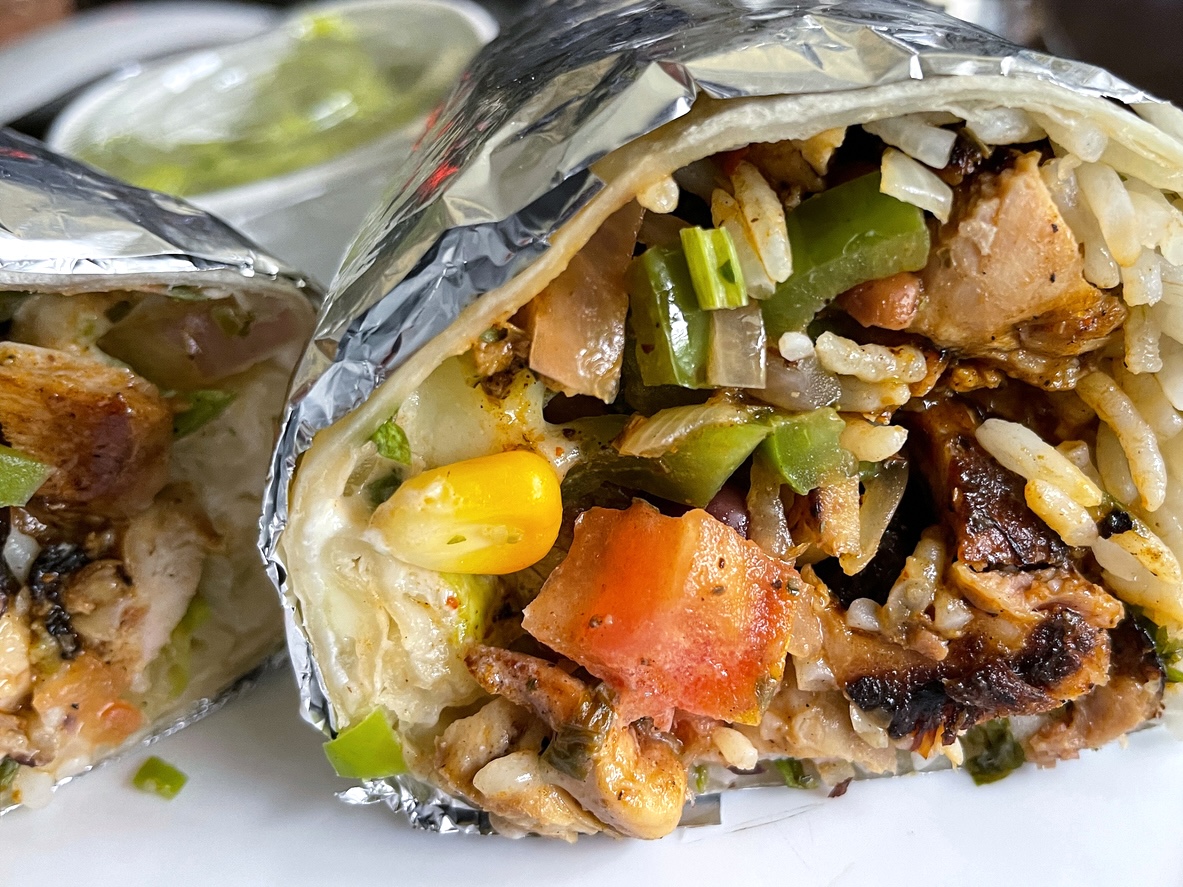
It’s a tough time to be in the business of burrito-making. The price of beef is on the rise. A farm supplying Taco Bell’s shredded lettuce was linked to the spread of cyclospora – a parasite whose laxative effects have been, for at least two people in Michigan, fatal. The latest salmonella outbreak, traced to jalapeños from Mexico, has driven Chipotle and Qdoba to announce recalls. And now, a $20 burrito has become a symbol of GOP infighting. It’s tainted, through and through.
The argument began when Andrew Kolvet, a spokesman for Turning Point USA, wrote on X: “One of our TPUSA college students gave me his take on affordability: ‘A burrito shouldn’t cost $20.’ Yeah, a lot of this is a hangover from Covid and Biden-era inflation, but the lived experience is the same: It just feels like basic things cost too much.”
It secretly pleases us to see Europeans go into hysterics over our portion sizes
The price point has been called into doubt (frankly, I find it hard to believe). But the commentator and podcast host Ben Shapiro does not deny the existence of a $20 burrito; he only denies that this is the price of a normal, everyman burrito. “If you’re paying $20 for a burrito and you’re not independently wealthy, you’re doing life wrong,” he wrote on X. Washington Post columnist Marc Thiessen believes that a burrito “only costs $20 when you buy it on DoorDash because you’re too lazy to walk over to Chipotle or Taco Bell (where you can get one for $3.99).” Texas Representative Dan Crenshaw told people to stop whining, get roommates and eat ramen. “The market doesn’t care what you think something ‘should’ cost.”
What Shapiro et. al. must understand is that the need for an exceptional burrito is not some symptom of a terminally decadent society. Abundance – extravagance, in fact, when it comes to food – is the birthright of all Americans. It has long been the promise of aspirational consumer media, from Gourmet magazine’s 1941 dedication to the “the honest seeker of the summum bonum of living,” to the 22,000 recipes on the New York Times Cooking app. It was this assurance in our bounty that gave us small-town hotdog-eating contests and the masochistic excesses of Adam Richman’s Man v. Food. In Martha Stewart’s breakout book Entertaining, our unquestioning faith in abundance can be found in her directions to “Cook 100 Lobsters” and “Cook Remaining 100 Lobsters.” It secretly pleases us to see Europeans go into hysterics over our portion sizes, and I felt a deep sense of pride as visiting World Cup fans stood in awe at the Buc-ee’s Jerky Wall.

Americans feel entitled to maximalism. The ethos of Manifest Destiny, the American Dream and American exceptionalism is a belief that it is our fortune to have more – more territory, more success, more power and freedom. But how can we be “potentially the greatest country in the world by far” if only the independently wealthy can afford a big-ass burrito? Must we forgo our birthright so the J.B. Pritzkers of the nation can have more than their fair share?
The trouble is that, for a long time, cheapness and convenience have also been considered our birthright. After the release of the 2004 documentary Super Size Me, McDonald’s phased out its offer to “supersize” your order for a small additional cost, but that holy trinity – speed, quantity, low cost – remains sacred to us. Trump once ordered a fast-food feast to the White House, and he posed for a photo op before the banquet table, candelabras on his left and right, with his hands raised like a priest giving a blessing. The $4.99 whole rotisserie chicken from Costco is an economic miracle, but what if it also represents a blip in history that’s coming to a close, rather than a God-given right? If it turns out that we can’t have it all, would we be able to accept that?
I doubt it. Telling people to “get real” about what’s affordable is a pointless exercise. If you ask your average American, they’ll tell you everything is too expensive, the grocery bill is through the roof, I work so hard and it’s all so stressful that I have to get a DoorDash every night to take away the pain. And if you ask the President, he’ll say, first of all, the word “affordability” is a con job by the Democrats. Secondly, you can afford a lot, because not only is inflation slowing, but grocery prices are going way down. According to Treasury Secretary Scott Bessent, “grocery prices are going down. And to be clear,” he continued, “since the President took office, food prices, or as many people like to call them ‘groceries,’ food at home – and this is statistical data – is up 2.5 percent.”
The administration’s solution to this anguished confusion has been to send Health Secretary Robert F. Kennedy Jr. out to show Americans exactly how they can eat well, at home, on a budget. “The Real Food Show,” broadcast by the Department of Health and Human Services, is the antithesis of those wonderful fake food shows where Guy Fieri chows down on a tower of onion rings, or contestants cook hotel-quality renditions of drippy, sloppy drunk food. You don’t need to gorge yourself on a disgusting burrito to attain the summum bonum of living, according to Secretary Kennedy, because health is wealth. He was joined on the first episode by the TV chef Andrew Gruel to make salmon fish cakes and a white bean and arugula salad – four portions for $19.64. Chef Gruel says you could charge $23 in a restaurant for the arugula salad alone. If the American people can’t afford that, let them eat fish cakes.



.jpg)
Comments