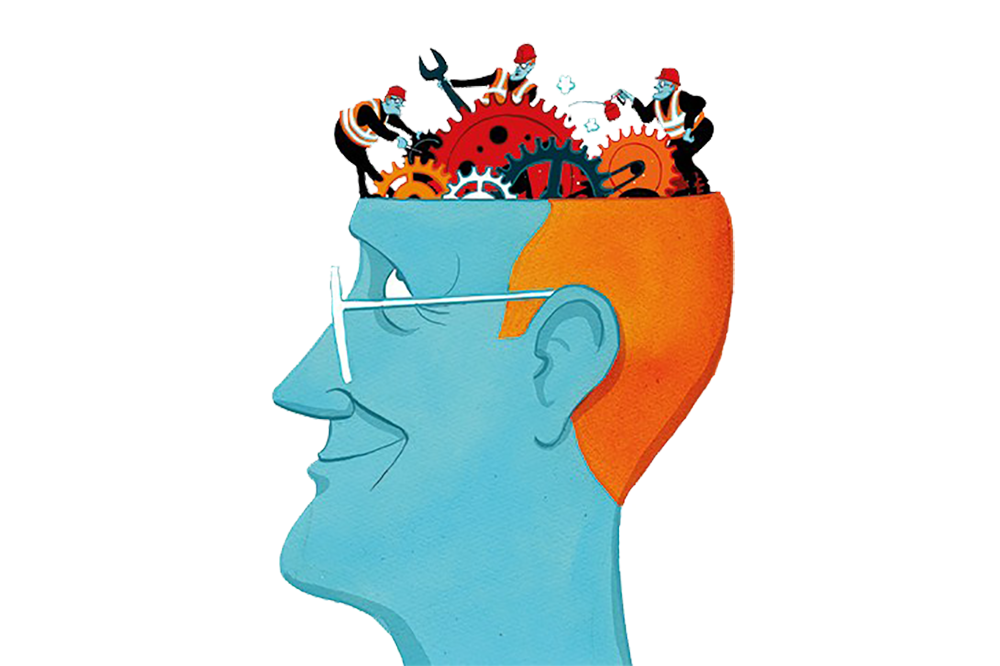


Fresh eyes can see a solution the experts may miss. At school I discovered the cure for cancer aged 13. I was in a science lesson and I was only half-listening because I found the nerdy, white-coated teacher faintly absurd. And yet the branches of science intrigued me. I loved physics (rockets), I quite liked chemistry (explosions) and I had a passing interest in biology (tadpoles); it was a biology lesson that prompted my brainwave.
The boffin was describing the division of cells and he mentioned that tumours evade detection because they grow at the same rate as healthy tissue. Human macrophages are primed to attack bacteria that multiply faster than normal cells. Hey presto. A bulb went ping in my head. If we could hoodwink a tumour into growing more quickly, like an infection, we could trigger the rescue sirens and get our microbial forces to destroy it. Problem solved. Cancer cured. I mentioned this to the teacher but he appears not to have passed it on to his fellow scientists. Alas, cancer endures.

Since then, I’ve solved other difficulties with my ‘fresh eyes’ approach. I examine the issue while drifting into a state of inattention and then I blurt out the first thing that comes into my head. I’m like the toddler who says ‘11’ when asked: ‘What’s one and one?’
This method has provided me with a remedy for our education system. In Britain, school is free but everyone hates it. In Africa, school is expensive and everyone loves it. The financial gap is vast. To educate a child in Britain costs £7,900 per annum, while in Africa the bill is just £3,200. So an education that the children love is cheaper than an education that they hate. It seems obvious. Ship British kids out to Africa and enrol them in private schools – and reap a surplus of £4,700 per child per year. Not every family in the UK will accept an annual premium of £4,700 for each of their children but a few will. The uptake may be sluggish for a few years until the trickle grows into a mighty flood.
If the bulk of our children are educated in Africa, they can help solve the ‘threatened species’ problem. I was staring at an advert for the World Wildlife Fund recently when it struck me that certain breeds are in trouble because of a labelling error. Our zoological categories limit their natural growth. Cows, sheep and chickens are classed as ‘livestock’ because we raise them for slaughter. But leopards, rhinos and other exotic beasts are listed as ‘endangered’ because we worship them. The remedy is to abolish the scary label ‘endangered’ and replace it with the friendlier word ‘edible’. We can stock our native farmlands with gazelles, wildebeest, orangutans and so on – and eat them. Our daily menus will feature hippo sausages, lion pie, emu meatballs, golden eagle drumsticks, koala nibbles, giraffe twizzlers and so on. And as we grow accustomed to the sight of these lovely creatures roaming across our countryside, we will feel less guilty about using their leather. Tiger pelts for bus seats. Rhino skin for stab-vests. Gorilla fur knitted into tea cosies or mittens. As any child will tell you, the hide of a giant panda would make a lovely duvet to snuggle in.
I examine the issue while drifting into a state of inattention, then blurt out the first thing that comes into my head
My ideas are unpopular, I understand that. When I suggest that dinosaurs may still exist (we don’t know for sure, we just haven’t looked hard enough), I can sense pulses of scorn emanating from my listeners. But they can’t refute my basic argument. There is no such thing as extinction, there are only shy animals and lazy naturalists.
A similar labelling error has clouded the issue of autism, which is an adult disorder projected onto children. The sufferers are weak-minded parents who can’t accept that their kids are average, run-of-the-mill youngsters with no particular need for kid-glove treatment. The anxieties of these parents are being exploited by crafty medics who have conjured up a vast, lucrative industry at their expense. If I were a schoolchild now, I would apply for the diagnosis on day one. Consider the options. An ordinary boy spends his days in a noisy classroom writing down everything the adults say. An autistic boy spends his days in a cosy treatment centre while the adults write down everything he says. To qualify for the upgrade he just has to mimic the tics and foibles that characterise the disorder. It’s not autism but taughtism.
One final problem. The small boats crisis. Easy to fix. Open a French consulate in Dover where migrants can register for asylum as soon as they disembark. Assemble the applicants and conduct them back to Normandy to await the verdict of the Direction générale des étrangers en France. This will make the Channel crossing pointless. As soon as word spreads that Britain and France are obeying international law, the risky sea journeys will cease.
I’ve sent this proposal to the Home Office but I don’t expect a positive response. Civil servants hate commonsense ideas. In the David Cameron era, they used to joke about our vanishing trawler fleets. ‘Give a man a fish and feed him for a day,’ they said. ‘Teach a man to fish and sell his quota to the European Union.’




Comments