
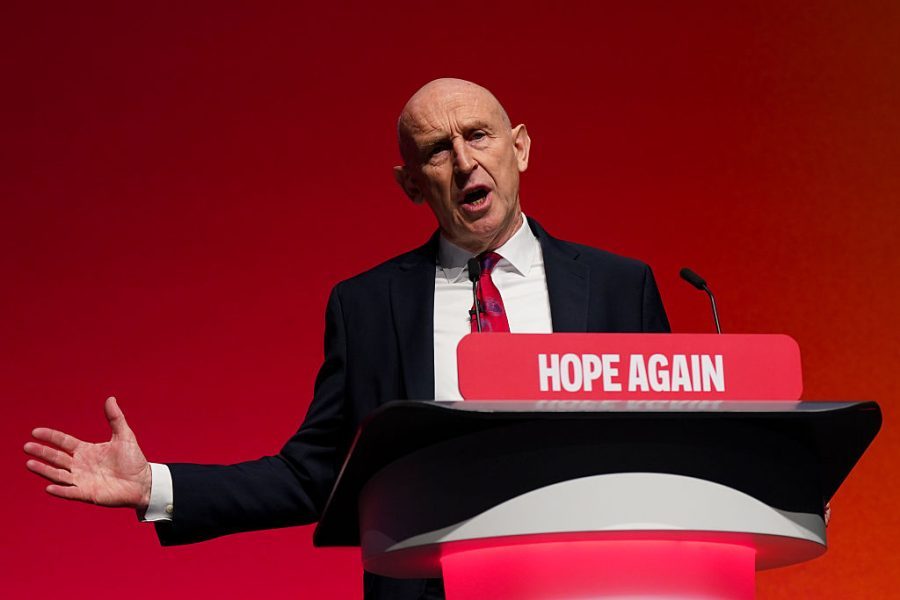
Rachel Reeves made a great start – but now it looks as if her successor as Chancellor John Healey is determined to finish the job. With yet another tax raid reportedly being planned, the Treasury has clearly decided that family-owned businesses are an easy target as it struggles to balance the books ahead of next week’s Budget. Clearly, though, the Treasury seems not to know that family-owned businesses are critical to keeping the economy running. We would certainly miss them if they go.
The Labour government has already dealt one blow to family-owned companies by imposing inheritance tax on them when they are passed from one generation to the next. The latest leaks ahead of the Budget suggest Healey wants to double down on that. But how? The plan is to charge income tax when the company is passed on instead of capital gains tax (CGT). In effect, the rate charged would rise from 24 per cent to 45 per cent.
Family companies are the backbone of the economy
Seriously? Most normal countries allow business assets to be passed between the generations without taxes being levied. That is how huge family enterprises such as Lidl or Aldi emerge in Germany without needing to be listed on the stock market or rely on private equity firms. By contrast, Britain seemingly plans to impose a tax regime that would make it virtually impossible for them to survive. Very few owners could afford to pay 45 per cent of its value, and even if they could it makes more sense to sell and just pay the CGT. They would be wiped out.
Sure, to Labour politicians with a lifetime in the public sector behind them, and to Treasury officials who have never been near a private company, family businesses may seem like an irritating anachronism. They are rarely interested in a ‘partnership’ with a ‘mission-orientated state’, nor are they always respectful of all the other ‘stakeholders’. A suspiciously large number of them might vote for Reform. Even so, they are critical to the economy. They account for 15 million jobs, more than half the total in the private sector, and account for almost 50 per cent of the total output of the private sector. Your local garage, dry cleaner, or building firm is almost certainly a family-owned firm.
All the evidence suggests, however, that companies that are managed across generations are typically more stable, invest more, and are better employers. True, any tax changes Healey introduces won’t mean they are killed off instantly. They will have to be sold, either to a rival or to an investment house. But typically, the new owners won’t have the same kind of deep knowledge of the industry, nor will they care very much about the local area or the staff. And if there is no buyer, they may well just be closed down.
Family companies are the backbone of the economy. Labour can kill them off if it wants to – but it will prove an unprecedented act of economic vandalism.






Comments