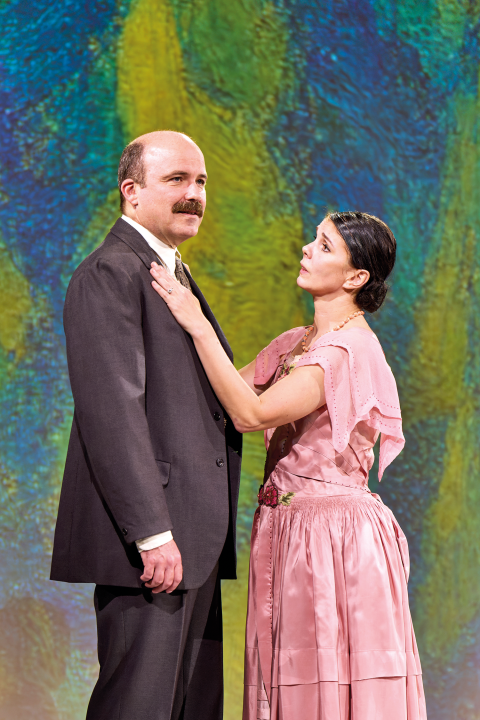


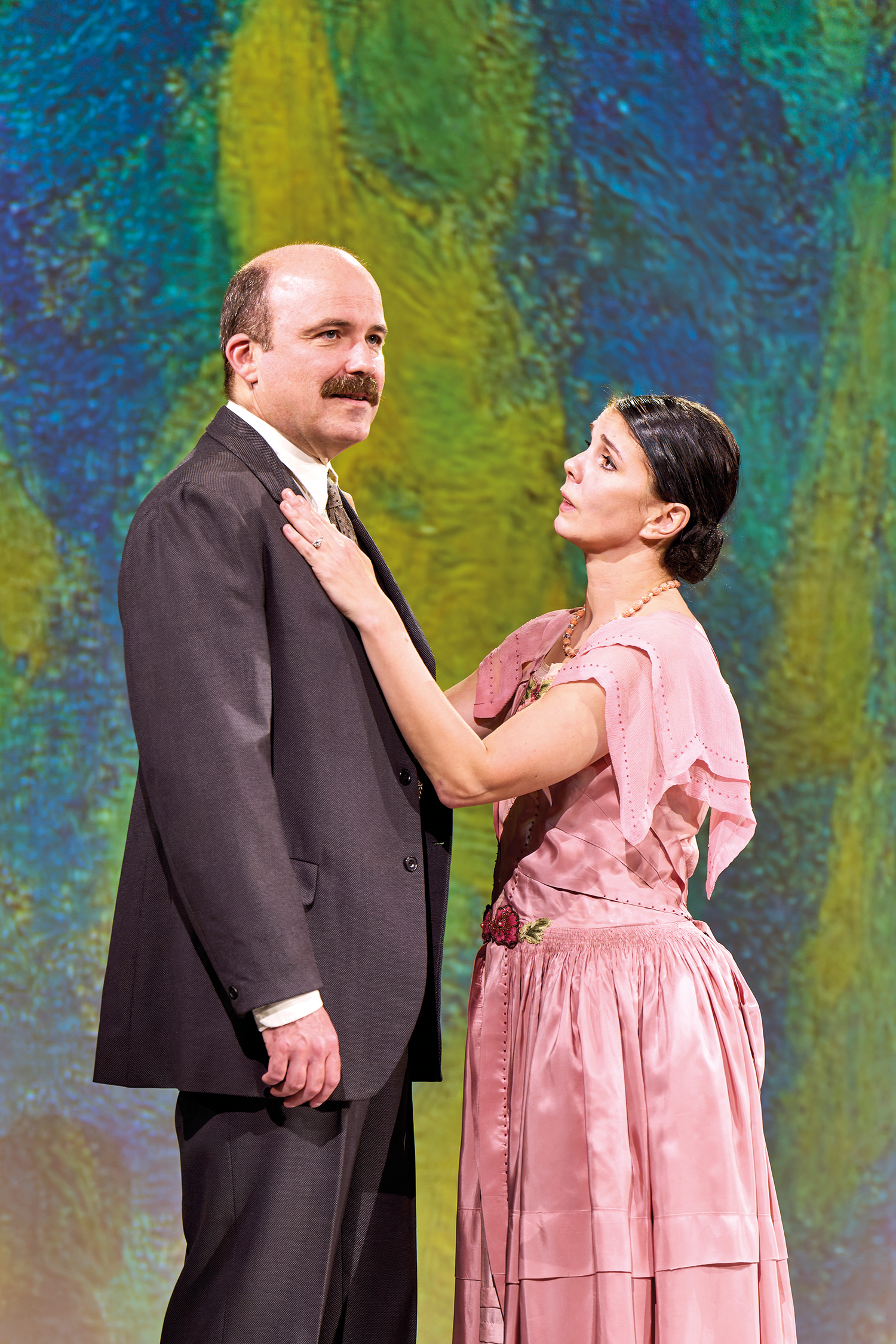
James Graham’s new play is a biography of John Maynard Keynes, known as ‘Mennid’ to his friends, which feels like a visit to a stately home. Mennid narrates the show and introduces us to the main events and personalities of his life but he doesn’t get involved.
This is a eulogy, not a drama. He’s a civilised oddball, a highly polished introvert, a maths geek with a saviour complex. His mission is to rescue Britain from the Great Depression by increasing the national debt and blowing the loans on railways and power stations. He uses his lectures to tell a fairy tale about a mythical traveller who finds a dying village and revives its economy by spending £1 in the local tavern. With this children’s yarn, he persuades the Labour party to adopt a borrow-and-squander policy which it has never quite abandoned. No asset is safe from his piracy, not even Granny’s nest egg. ‘Money in savings is asleep,’ he says. ‘Money spent is alive.’
James Graham is showing some of the faults of David Hare
His inner life remains a mystery. And the puzzles mount up as the play develops. He was a sex addict who enjoyed seducing gay men in lavatories and at conferences and he even kept a record of his conquests. But why did he not fear blackmail or imprisonment? He met Einstein, he says, ‘and I had a bit of a flirt with him’. That’s it. End of anecdote. He liked artists but didn’t care for any particular field of creative endeavour, apart from ballet. ‘I look at the men,’ he says. He once left a painting in a hedge on his way to a tea party. It was a Cézanne.
His status within the Bloomsbury group is unclear. Arriving at their townhouse in Gordon Square, he receives a hero’s welcome from the full complement of doodlers and scribblers. They adore him, apparently. But he owns the property where they live rent-free. Could their affection be clouded by other factors? He doesn’t seem to notice. Virginia Woolf berates him for working too hard. ‘Busy, busy, busy,’ she scolds. And she urges him to ‘tell the truth about himself’ but she doesn’t clarify what this means. She adds that she doesn’t find him credible as a human being. The play reinforces that impression.
Latterly, he marries a ballerina, Lydia Lopokova, who ignores his penchant for gay sex but she sheds no further light on their odd relationship. The Bloomsburys can’t bear Lydia, who takes over the attic flat and practises her dance moves on the floorboards while they fine-tune their masterpieces downstairs. Lydia tells Lytton Strachey that she’s never heard of him and she advises Vanessa Bell that her paintings would look better if she finished them. Buried in here is a comedy about the Bloomsburys but it doesn’t quite catch fire.

The script, for some reason, sets out to cover every last detail of Keynes’s social, intellectual and political life, and this involves screeds of dialogue about economic theory. Take notes. There may be questions afterwards. On stage, Rory Kinnear is made up to look like Groucho Marx dressed as Clement Attlee. And he fails to locate the inner Keynes. Perhaps there’s nothing there. James Graham is showing some of the faults of David Hare. He can turn out a highly effective dramatic product that gives you a lot of information but doesn’t make you feel a thing.
Noël Coward’s early play, Hay Fever, is a country-house comedy about a theatrical family who arrange a weekend party for four guests. The family treat the event as a chance to showcase their trivial emotional problems and they drive their guests away in frustration. The show feels like a piece of music that includes a lot of wonderful little duets interspersed with ensemble passages for the full company.
Good actors can shine here. Bad actors can’t hide. The casting is wonky. Some of the performers are a decade or two older than the characters they play. A few of them lack the skills to enunciate Coward’s dialogue crisply. Here are the winners. Will Close is wonderfully silly as the young artist Simon. Richard E. Grant plays David Bliss as a white-haired Withnail, smouldering with vanity and anger. Lovely stuff. Charles Edwards is dazzling as the buttoned-down diplomat Richard, who finds himself alone with Judith at the grand piano. She invites him to lean on the instrument, which he does with a sublime display of agonised confusion. A great moment of silent comedy. Jo McInnes has a good time playing Clara, the overworked maid, who mocks the pretensions of her employers. Nancy Carroll (Myra Arundel) treats the text like a favourite mount and canters over the hedges with steely brilliance. Every detail of her performance is perfectly judged and exquisitely delivered. It’s all done without the slightest trace of premeditation. The others are acting in Coward. She belongs there.






Comments