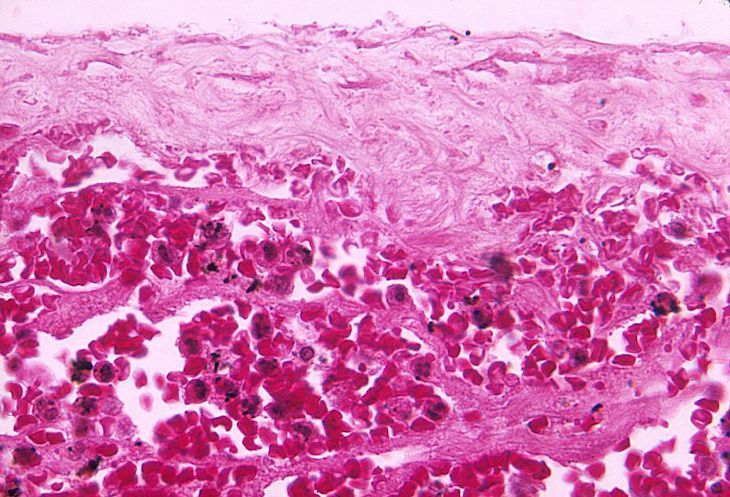
Something bad and life-changing happened to me: last October I had a subarachnoid brain haemorrhage and then spent three months in hospital shackled to a cylinder containing my cerebrospinal fluids. Ordinarily, I’m a private person and recoil from those who need to centre their “lived experience”, especially if that experience amounts to a claim of victimhood. But I also feel trapped in my story and figure that if I tell it here I will stop reliving it in my head. Perhaps there are others who will recognise their own experiences in mine, but that’s not really why I’m writing this. It’s more to make sense of what happened to me and to draw a line under something that’s difficult to absorb.
My doctor recently described my stay in the hospital as “long and complicated”. This is one way of putting it
I have a good and horribly vivid memory of the day it happened, although it’s something I find hard to talk about and for a long time euphemistically referred to it as “the event”. A few dear, if not especially delicate, friends have asked me what a brain haemorrhage feels like. Well, it feels bad: like you’ve been shot in the back of the head. It feels like you’re going to die, without knowing why. You also vomit a lot. I was conscious throughout the whole thing, but I was deeply confused and terrified by what was happening to me.
My doctor recently described my stay in the hospital as “long and complicated”. This is one way of putting it. A few days after the haemorrhage l had surgery to reduce the liquid on my brain and while this saved my life it led to a severe ventriculitis infection called pseudomonas aeruginosa, which explains why I was in hospital for such a long time. This meant six weeks of antibiotics via an intravenous drip, which further curtailed my movement and in turn meant that I was confined to a hospital bed in semi-intensive care.
I don’t remember much about those first few weeks after the haemorrhage, but in that crucial 14-day period from when it hit, when I could have bled further or been struck by a stroke, I do recall being very concerned about where and how I was going to defecate: that would be in a nappy. You obviously shouldn’t shit where you eat, as Tony Soprano is fond of saying, but for nearly three months I literally ate and shat in the same spot: my hospital bed. This, as the podcast bros would say, wasn’t exactly optimal, but when you’ve just had a brain haemorrhage optimisation is somewhat of a luxury. There were other indignities, too: most notably my daily bidet routine, which was given to me by the same nurses who wiped my arse. Now they would be washing my cock and balls. I dreaded this morning ritual before breakfast.
In the early stage of my illness, when I was in and out of fever and couldn’t eat, I had the awful feeling that I wasn’t going to make it. On several occasions I thought that I’d already died. I was in acute pain from the bleed, which slowly radiated its way down my back and legs, making it impossible to ever get comfortable. I felt like a prisoner inside my body, tethered as I was to my hospital bed. It was too difficult to read or to watch anything, so I would devour the back-catalogue of the Fifth Column Podcast and Chris Williamson’s Modern Wisdom. Make of that what you will.
Strange things happen to you when you do an extended stint in hospital. One thing that gets screwed up is your sense of time, which slows down to a snail’s pace. A nurse would poke a thermometer under my armpit and then return after what seemed like an hour. But in reality it was at ten-minute intervals. My short-term memory would also mug me off. When, at dinner time, I was asked what I had for lunch I’d often blank; I chalked this up to the grind of being in the hospital for so long, but it was also because of the excess liquid on my brain.
When I was taken to do one of the many scans I had to do and wheeled off in my bed to another part of the hospital I’d often see visitors milling around and waiting – and I’d enviously wonder about the lives of these non-hospital civilians on the outside. Some nights when I was restless, and that was most nights, I’d try to reimagine old bike rides or memorable walks. Visits from family, though a lifeline to me, could also be difficult, as I had no real news to impart, except the usual patter about my aching back and diarrhea induced by the antibiotics coursing through my veins.
By January I had beaten the ventriculitis infection but I had developed hydrocephalus, which required an operation to install a device – a “shunt” – that drains excess cerebrospinal fluid from the brain. I was terrified that I was going to get another hospital infection, but the operation was a success. This was then followed by months of physiotherapy, where I had to relearn how to walk after such a long period of bed-bound inactivity.
As of writing, I have now regained the 14 or so kilos I lost and can just about work half-days at a desk, but I suffer from bed-inducing migraines and have neck pain that is only alleviated by lying down. Still, I’m acutely aware that it could have been much worse: the haemorrhage I suffered has a case fatality rate of around 40 per cent during the first month, while the ventriculitis “complication” I had has a similar rate of mortality.
I still can’t quite move past what happened to me
And yet I still can’t quite move past what happened to me and even though it’s been well over six months since I came out of hospital I often find my mind returning to that strange and dark place – “the land of malady”, as Christopher Hitchens called it – where boredom and terror co-exist and define the culture. Perhaps I have some perverse nostalgia for the life-and-death drama of that period; it was certainly simplifying and clarifying in equal measure. But, more prosaically, I think it’s to do with the difficulty of absorbing the greater existential challenge of the haemorrhage, which is that, to use a carceral metaphor, we’re all on licence and can be deported to the land of malady at any moment and without notice. The particular haemorrhage I suffered was rare. I’ve never smoked, I drank more or less moderately and was relatively fit with low blood pressure. If it could happen to me, it could happen to you. The “it” is death, sickness or a total loss of personal autonomy.
If it could happen to me, it could happen to you
When I was discharged from hospital I was offered psychological support, but didn’t take it. I now wonder if that was a mistake and that I could have found solace in talking to someone or others about my illness and the difficulties of such a long stay in hospital. Instead I confided to an AI about my woes, and it was supremely empathetic and told me that there are online self-help groups for people like me. But I have mixed feelings about joining one and becoming a member of the “shunt community”. I don’t want this experience, which I never wanted and find terrifying, to define me.
Nietzsche famously remarked that what doesn’t kill you makes you stronger. I’m not so sure about that. But coming close to death does make you better appreciate life and its terrible vulnerability. I don’t think this has made me a stronger person and there are moments when I feel weak at the thought that at any minute things can go desperately wrong and that I have no control over any of this. But I do feel a strong sense of gratitude for surviving the haemorrhage and for the life that I have. I also have a renewed sense of profound love for those closest to me and to whom I am enormously and eternally indebted.




Comments