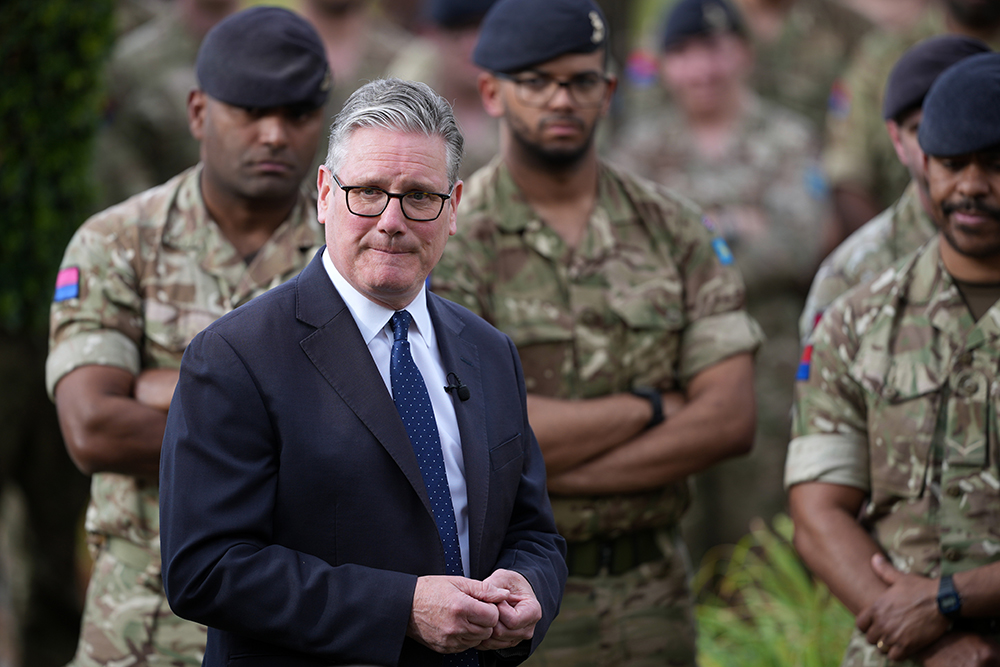


When John Healey was asked, onstage at the London Defence Conference, whether the armed forces were “ready” for war, the Defence Secretary replied: “Yes.” One of those present says: “That was greeted with near incredulity in the room.” Another attendee compared Healey’s plight to someone “playing French cricket,” with critics from all sides hurling balls at his ankles while he tried to bat them away. “You can’t score any runs in French cricket.”
George Robertson, Healey’s most respected Labour predecessor and a former secretary general of NATO, was not present; he was in Scotland celebrating his 80th birthday. But he returned to give a withering interview to the FT and a speech. Having co-written the government’s strategic defense review, he warned that, because of the government’s “corrosive complacency” over defense spending, Britain was “not safe.”
‘We could have drone swarms attacking us off Russia’s shadow fleet in the Channel within 18 months’
While Keir Starmer is congratulated by his MPs for opposing Donald Trump’s war on Iran, defense chiefs, various ministers and leading figures in the defense industries think the government is failing at a moment of existential crisis for national security. The Defence Investment Plan (DIP), due last autumn, is still in flux; insiders say that Starmer has “given the DIP to the Treasury,” which one called “an act of national suicide.”
Multiple sources say Downing Street is gearing up to find more money for defense after May’s local elections, but as a former Starmer aide put it: “No one seems to have told George [Robertson], which is stupid.” Two insiders say officials have “penciled in” June 28 to publish the DIP, but one added: “People writing the submissions say it’s still a mess with no direction.” That timing makes sense, since it is just before the NATO summit in Ankara. Others point out that the G7 summit in Evian begins on June 15, when Starmer is likely to get a fresh pounding from Trump.
A senior defense source who spent the week in the US said: “There’s a lot of frustration at what they see as a pretty sanctimonious attitude over the Gulf. Even people who think Trump has made a horrendous mistake believe friends should stand with you when you screw up, not dump on you.”
Antonia Romeo, the new Cabinet Secretary, has been advised by former civil servants to take charge of the issue, as Jonathan Powell, the National Security Adviser, is a “roving troubleshooter,” not a numbers man. But a Whitehall insider says: “Antonia came in thinking she was going to sort it out and get the Treasury to make savings to fund defense. That died within a week.”
This funding crisis has been long in the making. “We were shit as well,” a former Tory minister admits. But Chancellor Rachel Reeves is offering just £10 billion over four years to plug a £28 billion shortfall and defense chiefs have been told to make cuts of £3.5 billion this year. One source claims: “I’ve heard it from several people that Reeves said: ‘Why should we give money to a department that’s so far away from gender parity?’” Naturally, this is denied. The Chancellor dislikes “mansplaining” but as one defense source put it: “In this case, the mansplainers are right.”
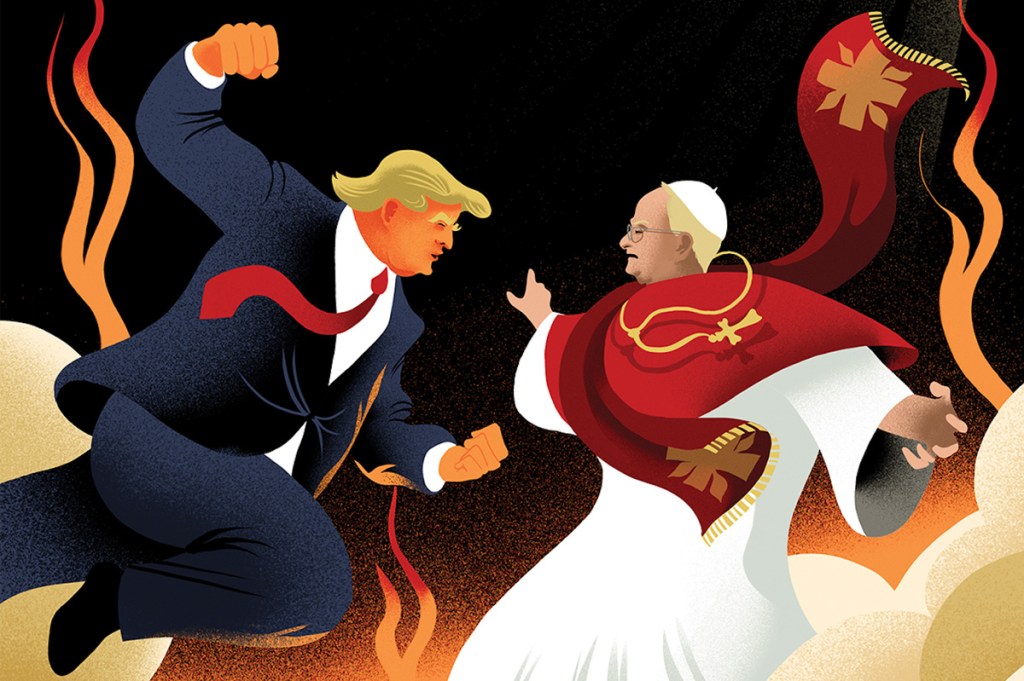
The long-term cost of Treasury penny-pinching could be high. Gulf allies, disappointed by Britain’s sluggish response to the Iran war, are “less likely to use their sovereign wealth funds to invest in the UK,” says a source. If America moves away from NATO, as Trump has again threatened, every country in Europe will need to spend 5 percent of GDP a year for a decade to develop the capability to deter Russian aggression, a near doubling of the current defense budget.
A source says that when Healey first got the job, he told the MoD strategy team to stick to Labour’s manifesto commitment to spend 2.5 percent of GDP on defense, rather than lobby the Treasury for more.
Despite warnings by Angus Lapsley, the UK’s man at NATO, that “other nations were folding,” it came as a surprise to ministers last year that other countries were ready to spend the 3.5 percent demanded by Trump. A senior figure recalls: “The UK tactic was ‘This will never happen.’ The government expected to hide behind Italy, Canada, Belgium and Spain. But the only one hanging behind was Spain. It was delusional.” Another source claims: “The defense review was going to be called NATO First, until they realized that would be too expensive.”
The effects of the underspending are evident. At the start of the Iran crisis, a former cabinet minister says, “The navy was told it could have one active capability – either protecting the cables around UK waters or being in the Gulf. It couldn’t do both.”
Nowhere is the lack of cash and direction clearer than in the purchase of drones. On April 13, Volodymyr Zelensky said that robots and drones alone had captured and held a Russian position for the first time. Yet despite Britain having supplied 85,000 drones to Kyiv, insiders say we have “hardly any” of our own. Meanwhile, the plan to supply an attack drone to Estonia has not been delivered on. Last April, the MoD admitted the only purchase order for unmanned aerial vehicles since the general election had been for just three surveillance drones. “The British Army has no medium-range strike drone and no deep-strike one-way attack drone at meaningful scale,” a source says. The Octopus interceptor drone, promised “within weeks” last October, has no confirmed status. “We have no drones, no energy and no stockpiles,” a Labour advisor admits.
The MoD argues there is no point stockpiling drones, since the technology changes so fast. But critics say the military is not ready for a modern war. “Our armed forces are not training properly in uncrewed warfare,” an MP observes. Estonia is canceling a combat vehicle contract so as to invest in drones. Poland has ordered 10,000. An expert warns: “We could have drone swarms attacking us off Russia’s shadow fleet in the Channel, or a hypersonic missile attack, within 18 months.” “The problem is fundamental,” the former cabinet minister says. “Starmer can’t make a fucking decision” and is putting “party before country.” A Labour right-winger, mocking the PM’s abandonment of his Chagos Islands deal and his “Love Actually moment” with Trump, says: “Surely the new Starmer strategy demands that he gives Diego Garcia away at a press conference with Hugh Grant.”
An unlikely savior waits in the wings. Defense sources say Angela Rayner, who is still eyeing the leadership, is privately vowing to act if she ousts Starmer. “She’s saying, ‘I’m the one that’s going to get to 3.5 percent, get the jobs and do defense re-industrialization,’” a well-placed source reveals. “She’s inexperienced, but she’s a better politician than Starmer. She can join the dots.”
In the meantime, a Labour advisor predicts that “there will be more money, but probably not enough. And it will have to be squeezed out, as opposed to the UK leading.”
Comments