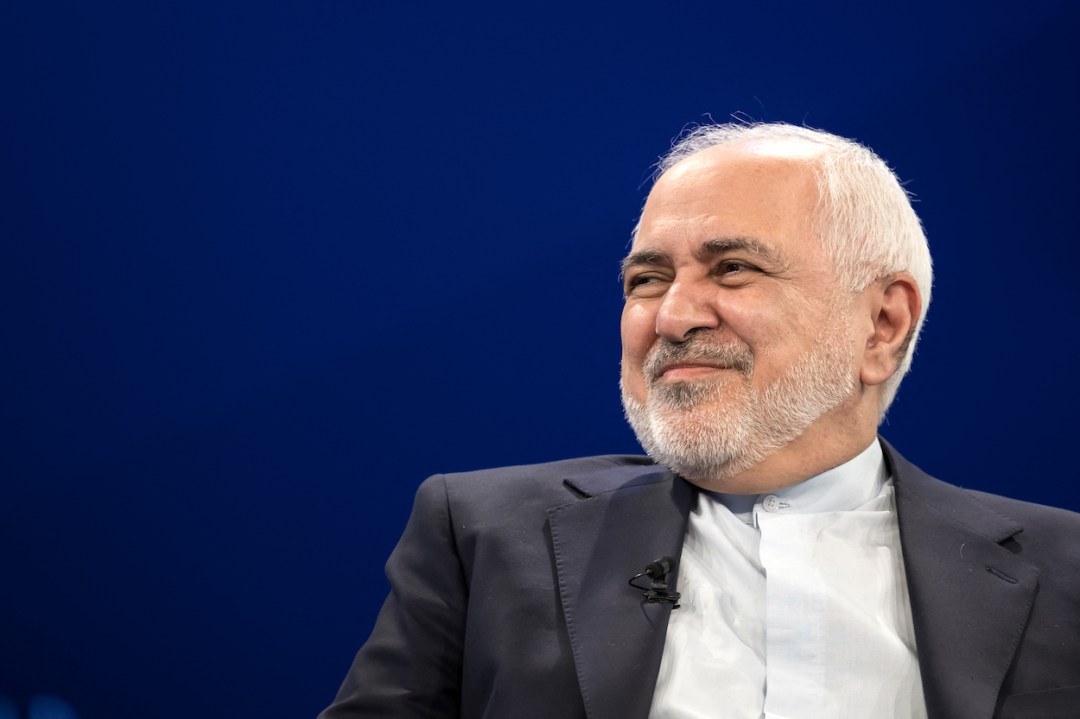
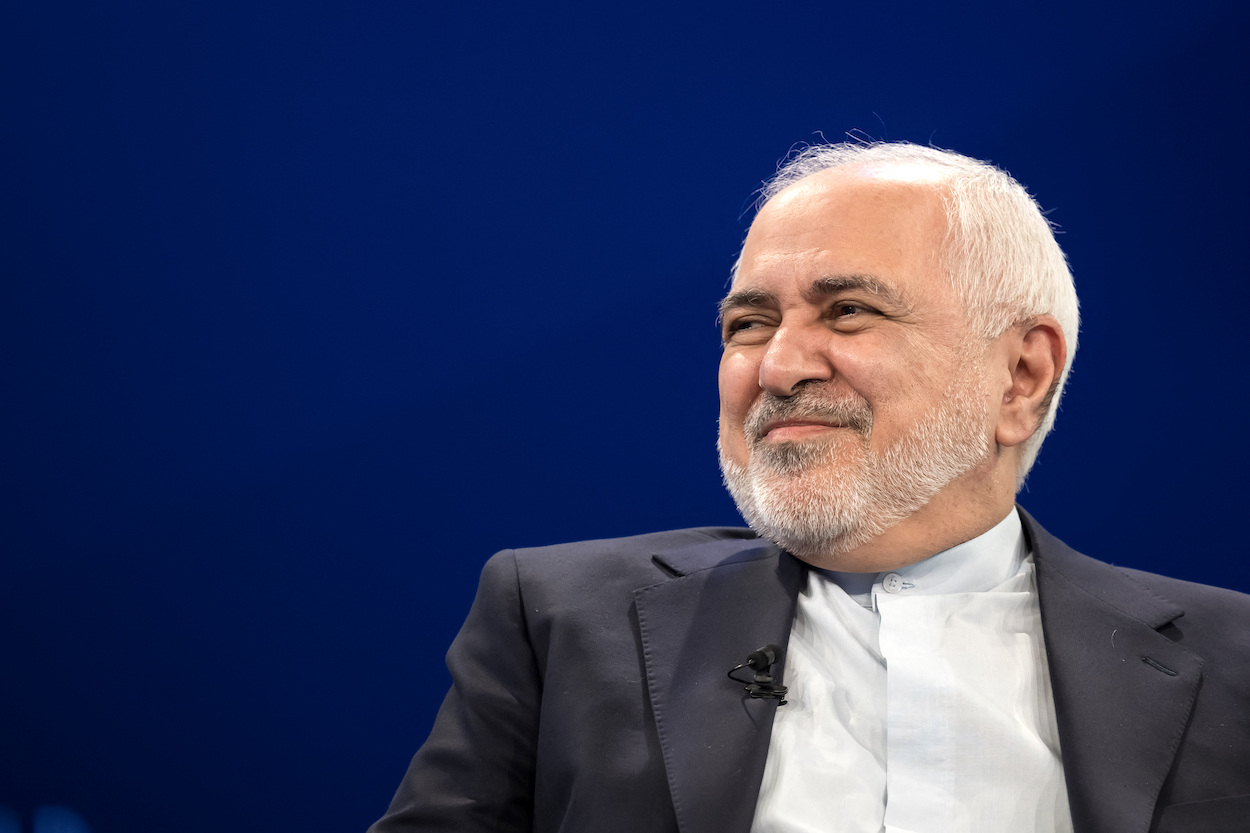
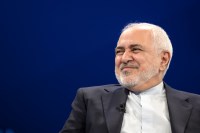
There are few figures in Iranian politics as simultaneously familiar and enigmatic as Javad Zarif. To some in Washington he remains the smooth-talking apologist of the Islamic Republic; to hardliners in Tehran, he is still the man who gave too much away in the nuclear negotiations. When such a figure publishes the necessary elements for a new US-Iran deal that will end the Third Gulf War, it is worth paying attention.
Zarif’s recent article in Foreign Affairs, framed as a set of reciprocal steps between Tehran and Washington, is best understood as a sort of olive branch. In diplomatic parlance, he is “flying a kite”: testing how far the wind might carry a new idea without committing to its consequences.
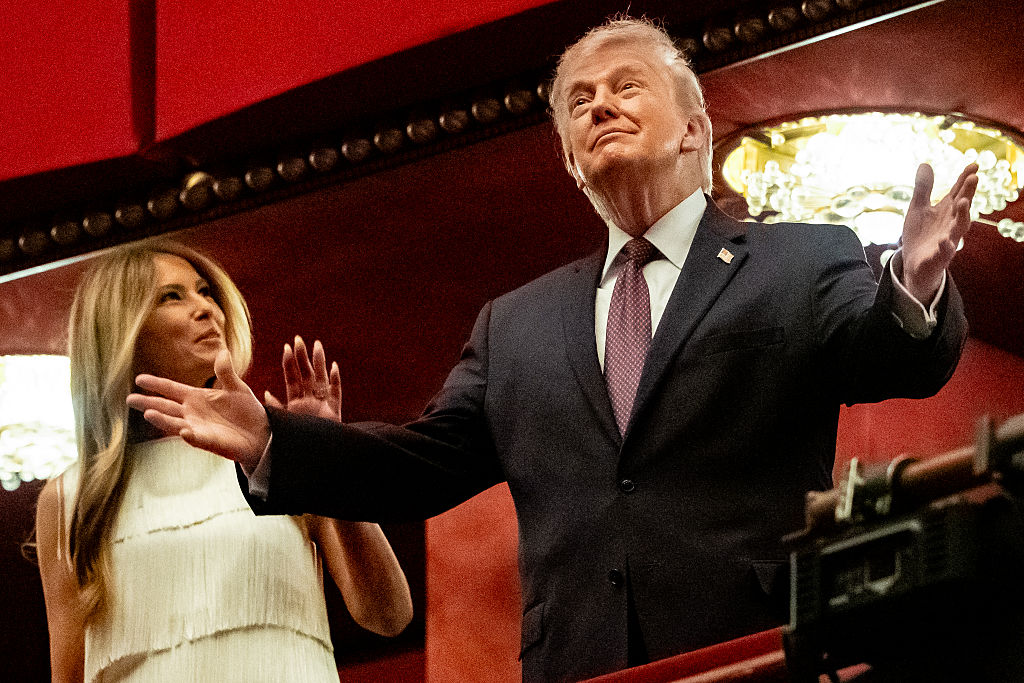
I knew Zarif when I served as Britain’s ambassador in Tehran during his tenure as foreign minister in President Rouhani’s government. He was already a veteran operator then – an American-educated former academic who had spent years in California before returning to serve the Islamic Republic. He was deeply loyal to the system he represented, yet convinced that engagement with the West was not merely desirable but necessary. He was polished, personable and unfailingly courteous, and also a formidable negotiator.
Zarif’s career since those years has followed the familiar rhythm of Iranian politics. Having been central to the negotiation of the Joint Comprehensive Plan of Action – better known as the JCPOA or Barjam in Iran – he fell from favor when the pendulum swung back towards the hardline camp under President Raisi. He spent years in the wilderness, returning to academic life teaching at Tehran University for a while. Zarif returned to prominence as a vice president following the election of President Pezeshkian, whose candidacy he actively championed in 2024. He has since resigned that post (resignation being one of his preferred political levers) but remained a central figure in Iranian politics.
Zarif today remains what he has long been: a moderating influence within the regime, capable of engaging western interlocutors, while remaining totally loyal to the Islamic Republic and without straying beyond the system’s red lines. Crucially, he is not a free agent. For what it’s worth, I do not believe he would have published such a piece without at least tacit approval from elements of Iran’s security establishment – even if that approval is deliberately ambiguous.
So what, precisely, is Zarif proposing?
At its core, it is a familiar bargain, updated for present realities. Iran would accept stringent and permanent constraints on its nuclear program: no pursuit of nuclear weapons, enrichment capped at low levels (3.67 percent), and full adherence to enhanced monitoring by the International Atomic Energy Agency. All of that was pretty much in the original JCPOA. However, Zarif’s deal would go further, offering to internationalize aspects of Iran’s enrichment activities through a regional consortium and to guarantee freedom of navigation in the strategically vital Strait of Hormuz, in cooperation with Oman.
In return, the United States would lift sanctions and not merely the secondary measures that under the JCPOA from 2016-18 (before the US unilaterally withdrew from the agreement) allowed limited international trade. The US, crucially, would also ease the more consequential primary sanctions that have kept American firms out of Iran for decades. Washington would accept the continuation of a limited civilian nuclear program, restore diplomatic relations and integrate Iran into global economic structures. There is even the suggestion of compensation and reconstruction assistance – an ambitious, perhaps unrealistic, element that nonetheless signals the scale of Iranian expectations. This aspect of the “deal” should be seen as an opening gambit rather than a red line.
This is, in essence, “JCPOA-plus.” It expands the Obama-era agreement and incorporates lessons learned from its collapse and the subsequent deterioration in regional security. The “plus” lies in two areas in particular: deeper economic integration, including potential US investment, and a new framework for managing the Strait of Hormuz, the importance of which has been underscored by recent tensions.
Why should Washington – and particularly President Trump – bother to take any notice of such a proposal made by someone who might be seen as a yesterday’s man reheating what is at its core a deal that Trump rejected in his first term?
Because, stripped of its rhetorical flourishes, Zarif’s proposal addresses a central dilemma that has long confounded Western policy towards Iran. Isolation has constrained the regime, certainly, but it has also entrenched its more hardline tendencies. Engagement, by contrast, carries risks but also the possibility of gradual internal change.
Zarif, one suspects, understands this better than most. The presence of western companies, the inflow of investment, and the normalization of economic life would not simply benefit Iran materially; it would, over time, alter the character of the system itself. It is a paradox familiar to international relations students. Opening up a closed society can prove more subversive than attempting to isolate it. Remember Perestroika.
From the Islamic Republic’s perspective, the red lines are relatively easy to identify. There must be no demand for total dismantlement of the nuclear program; enrichment for civilian purposes is non-negotiable, even if temporarily suspended. There must be meaningful sanctions relief, including – ideally – the lifting of primary sanctions which would allow genuine economic recovery. And there must be security assurances: a credible commitment that the United States, and by extension Israel, will refrain from further military attacks.
All of this is a long way from the US’s multiple demands, which have been transmitted through intermediaries such as Pakistan. Indeed, some of Zarif’s suggestions – notably the question of compensation – are unlikely to be acceptable to any White House. Nor should one underestimate the domestic political constraints on both sides. In Washington, Iran remains a deeply polarizing issue and accepting any deal resembling this would mean agreeing to the continued, indefinite existence of the Islamic Republic; in Tehran, suspicion of American intentions runs deep and is enduring.
Yet to dismiss the proposal out of hand would be a mistake. At the very least, it provides a basis for what diplomats call “proximity talks”: indirect negotiations in which each side tests the limits of the other’s flexibility. More ambitiously, it offers a pathway – however narrow – towards a more stable and predictable relationship, regional stability, and unimpeded passage for maritime shipping through the Strait of Hormuz.
To dismiss the proposal out of hand would be a mistake
The initial reactions have been telling. Critics on both sides have been quick to denounce Zarif, each accusing him of serving the other’s interests. This, in its own way, is a mark of success. In diplomacy, as in politics, one is often on the right track when one manages to irritate all parties simultaneously.
There is also a longer-term question lurking beneath the immediate policy debate. Iran’s political system, though resilient, is not immutable. Should it evolve – whether through gradual reform or more abrupt change – figures like Zarif may yet play a role in shaping its future direction. If he were to emerge as a transitional figure in a post-crisis Iran, the West could do considerably worse.
For now, however, the significance of Zarif’s intervention lies less in what it promises than in what it reveals. Beneath the familiar slogans and entrenched positions, there remains in Tehran a current of thought that recognizes the limits of confrontation and accepts the necessity of engagement. Unusually, given that the Islamic Republic of Iran is normally comfortable with lose-lose outcomes, what Zarif is putting on the table, no matter how hypothetically, might potentially lead to a win-win result.
Whether Washington is prepared to meet it halfway is another matter entirely.


Comments