
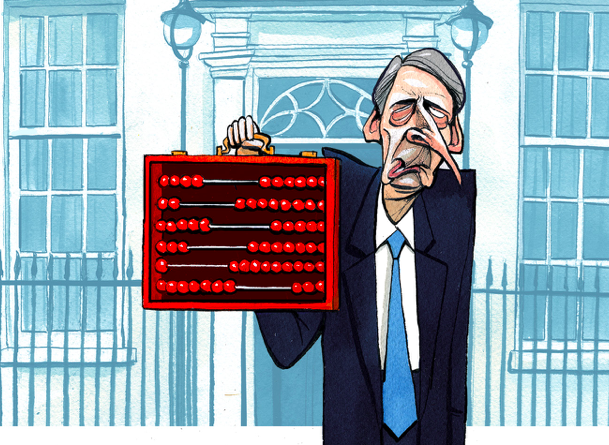
Some thoughts on today’s Budget:
- Hammond breaks Tory promise not to raise National Insurance. Breaks his word, hits 15pc of workforce, raises a pittance. The pledge was made no fewer than four times in the 2015 Conservative Manifesto: no rises in VAT, income tax or National Insurance.
 And after the election, a law was then passed to stop tax rises, which I thought odd at the time. Did Osborne really need legislation to restrain himself? If Tories have made a manifesto promise, as solemn a promise as you can get in this kind of world, why pass a law? We now know the answer: manifesto pledges are seen as expendable (at least by this Tory government). Apparently the law that George Osborne passed didn’t cover National Insurance, so Phillip Hammond thinks it’s okay to raise it by 2 points to 11pc. I wonder how many of tomorrow’s newspapers will agree. The policy is, anyway, a bad one. Self-employment is soaring in Britain, due in part to the welcome lower taxes. It reflects the greater risk taken, having to run your affairs like a business, etc. No sick leave, no parental leave, none of the other benefits that usually come with being a staff member. Yet a great many people prefer self employment to staff contract and PAYE, perhaps why they have risen from 10pc to 15pc of the workforce in recent years. Why would a Tory Chancellor confront these people? In seeing their lower taxes as an anomaly to be corrected, Hammond has overlooked the politics of this – as James says, it looks like the pasty tax all over again. A row that do a lot of political damage, with relatively tiny sums raised.
 - The self-employed constituted a third of the employment growth under the Tories, hence the 2015 pledge not to raise their taxes. Hammond might argue that the abolition of Class II National Insurance will mean the bulk of the self-employed will be better off. But what about those who are not? I suspect they’ll be cursing themselves for believing a Tory manifesto pledge, and might make a mental note not to repeat the mistake.

- The OBR warns that austerity could last another ten years Its report mentions Hammond’s pledge to “return the public finances to balance at the earliest possible date in the next Parliament” – ie, wait until after 2020. You’d think that would be long enough. Apparently not. The OBR says that on current trends, the books will not be balanced until 2025-26 with “per capita departmental spending continue to fall each year in real terms”. Like a child peeling a plaster away slowly in hope of minimising the pain, the Osborne-Hammond tantric approach to deficit reduction will mean that – almost 20 years after the crash – the public finances will still not be on an even keel.

- North Sea oil forecast recovers, but still not enough to salvage the economic case for Scottish independence. The 2014 economic case advanced by Alex Salmond spoke of £11bn of North Sea revenues by 2017/17. The new figure is rather lower.

- Inflation will rise, as a result of the crashing pound. But to manageable levels. And far closer to the 2pc target.

- And the debt mountain – now set to peak at £1.9 trillion. When the Tories took office it was about £1 trillion.

Comments