Uk politics

‘She doesn’t have political permission’ – Chris Hope on Shabana Mahmood’s asylum plan

From our UK edition

48 min listen

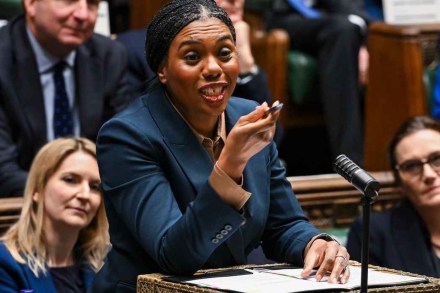
For this week’s Edition, William Moore is joined by the Spectator’s policy correspondent John Power, political correspondent Noa Hoffman and the political editor of GB News Christopher Hope. This week: is Labour taking a dangerous gamble with asylum? Shabana Mahmood has announced plans for new safe and legal routes into Britain, including for displaced Palestinians and Afghans. John warns however that charities operating in refugee camps could face intimidation or manipulation by extremist groups – while an overstretched Home Office may struggle to vet those eventually selected. Is Britain balancing compassion and security properly, or does the scheme risk creating vulnerabilities of its own? Also: will Labour ever get to grips with welfare?
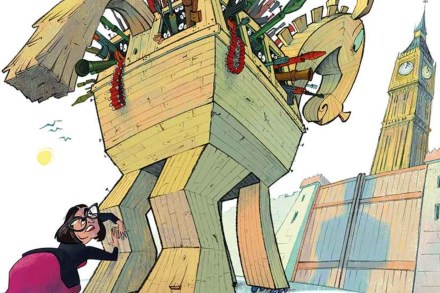
'She doesn't have political permission' – Chris Hope on Shabana Mahmood's asylum plan

Why we are not in an AI bubble – yet

From our UK edition

33 min listen

Is the AI bubble about to burst or is the boom only just beginning? As investors pile into AI stocks, tech valuations soar and central banks raise interest rates, comparisons with the dotcom crash are growing. But are we really heading for another market meltdown? To make sense of it all, Michael Simmons speaks to Giulio Bertini, a former European Central Bank employee and hedge fund trader – author of Ten Moments That Defined Markets – about the extraordinary rise and collapse of the dotcom bubble. They discuss the similarities with today's AI boom, why he actually believes the market still has further to run – and what there is to be positive about the British approach to AI. You can find Giulio’s book Ten Moments That Defined Markets here.

Why we are not in an AI bubble – yet

The British middle-class race to go private

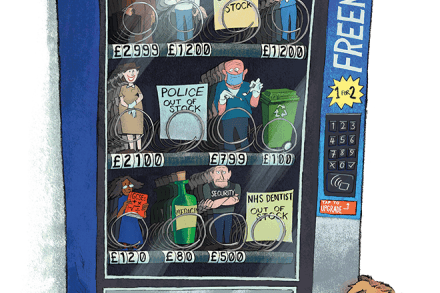
Postwar Britain can be defined by a bargain made with its middle class: pay for public services but benefit from them too. Private education has always been the choice of a very small minority; private healthcare was reserved for the wealthiest and those whose employers paid for it. Middle England was content to send its children to the same schools as everyone else and use the same GPs, hospitals and dentists. This is no longer true. State spending continues to grow, yet large parts of the population now pay privately to supplement what their taxes have already provided. Eighty-four years ago, William Beveridge’s Social Insurance and Allied Services set out five “giants” standing in Britain’s way: want, disease, ignorance, squalor and idleness.

Vending Machine of non tax covered cost
election

Is Andy Burnham preparing to call a December election?

What is the purpose of a Budget? To stabilize the national finances? To kickstart economic growth? If you’re John Healey, it may be to show the markets that you’re fiscally responsible and the public finances are safe in your hands. If you’re Andy Burnham, the goal is to show the public that you’re trying to do something about the rising cost of living – and to convince Labour MPs that they were right to give you the job. But Burnham also has big plans to transform the country and this was a Budget more about tinkering than transformation. Yes, defense will get £5 billion more by letting the National Wealth Fund borrow off the public balance sheet to invest in defense companies.

Fraser Nelson exposes Britain’s welfare pipeline

From our UK edition

48 min listen

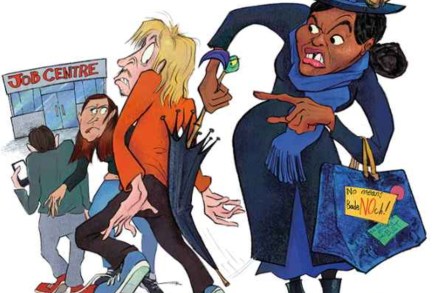
Is Britain’s welfare state still a safety net or has it become a pipeline for long-term dependency? Almost one in ten six-year-olds are now categorised as disabled through the benefits system and, on current trends, that figure would rise to one in four 16-year-olds. Reality Check’s Michael Simmons speaks to The Times's Fraser Nelson – former editor of this parish – about his investigation into Britain’s welfare system: why mental health and behavioural claims among children have surged, how disability benefits can follow young people into adulthood and why the system can leave people financially worse off for working. Can Britain break the welfare ‘pipeline’ and what would real reform look like?

Fraser Nelson exposes Britain's welfare pipeline

A bonfire of regulations & Kemi’s iron dome

From our UK edition

13 min listen

James Heale is joined by Tim Shipman, Michael Simmons and Lara Brown from the second day of Conservative Party conference in Birmingham. They discuss shadow chancellor Andrew Griffith’s pitch for a low-tax, low-regulation economy, Kemi Badenoch’s new ‘Britannia Shield’ defence proposal and whether the Tories are starting to recover some confidence. As Kemi seeks to assemble a more credible frontbench team, to what extent is this conference the beginning of a genuine Tory revival? Produced by Patrick Gibbons.

Can Kemi win the battle for the right?

From our UK edition

20 min listen

James Heale is joined by Tim Shipman and Liam Halligan, Telegraph columnist and the new director of the Centre for Policy Studies (CPS), to look ahead to Conservative Party conference. Kemi Badenoch’s latest attempt to draw clear dividing lines with Andy Burnham was over a tougher welfare offer aimed at the under-25s – exclusively revealed in an interview with Tim in the Spectator this week. Kemi will hope that this appeals, alongside tougher fiscal restraint and general plain speaking. Plus: how do the Conservatives outflank Reform while seeking to appeal to those in the centre-ground who may have turned to Labour at the next election?

Can Kemi win the battle for the right?

Can the Greens survive Burnham?

From our UK edition

16 min listen

James Heale reports from Green Party conference in Brighton, joined by More in Common’s Luke Tryl and Noa Hoffman. After a year in which the Greens appeared to be challenging Labour on the left, has their momentum begun to stall – and how much of that is down to Zac Polanski himself, compared to Andy Burnham winning progressive voters back to Labour? They discuss the tensions within the Greens’ increasingly broad coalition plus look ahead to next week's Holborn and St Pancras by-election. Will Polanski survive losing in London? Produced by Patrick Gibbons.

Can the Greens survive Burnham?

Harold Wilson is the new Labour lodestar

After Andy Burnham’s speech at the Labour party conference last month, one veteran factionalist declared: “We are all Burnhamites now.” Romantics love the rhetoric; cynics respect the ruthlessness. “Game recognizes game,” says one Labour figure. The Prime Minister’s address was pitched at a wounded party seeking support. Emotive and personal, yet also intensely political, it showed a keen awareness not just of Labour’s values, but of its interests too. Right to Buy, which attracted legions to the Tory ranks, will be halted for new homes; a new National Care Service will bring thousands more members into the unions’ fold.

harold wilson
Exclusive: work or face benefits ban, Tories tell under-25s

Exclusive: work or face benefits ban, Tories tell under-25s

From our UK edition

15 min listen

Tim Shipman has interviewed Kemi Badenoch ahead of Tory party conference this weekend. In the interview, the Conservative party leader exclusively reveals the Tories plan to ban benefits to under 25s who have never worked before. For this special episode of Coffee House Shots, here is an extract from the Spectator's Edition podcast, where Tim sat down with the Spectator's Lara Prendergast and Angus Colwell and the Telegraph's Poppy Coburn. Produced by Patrick Gibbons.

Hope again: do you buy Burnham’s big pitch?

From our UK edition

22 min listen

Andy Burnham has used his Labour conference speech to set out his clearest vision yet for the country and it was a strikingly ambitious one. Noa Hoffman is joined in Liverpool by Tim Shipman and Michael Simmons to unpack a speech that ranged from a new National Care Service and reform of the pension triple lock to electoral reform, water and Britain’s future relationship with the European Union. How radical is Burnham’s programme in practice and is the ambition matched in the detail? And what was missing from the speech? Produced by Patrick Gibbons.

Is Burnham ready to talk about war?

From our UK edition

16 min listen

Military and intelligence chiefs across Europe are sounding increasingly stark warnings about the threat posed by Russia, from cyber attacks and sabotage to drones and hybrid warfare. But is Britain taking the danger seriously enough – and are the armed forces actually ready for what might come next? Patrick Gibbons is joined by Tim Shipman and Noa Hoffman to discuss Britain’s military preparedness, Andy Burnham’s approach to foreign policy and what to expect when the Prime Minister comes face-to-face with Donald Trump in New York next week. Produced by Patrick Gibbons.

Is Burnham ready to talk about war?

Elon Musk to Clavicular: should we fear the manosphere? with Peter Hitchens & Toby Young

From our UK edition

40 min listen

For this week’s Edition, William Moore is joined by the Spectator’s associate editor and director of the Free Speech Union Toby Young, journalist and author Esther Walker, and Mail on Sunday columnist Peter Hitchens. This week: the men on the spectrum who rule the world. Charles Steel writes in the magazine about the wealthy, obsessive and often unconventional figures who increasingly shape politics and technology – from Elon Musk to the crypto billionaire Ben Delo. Is autism a useful way of understanding these men or has society become too obsessed with diagnosing people?

Elon Musk to Clavicular: should we fear the manosphere? with Peter Hitchens & Toby Young

Holy Smoke: Catholic Burnham barred – should the law change?

From our UK edition

15 min listen

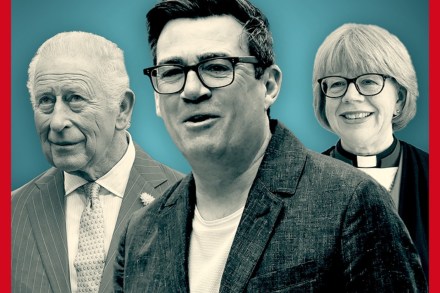
Andy Burnham has announced his intention to change a law which bars him from advising the King on appointments to the Church of England. The Victorian-era law explicitly bars Catholics like Burnham, as well as Jews – but doesn't prevent those of other Christian denominations, other faiths – like Hindu Rishi Sunak, or atheists like Keir Starmer. So, if the law is going to be changed to address this anomaly, should it allow all Prime Ministers of any faith to provide advice – or should all non-Anglicans be barred? And what does Burnham's interest in the power tell us about his relationship with his faith – and his approach to the job? The Spectator's James Heale and William Moore join Damian Thompson to discuss. This was originally broadcast on the Spectator's Holy Smoke channel.

Holy Smoke: Catholic Burnham barred – should the law change?

Catholic Burnham barred: should the law change?

From our UK edition

15 min listen

Andy Burnham has announced his intention to change a law which bars him from advising the King on appointments to the Church of England. The Victorian-era law explicitly bars Catholics like Burnham, as well as Jews – but doesn't prevent those of other Christian denominations, other faiths – like Hindu Rishi Sunak, or atheists like Keir Starmer. So, if the law is going to be changed to address this anomaly, should it allow all Prime Ministers of any faith to provide advice – or should all non-Anglicans be barred? And what does Burnham's interest in the power tell us about his relationship with his faith – and his approach to the job? The Spectator's James Heale and William Moore join Damian Thompson to discuss. Produced by Patrick Gibbons.

Catholic Burnham barred: should the law change?

Assisted dying dead – for now

From our UK edition

8 min listen

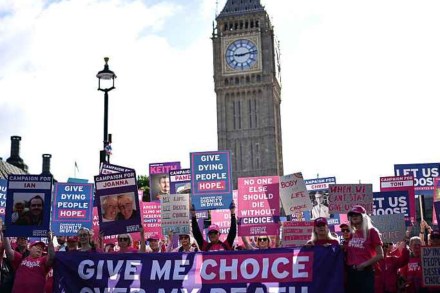
James Heale joins Patrick Gibbons to react to the news that MPs have voted against Assisted Dying. The vote was close – 286 vs 270 – but not a knife-edge, and several MPs changed their minds compared with previous votes earlier this year. What conclusions can we draw? Produced by Patrick Gibbons.

Assisted dying dead – for now
Assisted dying is back: what does Burnham think?

Assisted dying is back: what does Burnham think?

From our UK edition

15 min listen

The topic of assisted dying returns to Parliament today, with a vote scheduled in the Commons this afternoon. Labour MP Lauren Evans has used her private member's bill to reintroduce it, after Kim Leaderbeater's attempt failed, running out of time during the last parliamentary session. Then-Prime Minister Keir Starmer voted for the Bill; now, Andy Burnham has pledged to abstain, saying that – as Prime Minister – he should remain neutral. So what are the chances of this Bill passing? And what does Burnham really think? Tim Shipman and James Heale join Noa Hoffman to discuss. Plus: the team reflect on the 9/11 terrorist attacks in the US and its consequences, 25 years on from that seminal moment. Produced by Patrick Gibbons.

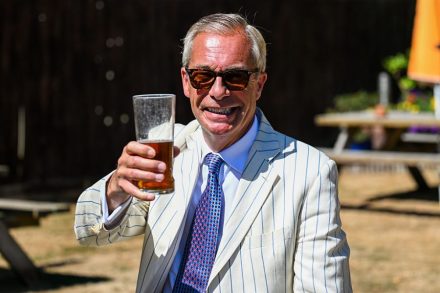
Nigel Farage has been strengthened

Nigel Farage has been reelected as the Member of Parliament for Clacton. He resigned last month to force a contest in his seaside constituency following a series of news stories about his financial affairs. The central claim is that before becoming an MP in 2024, Farge received £5 million from a crypto investor and failed to declare it to the parliamentary authorities once he was elected.  The people who have been most embarrassed by this bizarre by-election are the liberal left The Reform UK leader decided it was better to go to the voters than wait for some anonymous parliamentary inquiry to determine whether he had breached the rules. None of the main political parties ran a candidate against him, attempting to portray his by-election as a vanity project.

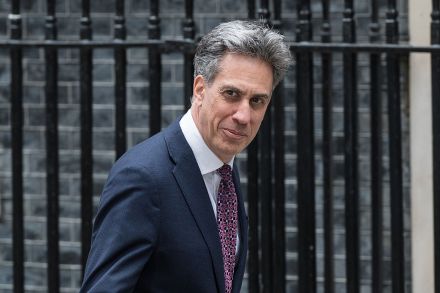
Is Ed Miliband preparing to take on Donald Trump?

Just one day after Ed Miliband was made UK Foreign Secretary we heard in the Telegraph that the White House is upset about the appointment, and even warned against it. Donald Trump is apparently unimpressed by Miliband’s role in blocking North Sea oil drilling. Miliband has also railed against Trump in the past, calling him a “racist, misogynistic self-confessed groper” on the BBC’s World at One in 2016, as an example – but in fairness his predecessor David Lammy called Trump “beneath contempt” before he became foreign secretary. Trump can forgive and forget – so long as his interlocutor is willing to forget their own pride. Miliband could bend the knee, but there is also some appetite to confront Trump.

ed miliband

Are the British the most evil people in history?

If you have not spent a great deal of time on the internet, you will probably know the British actress Jameela Jamil for her starring role in the popular comedy series The Good Place, or alternatively from her appearance in the Marvel miniseries She Hulk: Attorney at Law.  However, for the terminally online, Jamil is either a savior who is unafraid to say controversial things that her peers would shy away from, or someone whose batshit crazy utterances are given far too much attention given her modest celebrity status.  The latest of her pronouncements is on Brexit, ten years on, along with sundry instances of racism and horror in her home country. Jamil declared that “Britain is fucked. It doesn’t feel as though I’m going back to some haven.