I have often wondered why Google has always placed such great emphasis on the fact that it had two founders rather than one – and two pretty dull, geeky guys at that. For a while, it even divided CEO responsibilities between them. The answer, I suspect, is so it can escape the opprobrium directed at the sole founders of other big tech companies who’ve been quick to present themselves as heroic leaders. Judging from two recent films, one targeting Mark Zuckerberg, the other Elon Musk, that has turned out to be a wise strategy.
The Social Reckoning, written and directed by Aaron Sorkin, is a loosely based sequel to The Social Network, the 2010 film about the founding of Facebook. In the first one, also written by Sorkin, Zuckerberg is played by Jesse Eisenberg as a socially awkward loner and there’s a certain revenge-of-the-nerds satisfaction in seeing him get the better of his more popular Ivy League peers. In the second, he’s played as a pantomime villain by Jeremy Strong, ruthlessly engineering the Facebook algorithm to spread hate and division in pursuit of ever-growing profits. This time, it’s his nemesis who’s the nebbish outsider, a Wall Street Journal reporter played by Jeremy Allen White. He’s portrayed as a fearless exemplar of investigative journalism, although in an inconsistency that’s never addressed he seems to think the protections of the First Amendment should apply to the mainstream media, but not to social media.
‘Musk’ is so long that only the most dedicated Elon haters will have the patience to sit through it
The film is so dogmatic in its treatment of a nuanced and complicated question – to what extent should companies like Meta assume liability for what’s published on their platforms? – that it fails to spark into life. Unlike in some of Sorkin’s earlier work, such as A Few Good Men, the villain is a one-dimensional caricature without a single good line, reducing The Social Reckoning to a lifeless polemical screed. It climaxes with the Capitol riot in January 2021, placing the blame for that disturbance squarely at the feet of Zuckerberg, even though Facebook removed the original ‘Stop the Steal’ group two days after the election.
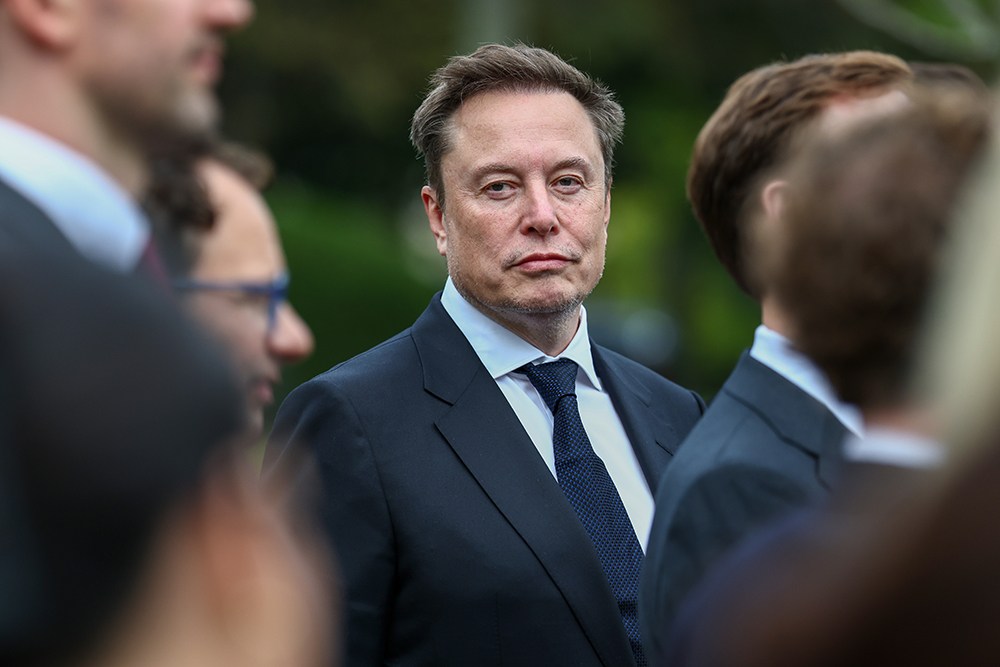
Musk is equally one-sided, in spite of being a documentary. At the beginning of the film, director Alex Gibney tells us he approached his subject to ask for an interview and expresses faux outrage that he declined on the grounds that it would be a ‘hatchet job’, implying he would have given him a fair hearing. Gibney’s solution is to create a lifelike digital avatar of Musk and have the simulacrum answer all his tough questions.

But isn’t that an example of the kind of ‘deep fake’ that Musk is constantly being told he should ban from X? To give an example of just how unsympathetic this film is, at one point the avatar emerges from under the hot lights, dons an Iron Man suit and starts slaughtering the dedicated civil servants standing in the way of his efforts to cut government waste.
To describe the film as a ‘hatchet job’ is to understate Gibney’s hostility to his subject – demolition job would be more accurate. The film reluctantly canters through Musk’s role in founding PayPal, Tesla, SpaceX, Neuralink, Starlink and the Boring Company, and lingers on what Gibney regards as his unforgivable sins, such as opposing the US government’s lockdown policy, disbanding Twitter’s Trust and Safety team (its censorship arm) and cutting USAID. We’re earnestly told that this last act will cause millions of preventable deaths, neglecting the fact that this figure is the upper bound of a speculative article in the Lancet claiming that 14 million people could die by 2030 if the USAID budget continues to be cut at the rate Musk initiated.
The problem with both films is that their makers are so consumed with hatred of their billionaire tech bro subjects that they’ve neglected to make them entertaining. The dramatically inert Social Reckoning flopped at the box office and Musk is so long, clocking in at three hours and 45 minutes, that only the most dedicated Elon haters will have the patience to sit through it. Neither will appeal to anyone who isn’t already in the sceptical camp.
I’m not in that group, but mildly sympathetic to both, so should have been the target audience. As it is, their various misdemeanours come as no surprise and do not add up to a damning indictment. Musk himself debunked the attacks on him when he opened an episode of Saturday Night Live in 2021, but it’s a defence that works equally well for Zuckerberg: ‘Look, I know I sometimes say or post strange things, but that’s just how my brain works. To anyone I’ve offended, I just want to say: I reinvented electric cars, and I’m sending people to Mars on a rocket ship. Did you think I was also going to be a chill, normal dude?’





Comments