The two cultures
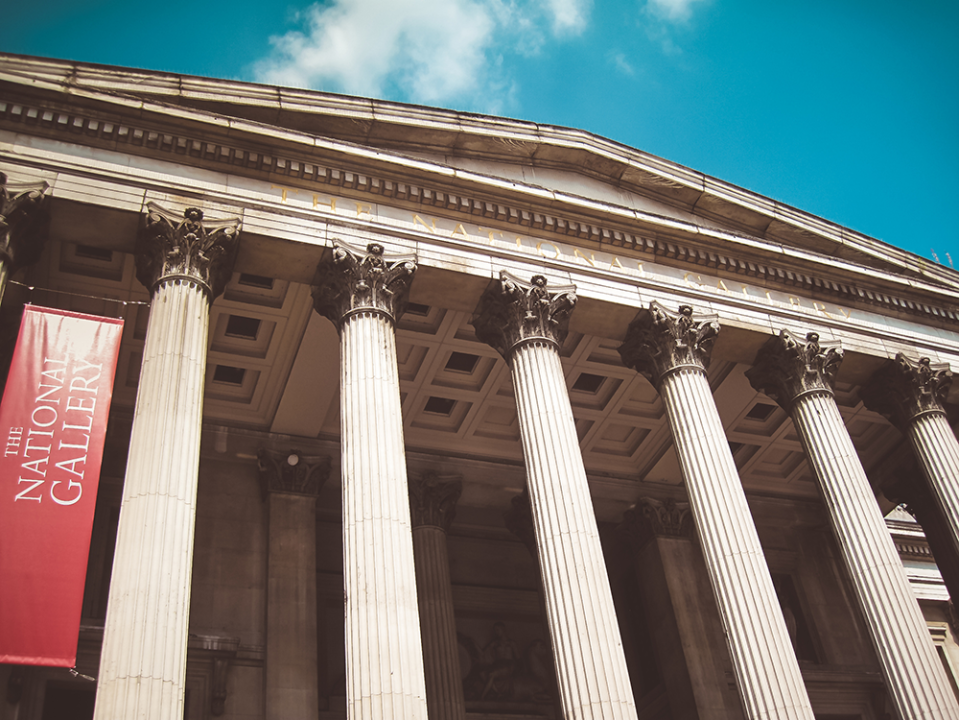
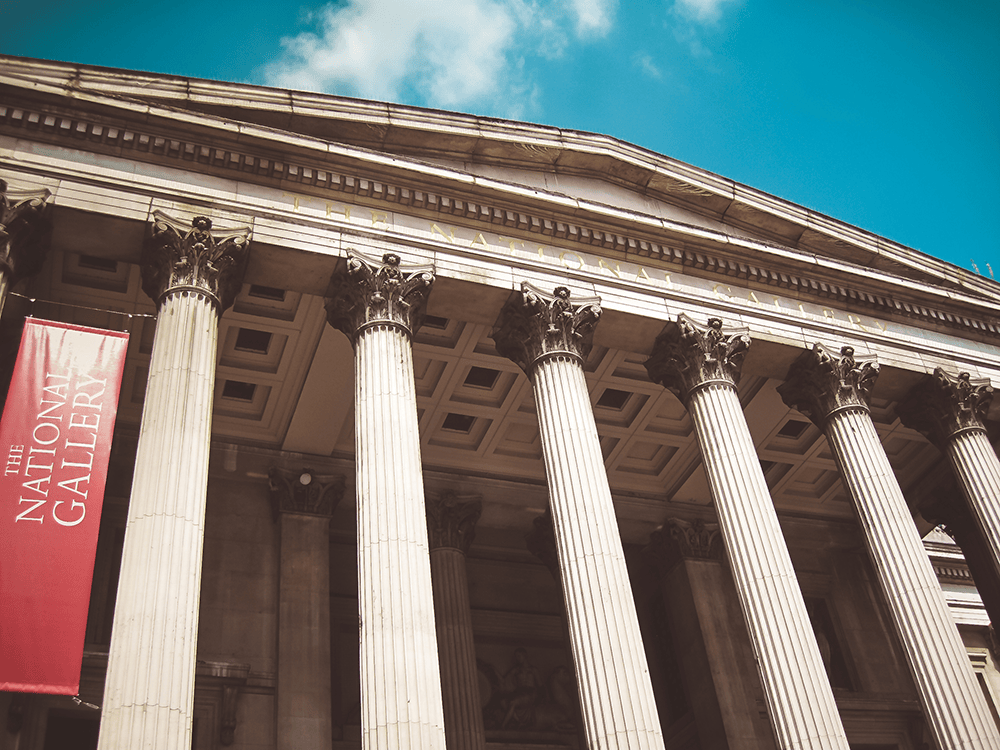
Sir: I share Lara Brown’s dismay at the intention of the National Gallery to bring the institution into the 21st century (‘Look away’, 21 November). Having visited the gallery for 60 years and with each visit learning something new, I’m happy for it to be left at 1250-1900. When I was professor of surgery at University College London, I used to take my students there to teach them the skills of observation and the links between art and medicine. One of my favourite pictures was ‘A satyr mourning over a nymph’ by Piero di Cosimo. The National Gallery claims that it illustrates an episode in Ovid’s poem ‘Metamorphosis’, where the nymph Procris is accidentally speared by her husband Cephalus while out hunting. Nonsense: this was murder. I was able to explain how Procris’s murderer approached with a knife from the front. First she held up her left arm to protect her face, which was slashed above the wrist. Then in despair she clutched the knife in her right hand as shown by the cuts on her fingers. All that failed and her killer stabbed her in the neck at the level between the 5 and 6 cervical nerve roots. We learn that by the distorted left wrist, the so-called waiter’s tip hand (Erb’s palsy).
Another favourite is Bronzino’s allegory with Venus and Cupid, which exposes all the clinical signs of tertiary syphilis. My students had lots to learn about art, as art students could learn about medicine; at last an affiliation of C.P. Snow’s two cultures.
Michael Baum
Professor emeritus of surgery and visiting professor of medical humanities
University College London
Pole position
Sir: Cllr Danny Adilypour is right to remind us of the important contribution Polish airmen made to Allied victory in the second world war (Letters, 21 November). However, the efforts of Polish soldiers and sailors also deserve commemoration.
At the Devonport Naval Heritage Centre, we have been showcasing the role of the Polish Navy from 1939 to 1945, when it was working in lockstep with the Royal Navy at Devonport. From the three destroyers and one submarine which escaped to Britain in September 1939, the Free Polish Navy rapidly grew to more than 16 vessels, many of which distinguished themselves in battle, including during the Norwegian campaign and the Normandy Landings. Six were lost.
Because of the high regard in which their Polish allies were held by the Royal Navy, Plymouth was the only city in Britain where the Poles were allowed to take part in the 1946 VE day anniversary parade. Immediate postwar politics kept the Free Poles from marching in London, but the Royal Navy demanded that they march alongside them in Plymouth.
Peter Dunlop, lead volunteer, Devonport
Naval Heritage Centre
Cross purposes
Sir: In his review of the Van Eyck exhibition at the National Gallery (Arts, 14 November) Robin Simon quotes the old canard about there being enough pieces of the True Cross to have built the Ark. In the preface to his novel about the Empress Helena, mother of Constantine the Great and supposed discoverer of this greatest of Christian relics, Evelyn Waugh cited the 19th-century architect and scholar Charles Rohault de Fleury. He calculated the volume of all claimed pieces of the True Cross. The total of four million cubic millimetres was less than one fortieth of the volume of each cross used by the Romans in their crucifixions.
Francis Bown
London E3
Lincoln first
Sir: The article on the architect Zaha Hadid was accompanied by a photograph of the Heydar Center in Baku, a place I have never visited (Arts, 21 November). So why was it so familiar? The answer is Sam Scorer, the Lincoln-based architect who was born 27 years before Hadid and pioneered the construction of hyperbolic paraboloid buildings with saddle roofs in both Lincolnshire and neighbouring counties.
Ivor Morgan
Lincoln
Reform, not prohibition
Sir: In Rupert Hawksley’s article ‘All Bets Are Off’ (26 September), he referred to me as a gambling prohibitionist. I disagree with this assessment: I am a philanthropist supporting gambling reform, not a prohibitionist. My funding of the new Gambling Policy Commission, with its call for evidence from all sides, attests to this.
Derek Webb
London and Los Angeles
What planet are you on?
Sir: William Atkinson is right to point out (Notes on, 21 November) that Mercury is not ‘the dullest planet’ (I doubt if there’s a wild party happening on Neptune right now). But then he says it has not inspired ‘any great fiction’. Can it be that he hasn’t read The Worm Ouroboros by E.R. Eddison (1922), in which the noble lords Juss, Spitfire, Goldry Bluszco and Brandoch Daha vie against the evil King Gorice? I admit it’s difficult to see why it’s set on Mercury, when the action takes place on a world with a breathable atmosphere, a 24-hour day and distinctly English weather, but perhaps we can put that down to artistic licence.
Tim Cheatle
London E3
Common sense
Sir: Rachel Johnson’s article about things common (Best Life, 14 November) reminded me of a dinner party discussion some years ago about how to describe to an American what ‘common’ means. Unable to reach a conclusion, I approached my elderly mother for advice. ‘But you can’t explain it to them, darling,’ she replied, ‘because they’re all common.’
Peter Fineman
Barrow Street, Wiltshire
Write to us
letters@spectator.co.uk




Comments