Companies on the frontier of artificial intelligence need savvy engineers, coders, big buildings, cutting-edge microchips and sophisticated software. But perhaps the most competitive aspect of the race to capture a share of the AI market involves the hardware needed to convert natural gas into electricity.
That reality was underscored by the news that Anthropic PBC – which went public with a $1.4 trillion valuation – is spending $3.4 billion to acquire 1.7 gigawatts of generation capacity from Caterpillar. It’s the largest-ever single purchase of gas-fired generators by a tech company. And here’s the thing: the generation capacity that Anthropic is buying from Caterpillar will come from Otto-cycle engines.
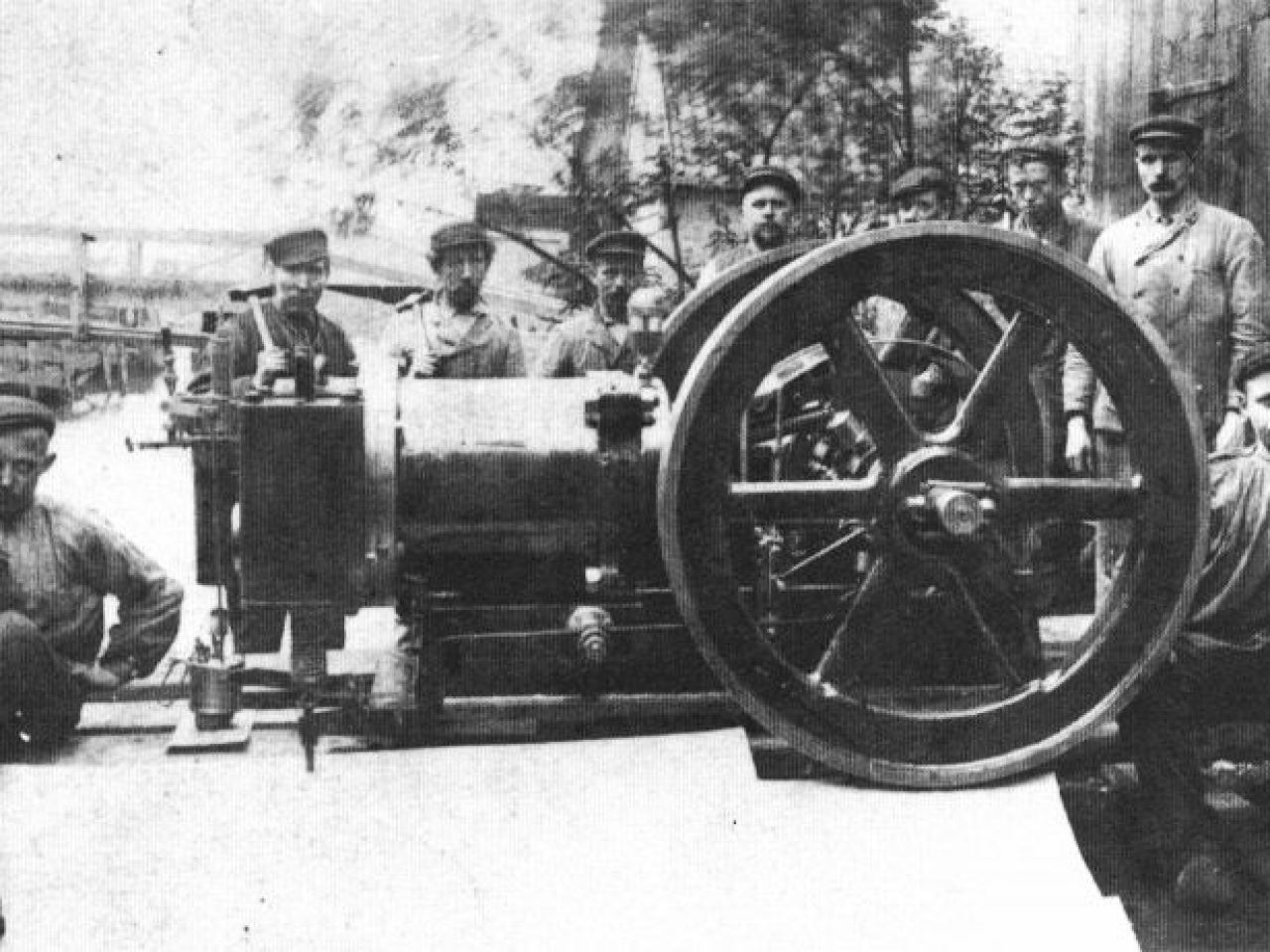
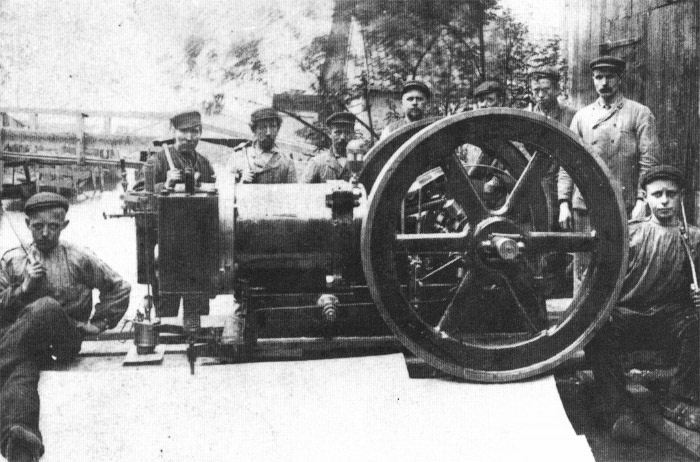
Thus, a company that is developing frontier AI models – the zenith of modern technology – will be relying heavily on spark-ignited internal combustion engines, which were invented some 150 years ago by German engineer Nikolaus Otto.
With wait times for gas turbines stretching to five years, Big Tech is turning to Otto-cycle engines
I first wrote about this trend in February, when I explained that Big Tech is “racing to build and deploy power generation capacity that’s independent of the grid… But as the race for generation capacity has tightened, so has the supply of gas-fired turbines, the workhorses that generate more than 40 percent of the juice produced in the US.”
And rather than wait years for a turbine, the AI companies have been buying engines for on-site and “behind the meter” (BTM) generation capacity so they can get their data centers online faster, a race that’s known as “speed to power.” Since February, the hyperscalers’ focus on speed to power has only accelerated. Over the past nine months, I estimate that the order book for gas-fired internal combustion engines for BTM generation has jumped by nearly 49 percent.
Today, with wait times for gas turbines stretching as long as five years, Big Tech is turning to Otto-cycle engines, and it’s doing so in a big way. Further, thanks to the size of the global engine manufacturing sector, widespread access to gas pipelines and low-cost fuel, AI companies are ordering and deploying far more gas-fired generation capacity than new nuclear capacity. Indeed, while the Small Modular Reactors (SMR) sector has seen massive media coverage and several silly IPOs, the gas-fired engine (and gas-turbine) business is the real story in powering AI.
Commercial SMRs under construction in North America total about 750 megawatts. That includes TerraPower’s 400-gigawatts Natrium reactor in Wyoming, GE Vernova-Hitachi’s BWRX-300 under construction in Ontario, Canada, and the 50-megawatt Hermes 2 reactor that Kairos Power is building in Tennessee. By contrast, the order book for the five big engine-makers totals 10.4 gigawatts of capacity. That’s 14 times the total capacity of the SMRs now being built in North America.
The surging use of Otto-cycle engines illustrates heavy industry’s ability to continually make gradual improvements in metallurgy, compression and electronics. Those improvements have resulted in engines with ever-better reliability, power density and thermal efficiency. To be clear, the amount of engine capacity being deployed for BTM power is impressive. But it’s essential to keep scale in mind. While the order book for BTM Otto-cycle engines now totals more than ten gigawatts, the world’s biggest gas-turbine-maker, GE Vernova, now has a turbine order backlog of about 130 gigawatts.

In early October, Wärtsilä, the Finnish engine maker, announced a 282-megawatt deal with a “major US independent power producer” that will supply juice to a data center. The company will provide the data center with 15 of its flagship gas-fired 18V50SG engines, each displacing 2,000 liters and rated at 18.8 megawatts. Wärtsilä (market cap: $16.8 billion) says it has now contracted to provide “more than three gigawatts” of capacity to data centers in the US since early last year.
Bergen Engines, a subsidiary of UK-based Langley Holdings, is also seeing a huge uptick in its data-center business. The privately held conglomerate, owned by British billionaire Anthony Langley, builds a gas-fired V-20, 900-liter engine that has an output of 11.3 megawatts. Bergen recorded its first US BTM data center engine deal in June 2025, which called for 200 megawatts of capacity. In August, Langley Holdings reported that “since then, the company has signed around three gigawatts of BTM business.” Munich-based Innio Group (market capitalization: $10.9 billion), which owns the engine maker Jenbacher, announced in October that it has received new orders and now has a 1.7 gigawatt backlog. The company said its “containerized Jenbacher solutions deliver what data centers need most: fast deployment, high power density, fuel efficiency and the performance to support demanding AI workloads.” The company’s J624 is a V-24, 150-liter engine with an output of 4.5 megawatts. The company’s CEO also said that he does not see “any slowdown” and is now talking to customers about projects as far out as 2031.
Erock, formerly known as Enchanted Rock, has been providing generator sets for backup power and grid support for about two decades. Today, it’s also a significant player in the data-center business. The company is profitable, has no debt and expects this year’s revenues to total about $450 million, more than double the $183 million it recorded last year.
In August, it announced a deal with Anthropic to provide 470 megawatts of generation capacity. Erock (market capitalization: $2.3 billion) is also building a 366-megawatt project for El Paso Electric that will provide power to a Meta data center campus now being built in El Paso. The project will include 813 of Erock’s gensets, which use a 22-liter V-12 engine built by Hyundai that produces about 500 kilowatts. In its third-quarter presentation, the company says Erock’s power plant will allow El Paso Electric to serve Meta up to five years sooner than if the social media company had to get power from other sources. It also expects to complete the El Paso installation “by mid-2027.”
The order book totals 10.4 gigawatts of capacity. That’s 14 times the total capacity of the SMRs now being built in North America
Erock has a $1.6 billion order backlog. Assuming an installed cost of $1.5 million per MW, that means the company has a backlog of about one gigawatt of generation capacity.
While many other companies are benefiting from the AI spending frenzy, none is profiting more than Caterpillar. As I noted in February: “Whether it is providing engines for backup power or for BTM projects, or standby gensets for data centers, the company’s generation segment is the fastest-growing part of its business.” That remains true today. In the third quarter, Caterpillar (market cap: $275 billion) reported record revenue of $20.6 billion. Its power and energy segment accounted for about a third of that sum, and segment profit ($2.1 billion) provided half of CAT’s quarterly profits.
Caterpillar has an order for 1,700 megawatts of BTM engines. That figure accounts only for the $3.4 billion deal Anthropic made in September to acquire that generation capacity from OnePWR Solutions. Caterpillar’s actual order book for Otto-cycle engines is almost certainly much bigger, but the company doesn’t break down that capacity. (CAT’s overall order backlog at the end of the third quarter was $78 billion, about double what it was a year ago.)
According to the Financial Times, Anthropic’s purchase of the 1.7 gigawatts of Caterpillar engines is “the largest known single purchase of power-generation equipment by an AI lab, underscoring how the race for electricity is pushing tech companies deeper into the energy industry.”
Caterpillar’s leaders understand the new AI landscape and what it means for the company’s future. Caterpillar is resuming production of its ten-megawatt Otto-cycle engine to meet the surging demand from data centers. (It stopped making them in 2022 because demand was tepid.)
During the company’s latest earnings call, chief executive Joe Creed said it is “really excited” about the “opportunity with data centers and the demand they’re putting on the grid. We’re going to see a lot more of this.” Creed also said the company plans to “increase large reciprocating engine capacity to nearly three times the 2024 level by 2030,” and that “we’re now taking some large reciprocating orders as far out as 2029 and turbine orders into 2030.”
The punch line is that the engines of the AI revolution aren’t just microchips; they’re engines that Otto would admire. And the market for those engines is growing at a remarkable clip.





Comments